Energy Markets

Oil prices drop 0.72 percent to $76.25 as more tankers cross Strait of Hormuz



Oil prices extended this week’s decline on Wednesday after signs emerged that more oil tankers stranded in the Gulf are beginning to transit the Strait of Hormuz, reducing immediate concerns over supply disruptions. While diplomatic negotiations between the United States and Iran continue to leave room for uncertainty, investors are increasingly focusing on the gradual normalization of shipping activity and the prospect of more stable exports from the Middle East.
Brent crude futures fell 55 cents, or 0.72 percent, to $76.25 a barrel, while U.S. West Texas Intermediate (WTI) crude slipped 55 cents, or 0.78 percent, to $72.64 a barrel.
Both global benchmarks had already declined about 1 percent on Tuesday, leaving prices at their lowest levels since early March.
The market has faced sustained pressure this week after Washington granted Tehran a 60-day sanctions waiver following initial peace negotiations, allowing Iranian oil exports to continue while diplomatic discussions progress. At the same time, easing hostilities in Lebanon have reduced concerns that regional conflict could disrupt broader energy supplies.
Hormuz reopening
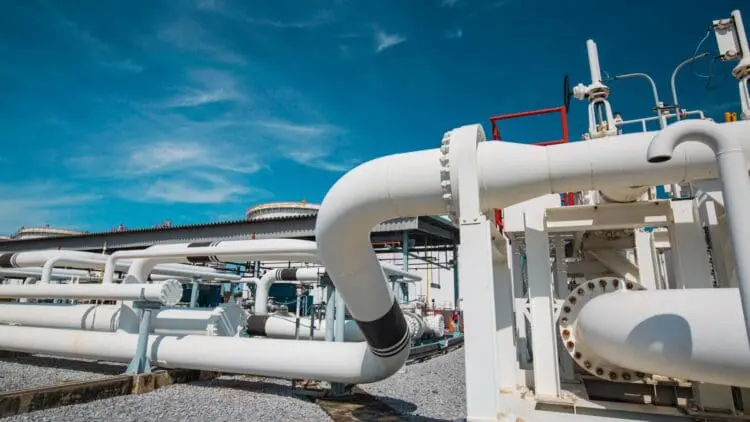
Attention remains firmly fixed on the Strait of Hormuz, the narrow waterway through which roughly one-fifth of the world’s seaborne oil passes.
On Tuesday, Oman and Iran agreed to continue discussions regarding the future administration of navigation through the strait. Meanwhile, U.S. Secretary of State Marco Rubio said any attempt by Iran to impose transit fees on vessels would violate international law.
Although diplomacy has improved market sentiment, conflicting statements continue to cloud the outlook. U.S. President Donald Trump said Iran had agreed to allow nuclear inspections indefinitely, while Tehran denied making such a commitment during negotiations.
Investors are also closely monitoring how quickly Gulf producers can restore normal export operations and whether additional vessels will resume transit through the region.
Tankers moving
Shipping activity is gradually improving.
An Iranian military source told Fars news agency that a limited number of ships are being allowed to pass through the Strait of Hormuz each day under coordination with Iran’s Revolutionary Guards Navy.
Ship-tracking data showed that three stranded supertankers successfully transited the strait on Tuesday. Separately, the United Nations’ shipping agency said an evacuation plan is underway to help hundreds of vessels and approximately 11,000 seafarers stranded in Gulf waters safely resume their voyages following the U.S.-Iran ceasefire agreement.
The gradual increase in tanker movements has reassured markets that one of the world’s most important oil export routes is beginning to normalize, although shipping volumes remain below typical levels.
Inventory picture
Beyond geopolitical developments, traders are also assessing U.S. supply data for fresh clues about market fundamentals.
According to market sources citing figures from the American Petroleum Institute, U.S. crude inventories declined by 765,000 barrels during the week ended June 19.
The drawdown was smaller than market expectations. Analysts surveyed by Reuters had forecast an average decline of approximately 4.5 million barrels, suggesting domestic supply remains relatively comfortable despite recent geopolitical disruptions.
The official inventory figures from the U.S. Energy Information Administration are expected to provide additional direction for oil markets later in the week.
For now, traders appear increasingly confident that improving shipping flows through the Strait of Hormuz and continued diplomatic engagement are reducing the immediate threat of major supply disruptions. Nevertheless, any setback in negotiations or renewed tensions across the Middle East could quickly reverse sentiment, reminding investors that geopolitical risk remains one of the most powerful drivers of global oil prices.
Related Articles

Renewable Energy Storage Market 2025 Forecast - La...
21 Oct, 2025 07:12
Solar power mistake in South Africa costs homeowne...
21 Oct, 2025 07:54
An Investor’s Guide to Africa...
21 Oct, 2025 09:47
Doha Strike Shakes Global Energy Assumptions...
22 Oct, 2025 13:01
GCC and Russia Deepening ties in a multipolar Midd...
23 Oct, 2025 11:59
Tesla prepares first steps into Africa with Morocc...
23 Oct, 2025 13:29
Off-Grid Solar Energy Market to grow at 17.42 GW b...
23 Oct, 2025 13:39
Petroleum Institute Urges Early Take Off of Africa...
23 Oct, 2025 13:45
Algeria inks $5.4 billion energy pact with Saudi M...
23 Oct, 2025 14:03