مجالات الطاقة الأخرى

Sasol and White Desert Launch South Africa's First Commercial SAF Partnership for Antarctic Flights


By: OrePulse
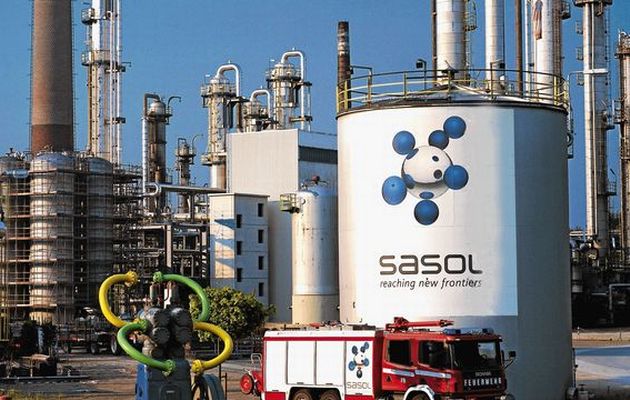
South African energy company Sasol has teamed up with Antarctic expedition operator White Desert to launch a commercial sustainable aviation fuel (SAF) partnership, announced on September 15 at the Africa Green Hydrogen Summit. The companies are positioning the deal as a meaningful step toward building out a domestic supply chain for lower-carbon aviation fuel within South Africa.
The arrangement will see Sasol provide White Desert with its inaugural commercial batch of SAF, intended to power the operator's flights connecting Cape Town with Antarctica. Sasol manufactures the fuel using sustainable bio-based feedstocks at its Natref refinery, which recently earned ISCC+ sustainability certification. This designation enables the site to both produce and distribute sustainable fuel products.
Dr Sarushen Pillay, Sasol's executive vice president for business building, strategy and technology, framed the collaboration as proof that sustainable fuel can move beyond theoretical goals and into commercial use through this partnership with White Desert.
White Desert's founder and chief executive, Patrick Woodhead, described the agreement as a significant achievement, emphasising the value of finally accessing sustainable fuel produced locally in South Africa that delivers genuine reductions in carbon emissions.
Pillay explained that the deal reflects a broader strategic philosophy at Sasol: that shifting the aviation sector toward lower-carbon fuel is best achieved by adapting existing industrial infrastructure rather than building entirely new systems from scratch. He pointed out that South Africa already possesses the necessary fuel infrastructure, technical know-how, and international export relationships to become a genuine participant in the global SAF market. According to Pillay, the current bio-based SAF supply represents an early proof point of this infrastructure-conversion strategy — one that the companies view as a stepping stone toward a longer-term e-fuels economy built around green hydrogen.
Both companies acknowledged that a future transition to green-hydrogen-derived e-fuels remains possible as the underlying technology continues to develop, though neither offered a specific timeline for when that might happen. Additionally, neither Sasol nor White Desert revealed the actual volume of SAF involved in the deal or its financial terms.
What makes this partnership particularly notable is its reliance on existing refining infrastructure. Natref, a refinery operated as a joint venture, was repurposed for sustainable fuel production rather than requiring new dedicated SAF facilities. This approach echoes a strategy several refiners worldwide have adopted to enter the SAF market without committing to massive new capital investments—essentially certifying existing processing units to handle bio-feedstocks alongside their standard crude-oil-based operations.
White Desert runs logistics and expedition flights between Cape Town and Antarctica. This route demands substantial long-haul aviation fuel and has faced increased scrutiny over its environmental impact, given that it serves one of the world's most remote and ecologically sensitive destinations. By securing SAF from a domestic source, the operator sidesteps a logistical challenge it would otherwise encounter in trying to import lower-carbon fuel for these flights.
Neither company has clarified exactly when SAF deliveries under this new partnership will actually begin, nor have they indicated what portion of White Desert's total fuel needs for its Antarctic flights the initial supply volumes are expected to cover.
مقالات ذات صلة
Kuwaiti oilfield comes onstream officially after 1...
22 سبتمبر, 2025 12:56
African Energy Week (AEW) 2025: Unlocking the Pote...
22 سبتمبر, 2025 13:22
South Africa warns illegal car imports threaten ne...
23 سبتمبر, 2025 06:31
South Africa Confronts EU Carbon Border Mechanism...
23 سبتمبر, 2025 12:33
South Africa, China Deepen Investment Ties in Key ...
24 سبتمبر, 2025 07:35
Raysut Cement’s Expansion into Libya and North Afr...
24 سبتمبر, 2025 07:40
Nextchem opens regional office in Abu Dhabi...
24 سبتمبر, 2025 08:10
Ghanaian students win top honours in IAEA’s Female...
24 سبتمبر, 2025 09:32
Key Sectors Linking Mauritania and Gambia...
24 سبتمبر, 2025 09:40