Energy Other

Oil prices rise to $106.1 as focus shifts to Trump-Xi meeting


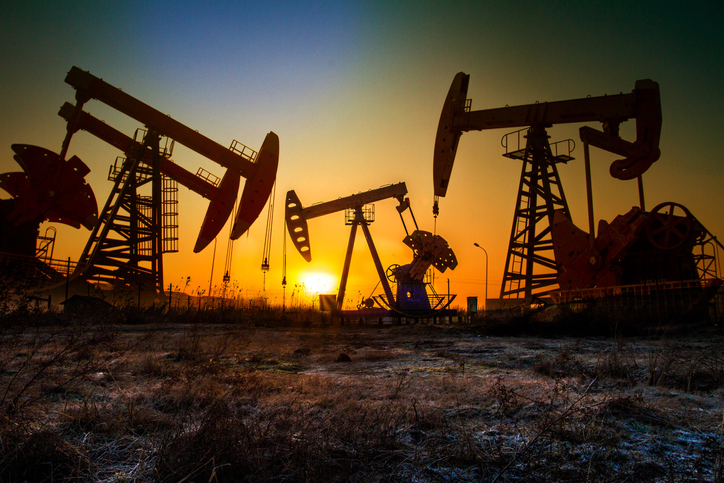
Oil prices climbed on Thursday as markets closely watched the meeting between U.S. President Donald Trump and Chinese President Xi Jinping for any signs of progress on the Iran conflict, which has severely disrupted global oil supplies.
Trump is expected to urge China to press Tehran toward reaching an agreement with Washington to end the war. However, analysts remain skeptical that Xi will be prepared to exert significant pressure on Iran, a long-standing strategic ally of Beijing.
As of 4:05 GMT, Brent crude futures gained 47 cents, or 0.44 percent, to trade at $106.1 a barrel, while U.S. West Texas Intermediate crude futures climbed 60 cents, or 0.59 percent, to $101.6 a barrel.
Investors eye Trump-Xi meeting outcomes
Oil prices declined on Wednesday as investors grew concerned that rising fuel prices could fuel inflation and prompt further U.S. interest rate hikes. Brent crude futures dropped by more than $2 a barrel, while WTI futures fell by over $1.
Meanwhile, Trump was welcomed in Beijing’s Great Hall of the People on Thursday ahead of talks with Chinese President Xi Jinping, with discussions expected to focus on their fragile trade truce, the Iran conflict and U.S. arms sales to Taiwan.
“The U.S. will want China to use its influence with Tehran, especially because China is a major buyer of Iranian oil. China, meanwhile, wants energy security and stable shipping lanes, but it is unlikely to appear as if it is acting under U.S. instruction. That means the most likely outcome is not a dramatic public deal, but a more subtle signal: both sides may agree on the need to avoid further escalation, keep shipping lanes open and support a diplomatic path,” said Charu Chanana, Chief Investment Strategist, Saxo Bank.
“That would still matter for markets. If China is seen as helping to keep oil flows moving, crude prices could lose some of their war premium. If the meeting turns into a blame game over Iran, oil could remain supported and equities may struggle,” she added.
Global oil supply to lag behind demand this year as Hormuz closure persists
The Strait of Hormuz, a critical global energy transit route, has remained largely closed since the war erupted at the end of February. Although Trump has said he does not believe he will need China’s assistance to end the conflict, he is still expected to seek Xi’s help in resolving the war.
Iran, meanwhile, appears to have strengthened its grip over the Strait of Hormuz, striking agreements with Iraq and Pakistan to transport oil and liquefied natural gas from the region.
“The Trump-Xi meeting may not end the Iran war, but it could shape how markets price the war. A constructive outcome would reduce some oil risk premium, support Asia and cyclicals, and help AI supply-chain sentiment. A poor outcome would keep inflation risks elevated and turn the Iran war from a regional energy shock into a broader U.S.-China strategic shock,” added Chanana.
On Wednesday, a Chinese supertanker carrying two million barrels of Iraqi crude passed through the Strait of Hormuz after being stranded in the Gulf for more than two months because of the U.S.-Iran conflict. It marked only the third oil tanker to leave the strait since the war began.
The International Energy Agency said on Wednesday that global oil supply is now expected to lag behind demand this year, as the conflict severely disrupts Middle East production and depletes inventories at a record pace, reversing its earlier forecast of a market surplus.
Related Articles
Kuwaiti oilfield comes onstream officially after 1...
22 Sep, 2025 12:56
African Energy Week (AEW) 2025: Unlocking the Pote...
22 Sep, 2025 13:22
South Africa warns illegal car imports threaten ne...
23 Sep, 2025 06:31
South Africa Confronts EU Carbon Border Mechanism...
23 Sep, 2025 12:33
South Africa, China Deepen Investment Ties in Key ...
24 Sep, 2025 07:35
Raysut Cement’s Expansion into Libya and North Afr...
24 Sep, 2025 07:40
Nextchem opens regional office in Abu Dhabi...
24 Sep, 2025 08:10
Ghanaian students win top honours in IAEA’s Female...
24 Sep, 2025 09:32
Key Sectors Linking Mauritania and Gambia...
24 Sep, 2025 09:40