
أسواق الطاقة

Oil prices rise 0.96 percent to $85.54 as Hormuz supply risks intensify


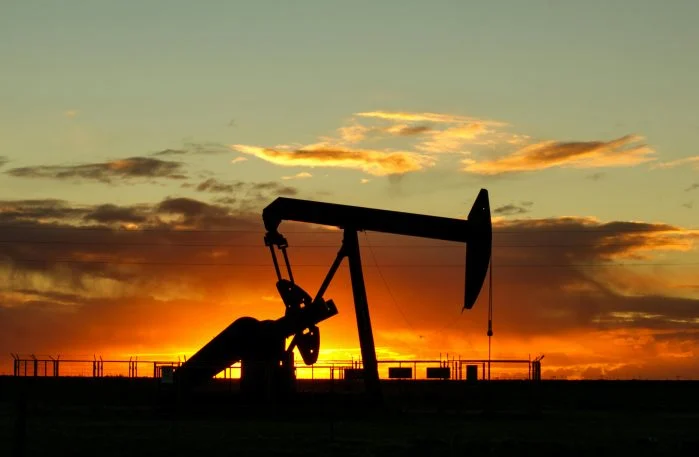
Oil extended its gains on Wednesday after President Donald Trump reimposed a naval blockade on all Iranian ports and Tehran launched strikes on U.S. infrastructure in the region. The renewed confrontation has returned the Strait of Hormuz to the center of the market narrative, reviving concerns about the security of oil and liquefied natural gas supplies from the Gulf.
Brent crude futures climbed 0.96 percent to $85.54 a barrel at 8:30 UAE time. West Texas Intermediate futures gained 0.66 percent to $79.98 a barrel.
The increases followed a strong session on Tuesday, when oil prices closed around 2 percent higher at a one-month peak. Attacks in the region exacerbated an existing supply disruption in the Strait of Hormuz, through which about a fifth of the world’s oil and liquefied natural gas passed before the beginning of the U.S.-Israeli war on Iran.
The price reaction reflects more than immediate concern over military exchanges. Markets are attempting to measure the possibility that a prolonged confrontation could restrict shipping further, delay the recovery of regional production and place physical energy infrastructure at greater risk.
That uncertainty is rebuilding the geopolitical premium in crude prices, with each military announcement carrying potential consequences for vessels, export terminals and energy consumers far beyond the Middle East.
Hormuz risk returns
Early on Wednesday, the United States also began a fresh round of strikes “to continue degrading Iranian capabilities used to attack commercial shipping in the Strait of Hormuz,” the U.S. military said.
Tehran said it had again closed the strait after hostilities between Iran and the United States reignited last week, fraying an already fragile truce reached in June after several months of fighting. The renewed closure claim raises the stakes for a global oil market that had only begun adjusting to the partial restoration of regional flows.
The importance of the waterway is difficult to overstate. The International Energy Agency said nearly 20 million barrels per day of oil were exported through the Strait of Hormuz in 2025, in addition to around 5 million barrels per day of petroleum products.
Although Saudi Arabia and the UAE have pipelines capable of bypassing the strait, the IEA estimates that these alternative routes provide only about 3.5 million to 5.5 million barrels per day of available crude export capacity. This means they can soften a disruption but cannot fully replace the volumes normally transported through the waterway.
The vulnerability is even greater for LNG. More than 110 billion cubic meters passed through the strait in 2025, with no alternative routes capable of bringing those volumes to market, according to the agency.
The latest escalation therefore confronts traders with two connected risks. The first is the immediate loss or delay of physical supplies. The second is the possibility that military action could damage the infrastructure required to produce, store and export energy even after shipping conditions improve.
For a market already shaped by months of regional disruption, the duration of the confrontation may ultimately matter as much as its intensity.
Energy stakes rise
“I’ll save the energy targets for last, but ultimately we’ll hit energy targets,” Trump told Fox News in an interview aired Tuesday night on “Special Report with Bret Baier.”
The remarks sharpened concerns that the confrontation could move beyond military positions and commercial shipping to include energy assets. Any direct attack on production, processing or export infrastructure could deepen supply losses and complicate the eventual normalization of regional oil flows.
Iran’s army said early on Wednesday that it had launched drone attacks against U.S. positions at Jordan’s Azraq base. There was no immediate comment from the Pentagon.
Iran’s Islamic Revolutionary Guard Corps said it had targeted weapons and storage facilities in Bahrain and Kuwait. Reuters could not immediately verify the reports.
The exchange illustrates how quickly the conflict’s geographical and economic reach can expand. With energy facilities, military positions and maritime traffic spread across the region, even an incident that causes limited physical damage can influence freight costs, insurance premiums and decisions by shipowners over whether to enter contested waters.
The International Energy Agency’s July Oil Market Report said global oil supply rebounded by 4.1 million barrels per day to 98.8 million barrels per day in June as renewed flows through the Strait of Hormuz supported a partial recovery in Gulf production. However, world output remained around 9.4 million barrels per day below pre-war levels.
That backdrop helps explain the sensitivity of current prices. The market has regained some supply, but the recovery remains exposed to renewed hostilities and disruptions along the same route that made the rebound possible.
Fragile truce unravels
The flare-up over the last few days has heightened doubts that a memorandum of understanding signed last month will lead to a permanent halt to the war, which has engulfed Iran’s neighbors. What had appeared to be a possible pathway toward greater stability is now being tested by renewed military action and competing efforts to control access to the Strait of Hormuz.
For oil traders, this places diplomacy and physical supply on the same pricing screen. A credible de-escalation could remove part of the risk premium, while further attacks on shipping or energy assets could make higher prices more difficult to reverse.
The deeper market question is no longer whether geopolitical tension can briefly lift oil prices. It is whether recurring interruptions are becoming a structural feature of the global energy outlook. Each new escalation makes supply planning harder for refiners, governments and companies that depend on predictable Gulf exports.
The IEA has described the resumption of transit through the Strait of Hormuz as the single most important step toward restoring stable oil and gas flows and easing pressure on markets and prices. Yet the latest exchange of attacks shows how vulnerable that stability remains.
Oil’s rise to a one-month high therefore carries a broader warning. The market may have buffers, alternative suppliers and some capacity to reroute crude, but there is no complete substitute for the Strait of Hormuz. As long as shipping remains disrupted and energy infrastructure faces the threat of attack, crude prices will continue responding not only to supply and demand, but to every signal of escalation or restraint.
The result is an oil market once again trading on the narrow distance between fragile diplomacy and a much larger supply shock.
مقالات ذات صلة

Oil prices jump over 3 percent to $84.41 as supply...
05 مارس, 2026 07:30
Oil prices fall 1 percent to $84.56 as U.S. grants...
06 مارس, 2026 07:40
Oil prices drop to $86.98 on report of IEA plannin...
11 مارس, 2026 07:16
Oil prices surge back above $100 as Mideast tensio...
12 مارس, 2026 08:07
Oil gains 9 percent this week as prices remain abo...
13 مارس, 2026 07:50
Oil prices surge to $104.87 as Trump seeks naval c...
16 مارس, 2026 07:48
Oil prices recoup losses, surge to $102.85 as supp...
17 مارس, 2026 08:01
Oil prices contract by 2.21 percent to $101.13 fol...
18 مارس, 2026 11:34
Oil prices rise to $107.34 as investors balance ge...
23 مارس, 2026 08:30