Energy Other

Nigeria's Local Crude Supply Falls Short. Dangote Switches Fuel Sales to Dollars


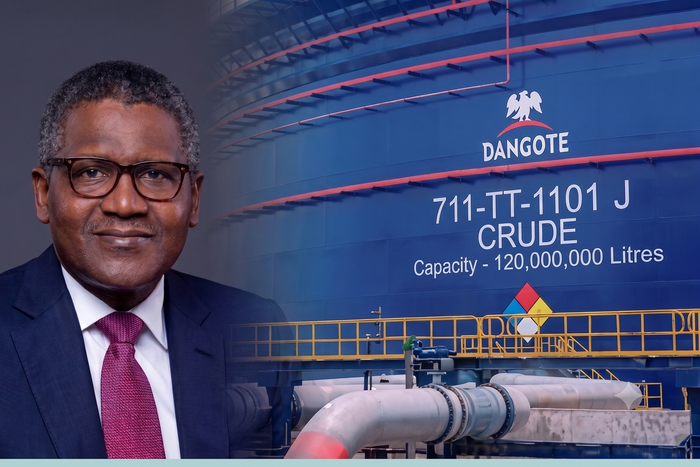
Dangote Refinery has begun pricing gasoline, diesel, and jet fuel sold on Nigeria's domestic market in U.S. dollars, citing persistent shortages of locally supplied crude oil.
The new pricing took effect immediately on July 13 and applies to both refinery gate sales and coastal deliveries. Liquefied petroleum gas (LPG) is not covered by the new policy. Under the revised price list, gasoline is now sold at $0.779 per liter, diesel at $1.087 per liter, and jet fuel at $0.942 per liter.
The decision also marks the end of the pricing model tied to Nigeria's "naira-for-crude" program, launched in October 2024. The initiative allowed domestic refiners to purchase crude oil in the local currency in an effort to reduce demand for U.S. dollars and strengthen the country's refining industry.
Local crude supplies fall short
According to Dangote, the change was driven primarily by growing financial pressure. The refinery had been purchasing part of its crude oil in U.S. dollars while selling refined products in naira. Edwin Devakumar, vice president of Dangote Group, said the company had absorbed the currency mismatch, but the limited volumes supplied under the "naira-for-crude" program made the model increasingly difficult to sustain.
The core issue remains crude supply. Dangote says it needs between 13 and 15 crude cargoes each month to operate efficiently. Deliveries from the state-owned Nigerian National Petroleum Company (NNPC) remain below that level, even after allocations increased from about five cargoes to seven in May.
The refinery has therefore been forced to purchase additional crude from international suppliers in U.S. dollars, exposing it to both exchange-rate movements and global oil price fluctuations.
That has reduced the effectiveness of the government's plan to promote the use of the naira throughout Nigeria's oil industry.
Refining capacity alone is not enough
Beyond Dangote, the situation highlights a broader weakness in Nigeria's energy sector: expanding refining capacity does not guarantee energy security if crude supplies remain constrained.
With a processing capacity of 650,000 barrels per day, the Lekki refinery has become a major supplier of transportation fuels in Nigeria. It has helped increase domestic production and steadily reduce the country's dependence on fuel imports.
According to the Nigerian Midstream and Downstream Petroleum Regulatory Authority (NMDPRA), local refineries met more than 44% of Nigeria's gasoline demand in September 2025, up from 17% a year earlier.
That progress, however, depends on reliable crude supplies. Central Bank of Nigeria data show that Dangote imported about $3.74 billion worth of foreign crude oil in 2025. For the Nigerian government, the issue extends beyond the refinery itself.
The "naira-for-crude" program was designed to create a virtuous cycle by supplying domestic refiners with locally produced crude, reducing pressure on foreign exchange reserves, and strengthening fuel security.
Dangote's decision now raises questions about whether the program can fully deliver those objectives.
Implications for the domestic market
The shift to dollar pricing could reshape Nigeria's downstream fuel market. Fuel marketers purchasing from Dangote will have to factor exchange-rate risk more directly into their costs, potentially making domestic fuel prices more sensitive to movements in both the naira and global crude prices.
The final prices paid by consumers will still depend on exchange rates, transportation costs, commercial margins, and regulatory charges.
For Dangote, pricing fuel in dollars is primarily intended to align its sales currency with the currency used to purchase much of its crude. But the move could also increase demand for U.S. dollars in the domestic market and make fuel prices more vulnerable to exchange-rate volatility.
The decision underscores a broader reality: Nigeria's drive toward energy self-sufficiency depends not only on expanding refining capacity but also on ensuring a stable supply of locally produced crude.
Related Articles

South African rand falls to 3-month low as soaring...
09 Mar, 2026 08:35
NamPower warns N$700 million in unpaid bills threa...
17 Mar, 2026 08:20
Middle East oil becomes most expensive in the worl...
17 Mar, 2026 08:43
Libya’s NOC launches Faragh-Brega pipeline project...
17 Mar, 2026 09:32
TotalEnergies’ global output down 15% amid Middle ...
17 Mar, 2026 09:39
Why Ethiopia’s Gas-to-Fertilizer Bet Matters for E...
19 Mar, 2026 12:58
Alake Advocates Regional Hubs to Power Africa’s Mi...
23 Mar, 2026 10:09
NTPC, Africa50 Discuss Joint Power Projects and En...
23 Mar, 2026 10:24
India and Africa Advance Strategic Energy Partners...
23 Mar, 2026 10:29