أسواق الطاقة

Iran's Pezeshkian defies pressure at UN as Qatar-mediated talks continue


By: OrePulse
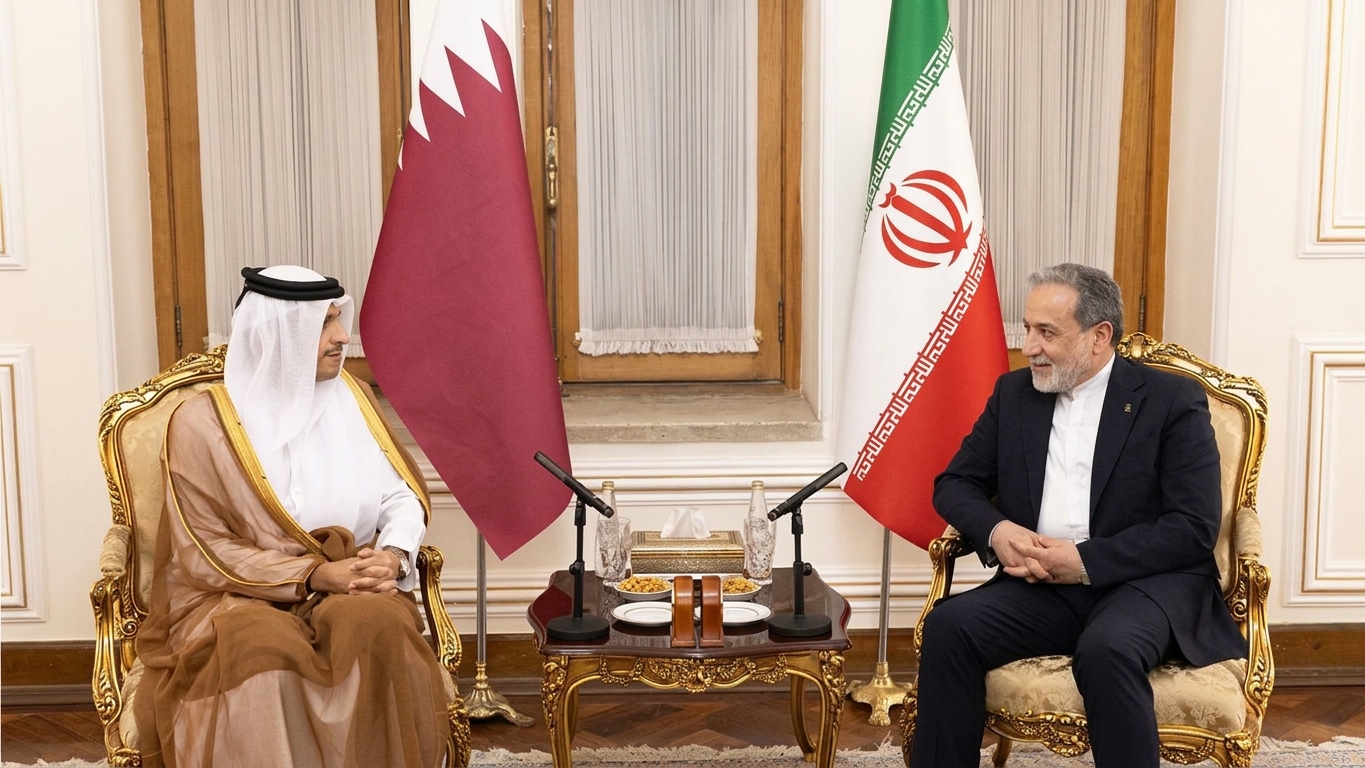
Iranian President Masoud Pezeshkian told the United Nations General Assembly on September 23 that Iran would not back down under military or economic pressure, delivering a defiant address that came even as U.S. and Iranian officials held hours of Qatar-mediated talks on the sidelines of the same gathering.
"We will never bow our head or bend at the knee," Pezeshkian said, adding "we're not afraid of fighting, of war." He described Iran's stance as fundamentally defensive, saying the country is "ready for dialogue and diplomacy and negotiations without accepting the language of force."
On the nuclear question, Pezeshkian said Iran's atomic program remains civilian in nature and argued Tehran would not accept technological limits on it while Israel continues to possess nuclear weapons.
The speech came the same day U.S. and Iranian officials spent roughly two hours in Qatar-mediated talks at the UN. Iran laid out conditions for de-escalation, including lifting U.S. naval blockades and sanctions, ending the war, releasing frozen Iranian assets, and accepting shipping routes through the Gulf determined jointly by Iran and Oman.
U.S. Secretary of State Marco Rubio pushed back on the nuclear issue directly, saying "Iran can never have a nuclear weapon." He warned that continued Iranian sponsorship of regional proxy groups and pursuit of nuclear capability could prompt further U.S. sanctions or military options.
The exchange unfolded against the backdrop of a fragile pause in the broader conflict involving the United States, Israel and Iran, which followed several years of confrontation between Iran-aligned proxy groups and Israel. Both the pause and the Qatar-mediated contacts represent the most direct U.S.-Iran engagement since fighting between the two sides escalated earlier this year.
Markets tracking the standoff have remained highly sensitive to any signal on whether the two sides are moving toward or away from a deal, given the direct link between the conflict and continued restrictions on shipping through the Strait of Hormuz, one of the world's most important oil and gas chokepoints. A defiant public posture from Iran's president, paired with a similarly uncompromising response from Washington on the nuclear question, does little to resolve the uncertainty hanging over Gulf shipping routes and crude supply even as direct diplomatic contact between the two governments continues.
Neither side signaled a breakthrough from the Qatar-mediated talks. Iran's stated conditions for de-escalation remain far from what Washington has previously indicated it would accept, suggesting the standoff, and the market uncertainty tied to it, is likely to persist in the near term.
The parallel tracks on display in New York, a defiant floor speech alongside quiet, hours-long mediated contact, illustrate how both governments are continuing to pursue public posturing and private negotiation at the same time, leaving outside observers, including energy traders, to weigh which track is likely to prove more decisive in the weeks ahead.
مقالات ذات صلة

Oil prices jump over 3 percent to $84.41 as supply...
05 مارس, 2026 07:30
Oil prices fall 1 percent to $84.56 as U.S. grants...
06 مارس, 2026 07:40
Oil prices drop to $86.98 on report of IEA plannin...
11 مارس, 2026 07:16
Oil prices surge back above $100 as Mideast tensio...
12 مارس, 2026 08:07
Oil gains 9 percent this week as prices remain abo...
13 مارس, 2026 07:50
Oil prices surge to $104.87 as Trump seeks naval c...
16 مارس, 2026 07:48
Oil prices recoup losses, surge to $102.85 as supp...
17 مارس, 2026 08:01
Oil prices contract by 2.21 percent to $101.13 fol...
18 مارس, 2026 11:34
Oil prices rise to $107.34 as investors balance ge...
23 مارس, 2026 08:30