Energy Markets

Oil gains 9 percent this week as prices remain above $100 despite Russia sanctions waiver


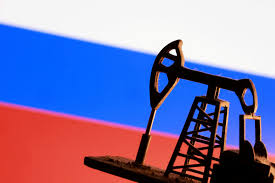
Oil prices were on track for weekly gains on Friday, even as the United States attempted to ease supply worries by granting a 30-day license allowing countries to purchase Russian oil and petroleum products currently stranded at sea.
As of 5:40 GMT, Brent crude futures edged down 30 cents, or 0.30 percent, to $100.02 per barrel, putting the benchmark on course for roughly a 9 percent rise for the week. Meanwhile, U.S. West Texas Intermediate (WTI) crude for April delivery slipped 57 cents, or 0.60 percent, to $95.16 a barrel, but was still set to record a weekly gain of about 7 percent.
Oil prices jump despite measures to ease supply shortages
The license to buy Russian oil was issued as part of what U.S. Treasury Secretary Scott Bessent described as an effort to stabilize global energy markets that have been unsettled by the U.S.-Israeli war on Iran. However, analysts said the measure has done little to ease broader supply shortages.
The announcement regarding Russian oil came a day after the U.S. Energy Department said Washington would release 172 million barrels of crude from its Strategic Petroleum Reserve to help rein in surging oil prices.
The move is being coordinated with the International Energy Agency, which has agreed to release a record 400 million barrels from strategic stockpiles, including the U.S. contribution.
Earlier this week, the United States issued limited waivers allowing certain purchases of Russian oil, including permitting India, the world’s third-largest oil importer, to ship crude from Moscow.
The move came as the conflict involving Iran showed little sign of easing, with Washington also pledging to release substantial volumes of crude from its Strategic Petroleum Reserve in an effort to cushion global markets from potential supply disruptions.
Inflation fears rise amid energy surge
Oil prices jumped more than 9 percent on Thursday, reaching their highest levels since August 2022.
Iran’s new supreme leader, Mojtaba Khamenei, said the country would continue fighting and maintain the closure of the Strait of Hormuz as leverage against the United States and Israel.
Iraqi security officials said two fuel tankers in Iraqi waters were struck by Iranian boats carrying explosives on Thursday. An Iraqi official also told state media that operations at the country’s oil ports have been completely halted.
Meanwhile, U.S. Treasury Secretary Scott Bessent said that the U.S. Navy, potentially alongside an international coalition, would escort vessels through the Strait of Hormuz when military conditions allow.
The closure of the Strait of Hormuz and the attacks on oil facilities have heightened concerns about prolonged disruptions to global oil supplies. The strait is particularly critical, as roughly 20 percent of the world’s oil consumption passes through this narrow shipping route.
Markets remain wary of a sustained rise in oil prices, amid fears that elevated energy costs could fuel inflation and prompt major central banks to adopt a more hawkish monetary policy stance.
Related Articles

Renewable Energy Storage Market 2025 Forecast - La...
21 Oct, 2025 07:12
Solar power mistake in South Africa costs homeowne...
21 Oct, 2025 07:54
An Investor’s Guide to Africa...
21 Oct, 2025 09:47
Doha Strike Shakes Global Energy Assumptions...
22 Oct, 2025 13:01
GCC and Russia Deepening ties in a multipolar Midd...
23 Oct, 2025 11:59
Tesla prepares first steps into Africa with Morocc...
23 Oct, 2025 13:29
Off-Grid Solar Energy Market to grow at 17.42 GW b...
23 Oct, 2025 13:39
Petroleum Institute Urges Early Take Off of Africa...
23 Oct, 2025 13:45
Algeria inks $5.4 billion energy pact with Saudi M...
23 Oct, 2025 14:03