Energy Other

Ethiopia’s green energy drive gets EU, UK boost


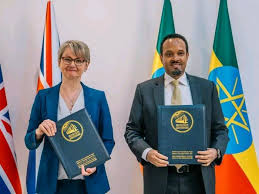
The European Union and the United Kingdom (UK) are making investments in Ethiopia’s energy sector billed to increase the country’s electricity connectivity and ease transportation costs.
The UK has announced a $5 million package to support Ethiopia’s electric mobility drive, marking a major boost for Addis Ababa’s push for electric mobility to cut fuel costs.
The British International Investment (BII) said this week it has committed $5 million in debt financing to Dodai, an Ethiopia based electric mobility company, as part of the company’s $13 million Series A round, supporting the expansion of clean, affordable urban mobility in Ethiopia.
Dodai assembles and deploys electric motorbikes and operates battery swapping infrastructure.“I am delighted that the UK – through British International Investment – is supporting the acceleration of the rollout of electric motorbikes and battery swapping infrastructure here in Ethiopia. This is an example of the UK’s development partnership with Ethiopia in action, supporting the creation of well-paying jobs, expanding access to affordable transportation, and helping to unleash the huge potential here in Ethiopia,” said Darren Welch, UK’s Ambassador to Ethiopia.“As the world looks forward to COP32 being hosted in Ethiopia, the UK is delighted to be supporting Ethiopia’s climate leadership, including through supporting the expansion of clean, affordable transport both here in Addis Ababa and across the continent.”The announcement comes on the heels of EU’s $164 million budget support programme meant to support the country’s rural electrification, renewable energy sector, digital economy and agribusiness as well as support healthcare systems.
The announcement came at the Ethiopia Business Forum earlier in April, where Addis Ababa marketed the country to some 500 European investors.“This package will help Ethiopia build the digital backbone it needs for the next generation,” said Jozef Síkela, Commissioner for International Partnerships. “Two-thirds of Ethiopia’s population is under 30, and digital connectivity is key to unlocking their potential.”Ethiopia is aggressively transitioning to electric mobility to cut high fuel import costs, characterised by the 2024 ban on non-electric car imports, aimed at achieving 80 percent vehicle electrification by 2030.
Under an additional programme called RISED (Resilience and Inclusive Sustainable Economic Development), a €269 million ($15 million), the EU and its members say they will fund access to electricity for 4 million people in Ethiopia, lay additional 2,500km of fibre optic cable to improve digital connectivity and rehabilitate the Ashegoda Wind Farm in Tigray, reducing power outages by 50 percent and saving 16 GWh annually.
Ethiopia recently started electricity production from the Grand Ethiopia Renaissance Dam (Gerd) on the Blue Nile, which is expected add about 6GW when in full production. But the country needs investments to evacuate the power to homes and businesses.
Ethiopia’s investments in renewable energy has focused on hydropower, wind and solar. But it was also the first country in the Horn to ban importation of fossil-fuel cars, raising demand for electric charging ports.
Leveraging 90 percent renewable energy from the Gerd, the country is expanding charging infrastructure, promoting local electric vehicle (EV) assembly, and investing in electric motorbikes through companies such as Dodai.“Ethiopia is emerging as one of Africa’s most compelling frontier markets for the clean mobility transition, where the right capital can unlock outsized impact and long-term value,” said Leslie Maasdorp, BII CEO.
Related Articles
Kuwaiti oilfield comes onstream officially after 1...
22 Sep, 2025 12:56
African Energy Week (AEW) 2025: Unlocking the Pote...
22 Sep, 2025 13:22
South Africa warns illegal car imports threaten ne...
23 Sep, 2025 06:31
South Africa Confronts EU Carbon Border Mechanism...
23 Sep, 2025 12:33
South Africa, China Deepen Investment Ties in Key ...
24 Sep, 2025 07:35
Raysut Cement’s Expansion into Libya and North Afr...
24 Sep, 2025 07:40
Nextchem opens regional office in Abu Dhabi...
24 Sep, 2025 08:10
Ghanaian students win top honours in IAEA’s Female...
24 Sep, 2025 09:32
Key Sectors Linking Mauritania and Gambia...
24 Sep, 2025 09:40