Energy Other

The Strait of Hormuz may never truly reopen


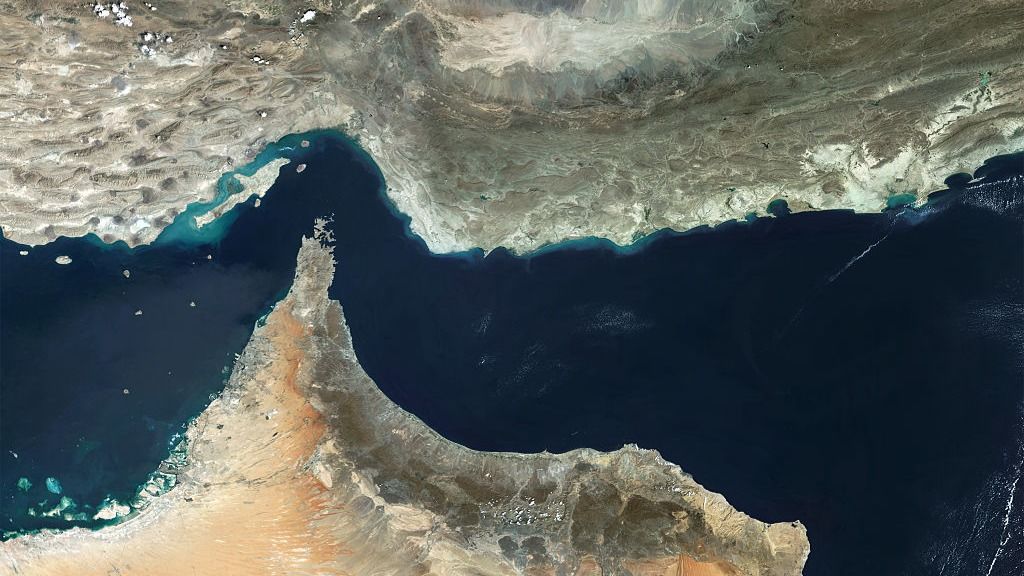
A bureaucratic announcement from Tehran yesterday did as much to concentrate the minds of Gulf energy policymakers as any drone attack.
Iran formally launched the Persian Gulf Strait Authority – a body with its own domain name, a contact email and a transit-permit regime that converts the Strait of Hormuz from an international waterway into a sovereign toll booth.
The legislation underpinning the PGSA bans Israeli vessels under any circumstances, requires Supreme National Security Council approval for ships from “hostile” nations and denies passage to vessels from countries deemed to have “damaged Iran” until compensation is paid.
Tehran is using its de facto control of the strait to assert sovereignty over international waterways – a move that contravenes international maritime law and puts permanent pressure on shipping companies caught between Iranian blockade and US counter-blockade.
The PGSA signals that Iran is not planning to hand back control of the strait any time soon, if at all.
“The Iranians clearly view control over the strait as a key – indeed perhaps their only – source of leverage over the US and the rest of the world,” said consultancy Capital Economics.
This reinforces what a growing body of energy analysis has been moving towards for weeks: that the Strait of Hormuz will take longer to reopen than anticipated and may never do so in the form the world knew before February 28.
The Federal Reserve Bank of Dallas has modelled three scenarios: a one-quarter closure pushing WTI crude to $110 per barrel; two quarters driving it to $132 and three quarters sending it to $167. The third scenario is now well within range.
Ratings agency Moody’s has abandoned its earlier “weeks not months” baseline. “We now have a single, central scenario which assumes a prolonged and significant disruption to the Strait of Hormuz through autumn,” it said, adding that “some structural shifts in supply chain design, risk premiums and defence spending will probably be permanent”.
If the PGSA regime does prove permanent, what are the realistic options for how the strait is managed in future? Four present themselves – none of them comfortable for the GCC.
Unilateral Iranian control, as the PGSA implies, is out of the question for the Gulf oil producers, who regard it as politically selective access in the interests of Tehran and not of its neighbours in the Arabian Gulf.
An Iran-Oman co-management arrangement, suggested early on in the conflict, is theoretically possible but would require GCC acceptance that Abu Dhabi and Riyadh are unlikely to extend.
A US-Iran condominium – joint oversight as part of a wider nuclear and conflict settlement – is a framework Donald Trump has dallied with, but it would be viewed with deep suspicion in the Gulf.
A broader Gulf arrangement including Iran and the GCC states would seem to be the most logical long-term solution, but it requires a level of trust that does not exist now and may not exist for years.
Which is why Gulf policymakers are simultaneously, and urgently, mapping the alternatives. Saudi Arabia’s East-West pipeline is pumping at full capacity, with crude exports via Yanbu of about 5 million barrels per day; the UAE’s Habshan-Fujairah pipeline adds another 1.5 million to 1.8 million bpd.
Together they cover less than a third of pre-war Hormuz throughput – and both have been targeted by Iranian drones.
Kuwait, Bahrain and Qatar have no alternatives at all. Qatar’s exposure is existential: every cargo of LNG from Ras Laffan passes through the Strait of Hormuz, the only maritime exit from the Arabian Gulf, with no pipeline bypass in existence or under construction.
Longer term, analysts point to revival of the 45-year-old Iraq-Saudi pipeline, the Kirkuk-Ceyhan route to Turkey’s Mediterranean coast, a second UAE pipeline to Fujairah and rail corridors connecting to Oman’s Sohar port outside Hormuz.
Moody’s warns that even a ceasefire does not equal normalisation: shipping backlogs, tanker repositioning and insurance market recovery would take months.
The International Energy Agency’s Fatih Birol has gone further, arguing that energy infrastructure confidence accumulates over decades but can be destroyed by a single sustained disruption – and the reputational damage to Hormuz as a reliable corridor is already irreversible.
The infrastructure decisions being taken across the Gulf right now – pipelines, port capacity, overseas LNG stakes, rail links – are being made by people who have quietly stopped assuming the Strait of Hormuz will reopen in any form they would recognise.
The thinking behind the Persian Gulf Strait Authority tells them they are right to think that way.
Related Articles
Kuwaiti oilfield comes onstream officially after 1...
22 Sep, 2025 12:56
African Energy Week (AEW) 2025: Unlocking the Pote...
22 Sep, 2025 13:22
South Africa warns illegal car imports threaten ne...
23 Sep, 2025 06:31
South Africa Confronts EU Carbon Border Mechanism...
23 Sep, 2025 12:33
South Africa, China Deepen Investment Ties in Key ...
24 Sep, 2025 07:35
Raysut Cement’s Expansion into Libya and North Afr...
24 Sep, 2025 07:40
Nextchem opens regional office in Abu Dhabi...
24 Sep, 2025 08:10
Ghanaian students win top honours in IAEA’s Female...
24 Sep, 2025 09:32
Key Sectors Linking Mauritania and Gambia...
24 Sep, 2025 09:40