المعادن الثمينة

Gold surges while diamonds reset: A volatile start to 2026 for precious commodities


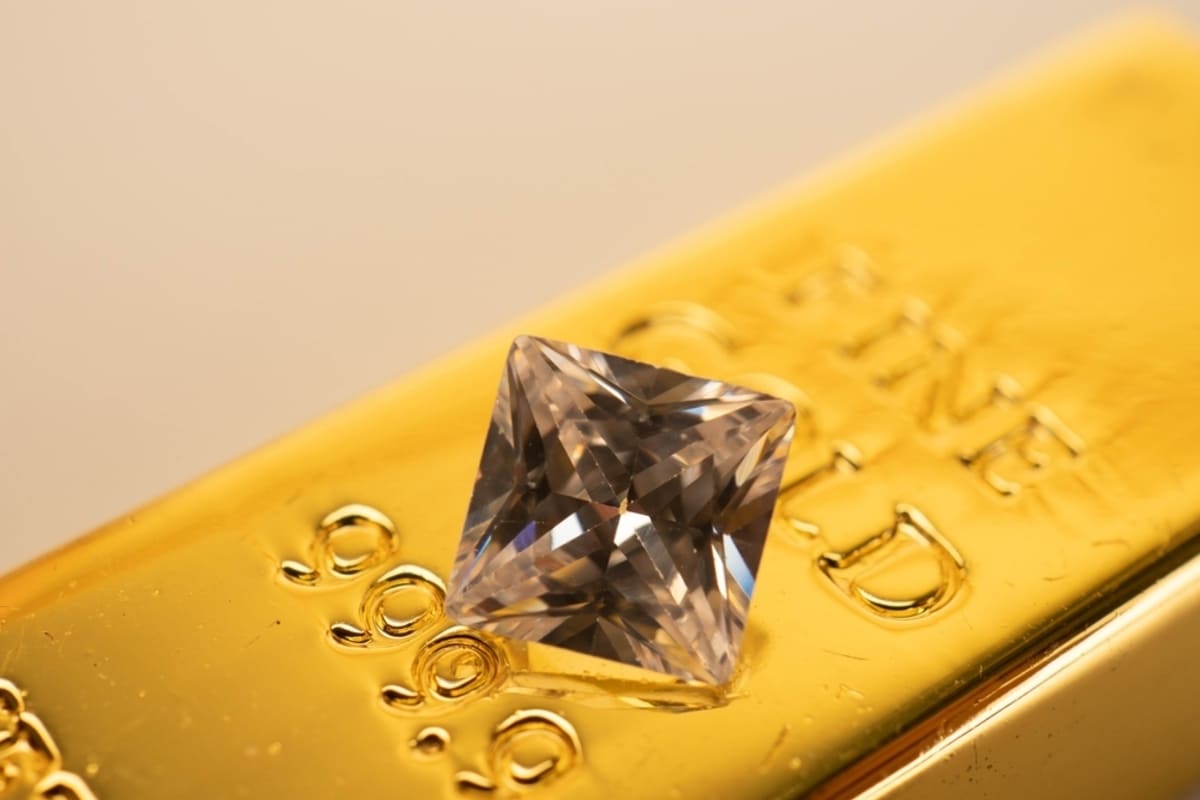
The first quarter of 2026 has offered a sharp illustration of how differently precious commodities can behave, even within the same market cycle. Gold and silver have surged in response to geopolitical shock and financial uncertainty, while the diamond industry has been navigating a quieter but equally significant structural adjustment. Beneath both stories lies a third: the fundamental transformation of silver’s role in the global economy, one that the raw supply and demand numbers make difficult to ignore, according to an analysis conducted by the Precious Metals and Diamonds Desk at CBD.
Gold: from historic high to new record
When analysts described gold prices above $2,650 per ounce as a historic high in late 2024, few anticipated that the metal would nearly double that level within twelve months. By February 2026, gold was trading at approximately $4,880 per ounce. By 2 March, following the outbreak of the Iran–U.S.–Israel conflict, COMEX futures reached around $5,322 per ounce and London spot prices climbed to approximately $5,340, among the highest levels ever recorded.
Investors moved rapidly into safe-haven assets as concerns grew around potential oil supply disruptions through the Strait of Hormuz and wider financial instability. In an unusual development, both gold and the U.S. dollar rose simultaneously in the opening days of the conflict, a departure from their traditional inverse relationship and a measure of how acute the demand for safety had become.
The rally partially reversed by 3 March as profit-taking and a stronger dollar pulled prices back to approximately $5,090 per ounce on COMEX. Analysts have characterized this as a tactical correction rather than a trend reversal. The longer-term picture supports that view: after recording zero net inflows in 2024, gold exchange-traded funds attracted 801 tonnes of inflows in 2025, representing 16 percent of total global gold demand. Central bank accumulation, particularly among emerging market institutions diversifying away from the U.S. dollar, has added further structural support throughout the period.
Silver: two stories in one metal
Silver tracked gold’s trajectory through February and March, rising from around $74.5 per ounce on 17 February to nearly $95.8 per ounce before retreating to approximately $82.5 per ounce by early March. The movements were sharper in both directions than gold, a characteristic feature of silver’s dual identity as both a precious metal and an industrial commodity.
Demand for silver from photovoltaic solar manufacturing rose from 81.6 million ounces in 2016 to an estimated 195.7 million ounces in 2025, a growth of approximately 140 percent in less than a decade. Combined with expanding consumption in electronics, electric vehicles and energy storage systems, industrial applications now represent the dominant share of total silver demand.
The consequence is visible in the supply and demand data. The silver market moved into a structural deficit in 2021 and has remained there since, recording its largest shortfall in 2022 at approximately 249.6 million ounces. By 2025, the deficit was estimated at around 117.6 million ounces, significant despite narrowing, and a persistent signal that supply is not keeping pace with demand growth. Total silver supply reached approximately 1,030.6 million ounces in 2025, against demand of around 1,148 million ounces.
For investors, this supply-demand imbalance provides a structural underpinning to silver’s price outlook that is distinct from gold, and arguably more durable than short-term geopolitical sentiment alone.
Diamonds: cautious stabilization after a difficult reset
Following significant price corrections across 2024 and into 2025, the diamond industry entered 2026 with cautious stabilization as major mining companies reduced output in response to lower prices and retailers started to replenish inventories.
India continues to anchor the supply chain as the world’s primary centre for cutting and polishing, while also representing a steadily growing consumer market in its own right. China’s luxury market, which had been a key driver of demand in prior years, remained under pressure from domestic economic conditions.
The clearest reflection of the industry’s difficult recent period is the trajectory of De Beers. The company’s book value fell from $9.2 billion in December 2022 to $2.3 billion by December 2025, a decline of 75 percent in three years. The company reported a loss of approximately $511 million in 2025, driven by weaker rough diamond prices, persistent softness in demand for smaller and lower-quality goods, and a cost base calibrated for a more profitable business environment.
The write-downs also carry a strategic dimension. Parent company Anglo Teck Plc is widely expected to divest or demerge De Beers, and reducing book value reduces the friction involved in any transaction. Botswana, Angola and Namibia have each expressed interest in acquiring equity stakes, with the Government of Botswana already holding 15 percent.
Laboratory-grown diamonds and the consumer shift
Compounding the pressure on natural diamond producers is the accelerating adoption of laboratory-grown alternatives. Synthetic stones now account for 61 percent of engagement-ring centre stones sold in the United States, a figure that illustrates both the pace of consumer preference change and the scale of competitive disruption facing the natural diamond sector.
Not all signals from the producing side are negative. Angola’s diamond revenue rose 21 percent in 2025 to $1.8 billion, as the government chose to sell stockpiled production from the Luele and Catoca mines rather than wait for a market recovery. De Beers also raised prices for five-carat and larger rough stones at its February sight, reflecting genuine shortages at the top of the size range and solid U.S. demand for larger polished stones, a reminder that distinct segments of the diamond market continue to perform.
Different markets, different trajectories
What the first quarter of 2026 makes clear is that gold, silver and diamonds are each responding to their own distinct set of forces. Gold is being shaped by geopolitical risk and institutional allocation. Silver is being driven increasingly by the structural demands of the global energy transition, with supply deficits reinforcing the longer-term price case. Diamonds are adapting to changed consumer behavior, new competitive realities and a supply chain seeking its equilibrium after several years of disruption.
مقالات ذات صلة

China’s ‘encouraging’ hydrogen progress witnessed ...
03 مارس, 2026 07:55
Lucara posts lower 2025 revenue, says additional f...
04 مارس, 2026 07:48
Gold bulls say broader rally is intact despite inv...
04 مارس, 2026 08:00
WorldVest Launches Gold Finance Africa, Building a...
04 مارس, 2026 10:44
Gold and silver rallies likely on pause despite ne...
04 مارس, 2026 11:49
Gold prices climb over 1 percent to $5,164 as Midd...
04 مارس, 2026 11:59
‘Extremely robust’ platinum investment demand expe...
04 مارس, 2026 13:08
Trigon Metals Launches Silver Exploration Drive in...
05 مارس, 2026 08:00
The Ekapa Mine liquidation – A tragedy compounded...
05 مارس, 2026 08:05