Metal Markets

Gold prices rise 0.2 percent to $4,315 as U.S.-Iran peace agreement keeps markets on edge


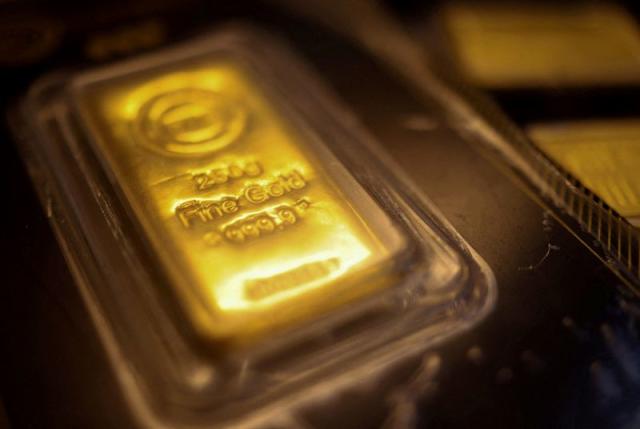
Gold prices were largely steady on Tuesday after climbing to a more than one-week high in the previous session, as investors paused to assess the implications of a preliminary U.S.-Iran peace agreement and awaited further details about what could become a broader geopolitical breakthrough.
Spot gold was up 0.2 percent at $4,315.87 per ounce, after surging as much as 3.6 percent on Monday to reach its highest level since June 5. U.S. gold futures for August delivery were down 0.3 percent at $4,337.10.
The precious metal’s resilience highlights the delicate balance currently shaping financial markets. On one hand, hopes for a reduction in geopolitical tensions could lessen demand for traditional safe-haven assets. On the other, uncertainty surrounding the details of the agreement and the broader economic outlook continues to support investor interest in gold.
In the UAE, gold rates increased, with 24-carat gold at AED521.25 and 22-carat gold at AED482.50.
In addition, 21-carat gold was priced at AED462.75, while 18-carat gold stood at AED396.75.
Meanwhile, 14-carat gold was trading at AED309.25.
The recent rise in bullion prices reflects how quickly investor sentiment can shift when major geopolitical developments emerge. While the prospect of peace has improved risk appetite in some corners of the market, many investors remain cautious until more concrete details become available.
Markets assess risks
U.S. President Donald Trump said on Monday that a preliminary agreement to end the war in the Gulf has been signed by the U.S. and Iran, though details have yet to be made public and both countries have indicated that a permanent truce still needs to be negotiated.
For financial markets, the announcement marked an important turning point, but not necessarily the end of uncertainty. Investors continue to evaluate whether the agreement can evolve into a lasting settlement and what it could mean for global trade, energy markets, and broader economic stability.
The U.S. dollar held near 10-day lows ahead of the Bank of Japan’s interest rate decision, adding another layer of support for gold. A weaker dollar typically makes bullion more attractive to holders of other currencies, helping sustain demand even when risk sentiment improves.
Market participants are also closely watching the Federal Reserve policy decision and remarks, the first under Chair Kevin Warsh, on Wednesday, with rates widely expected to remain unchanged.
Traders have scaled back expectations for a U.S. rate hike in December to 57 percent after the peace deal, down from about 70 percent last week, according to the CME FedWatch tool. Gold loses appeal in a high-interest-rate environment because it is a non-yielding asset, making interest-rate expectations a key driver of price movements.
David Kohl, Chief Economist, Julius Baer, remarked, “Kevin Warsh’s expected Fed leadership shift is likely to reshape communication more than policy, with reduced forward guidance. A stronger US labour market and easing energy pressures frame the outlook, while projections might signal no room for rate cuts. Inflation forecasts will be key to future hikes, contrasting with the ECB and BoJ policy paths.”
Bullish forecast ahead
Adding to the bullish outlook, Citi raised its 0–3 month gold price forecast by $500 to $4,500 per ounce, underscoring continued confidence in the metal despite shifting geopolitical conditions.
Elsewhere in the precious metals market, spot silver fell 0.58 percent to $69.73 per ounce, platinum lost 0.72 percent to $1,761.50, and palladium was down 0.23 percent to $1,317.00.
As investors navigate a mix of geopolitical developments, central bank decisions, currency movements, and evolving interest-rate expectations, gold remains at the center of market attention. Whether the recent rally extends further may depend on how the U.S.-Iran negotiations progress and what signals policymakers deliver in the days ahead.
Related Articles

Saudi Arabia champions global partnerships to powe...
21 Oct, 2025 06:51
Can Turkey Become a Rare Earth Element Power?...
23 Oct, 2025 13:24
Orion Minerals Set to Develop Secure, Responsible,...
23 Oct, 2025 14:12
Investing in Platinum Stocks...
24 Oct, 2025 06:56
Copper And Aluminum Prices Climb As Supply Worries...
24 Oct, 2025 07:09
Dubai 24-carat gold prices dip AED3.75 as global r...
24 Oct, 2025 12:06
Bauxite sales up but tariffs on Chinese metal ship...
27 Oct, 2025 13:15
Angola bids for majority stake in De Beers, source...
28 Oct, 2025 07:02
Dubai 24-carat gold price today drops AED479; glob...
28 Oct, 2025 08:15