Metal Markets

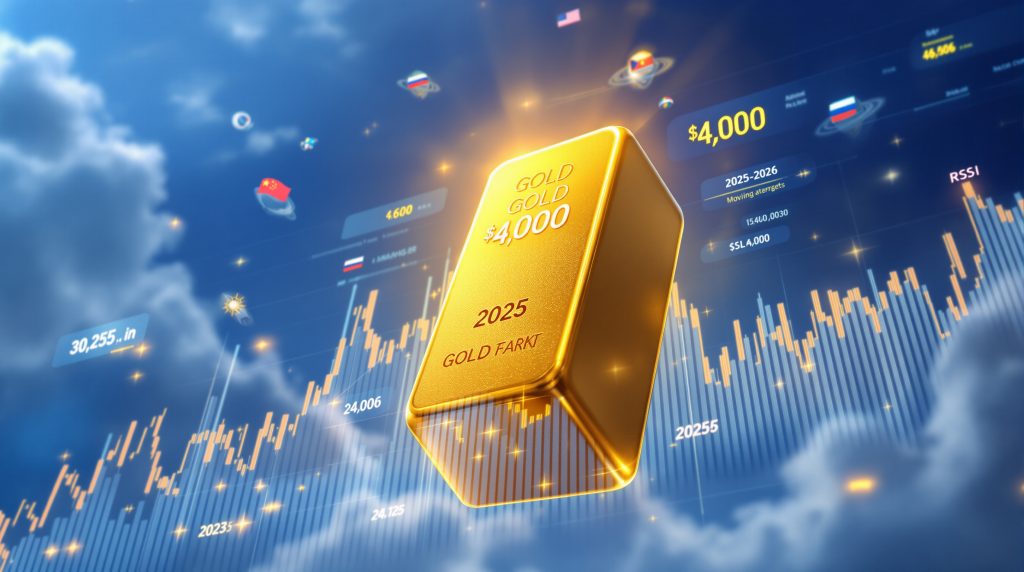
Gold falls 0.81 percent to $4,041 as dollar strengthens ahead of Fed decision


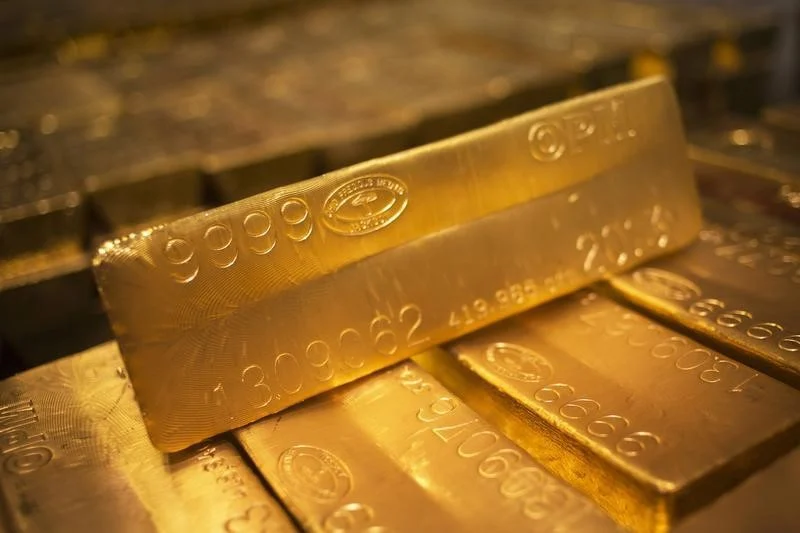
Gold prices moved lower on Tuesday as renewed strength in the U.S. dollar erased part of the previous session’s advance and investors avoided taking major positions before the Federal Reserve’s interest rate decision.
Spot gold fell 0.81 percent to $4,041.99 per ounce by 9:15 UAE time after gaining as much as 1 percent on Monday. U.S. gold futures for August delivery declined 0.8.4 percent to $4,042.95 per ounce.
The decline reflected a shift from Monday’s more supportive environment, when falling oil prices and a softer dollar had eased inflation concerns and strengthened demand for the non-yielding metal.
Retail gold prices also declined in the UAE on Tuesday,with 24-carat gold falling AED3.50 from Monday to AED487.50 per gram.
The price of 22-carat gold decreased AED3.25 to AED451.50 per gram, while 21-carat gold also lost AED3.25 to AED432.75.
Meanwhile, 18-carat gold declined AED2.75 to AED371 per gram, and 14-carat gold fell AED2.25 to AED289.25.
The UAE prices reflected the decline in international bullion during early trading. Domestic retail rates can continue changing throughout the day as global spot prices and currency-market conditions move.
The dollar remained close to a one-month high on Tuesday. A stronger U.S. currency makes dollar-denominated bullion more expensive for investors holding other currencies, potentially weakening international demand.
Gold’s movements remained relatively contained despite changing expectations surrounding monetary policy and the conflict between the United States and Iran. Traders were reluctant to push prices decisively in either direction without clearer guidance from the Fed.
Fed signals awaited
Ilya Spivak, head of global macro at financial content network Tastylive, said gold continued moving within a relatively narrow range of $3,950 to $4,200 per ounce as the market waited for signals from the Federal Reserve.
The Federal Open Market Committee began its two-day policy meeting on Tuesday and will announce its decision on Wednesday. Market pricing indicated a 62 percent probability that officials would leave interest rates unchanged and a 38 percent chance of an increase of at least 25 basis points.
The likelihood of a July rate increase had risen significantly from 16 percent one week earlier. Markets were also pricing in an 81 percent probability that the Federal Reserve would raise borrowing costs at its September meeting.
Higher interest rates generally weigh on gold because they increase the returns available from interest-bearing assets such as government bonds while bullion provides no regular yield.
The Federal Reserve’s official schedule shows that the policy statement will be released at 2 p.m. Eastern time on Wednesday, followed by the chairman’s press conference at 2:30 p.m.
U.S. President Donald Trump renewed pressure on the central bank on Monday, calling for lower borrowing costs and saying the United States should have the lowest interest rate in the world.
Iran talks watched
Geopolitical developments continued to provide an uncertain backdrop for precious metals. Trump said the United States was holding constructive discussions with Iran and that an agreement remained possible, although he warned that American strikes could resume if negotiations failed.
The diplomatic opening followed a pause in the U.S. military campaign against Iran, which had contributed to Monday’s sharp fall in oil prices and temporarily reduced inflation expectations.
However, the pause appeared to face an early test as Saudi Arabia, Jordan and Iraq reported drone attacks on Monday. The incidents demonstrated that regional risks had not disappeared despite the suspension of direct U.S.-Iran strikes.
Gold can benefit from heightened geopolitical uncertainty because investors frequently use it as a store of value during periods of conflict. However, the metal’s immediate direction remained more closely linked to the dollar and expectations surrounding U.S. interest rates.
Spivak said gold could move above $4,200 per ounce if the Federal Reserve’s communication did not prepare markets for an interest rate increase in September.
A more hawkish message indicating that policymakers were considering further tightening could instead strengthen the dollar and raise bond yields, maintaining pressure on bullion.
Metals decline broadly
Other precious metals also declined as the stronger dollar and uncertainty surrounding the Federal Reserve reduced investor appetite across the sector.
Spot silver fell 2.15 percent to $57.18 per ounce, giving back the previous session’s advance. Platinum declined 1.26 percent to $1,610.50, while palladium dropped 1.26 percent to $1,254.00.
The broad decline contrasted with Monday’s trading, when easing oil-driven inflation concerns supported gold, silver and platinum-group metals.
Silver frequently responds to many of the same monetary and currency influences affecting gold, but its substantial industrial use can produce larger price swings. Platinum and palladium are also exposed to economic expectations because of their use in vehicle-emissions systems and other industrial applications.
The Federal Reserve’s message could consequently influence the entire precious-metals complex through its effect on the dollar, Treasury yields and expectations for economic growth.
Markets will assess whether policymakers view the recent energy shock as a temporary disruption or a longer-lasting inflation threat requiring tighter monetary policy. Any indication that rates could remain elevated or rise further would increase the opportunity cost of holding precious metals.
Monday rally reverses
Tuesday’s retreat followed a positive session in which gold benefited from falling oil prices and a weaker dollar. Reuters reported on Monday that spot gold gained 0.5 percent to $4,074.22 per ounce, while August futures settled approximately 0.2 percent higher at $4,077.
The dollar index had slipped 0.1 percent, making bullion more affordable for buyers using other currencies. Brent crude simultaneously fell more than 8 percent after Washington and Tehran paused attacks and renewed diplomatic contacts.
TD Securities global head of commodity strategy Bart Melek said the decline in oil from above $100 to around $90 per barrel had lowered interest rate expectations.
The movement reflected the relationship between energy costs, inflation expectations and gold. Falling oil can ease pressure on consumer prices and reduce the likelihood of tighter monetary policy, supporting non-yielding assets.
Monday’s rally also included the wider metals market. Silver rose 0.5 percent to $58.44 per ounce, platinum gained 2 percent to $1,620.34 and palladium climbed 3.5 percent to $1,286.25.
China’s net gold imports through Hong Kong more than doubled from a year earlier in June, although they declined by more than 5 percent from May, according to official Hong Kong data cited by Reuters.
Demand remains resilient
The latest short-term volatility comes against a strong longer-term demand backdrop. The World Gold Council’s first-quarter report showed that total gold demand, including over-the-counter transactions, increased 2 percent annually to 1,231 tonnes.
The value of quarterly demand surged 74 percent to a record $193 billion because of historically elevated prices. Bar and coin purchases reached 474 tonnes, rising 42 percent and recording their second-highest quarterly level on record. Asian investors drove much of that increase.
Gold-backed exchange-traded funds added 62 tonnes during the quarter, although inflows were substantially lower than the 230 tonnes recorded during the corresponding period of 2025. U.S. fund withdrawals in March reversed much of the buying recorded during January and February.
Central banks purchased a net 244 tonnes, representing annual growth of 3 percent despite an increase in selling activity. Technology-sector demand edged 1 percent higher to approximately 82 tonnes, supported partly by continued investment in artificial intelligence infrastructure.
High prices continued to weigh on physical jewelry consumption. Jewelry demand volumes fell 23 percent from a year earlier, although spending increased 31 percent, indicating that consumers remained willing to allocate more money despite purchasing smaller quantities.
The World Gold Council expects geopolitical risk, inflation concerns and central-bank demand to remain important supports for investment during 2026. In the immediate term, however, the Federal Reserve’s policy signal and the dollar’s direction are likely to determine whether gold breaks above $4,200 or moves back toward the lower end of its recent range.
Related Articles

Saudi Arabia champions global partnerships to powe...
21 Oct, 2025 06:51
Can Turkey Become a Rare Earth Element Power?...
23 Oct, 2025 13:24
Orion Minerals Set to Develop Secure, Responsible,...
23 Oct, 2025 14:12
Investing in Platinum Stocks...
24 Oct, 2025 06:56
Copper And Aluminum Prices Climb As Supply Worries...
24 Oct, 2025 07:09
Dubai 24-carat gold prices dip AED3.75 as global r...
24 Oct, 2025 12:06
Bauxite sales up but tariffs on Chinese metal ship...
27 Oct, 2025 13:15
Angola bids for majority stake in De Beers, source...
28 Oct, 2025 07:02
Dubai 24-carat gold price today drops AED479; glob...
28 Oct, 2025 08:15