المعادن الثمينة

Gold exports surge to $3.5 billion as Ethiopia pivots toward mining-led growth


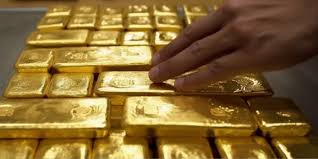
Ethiopia’s mining sector is rapidly emerging as a central pillar of the economy, with gold exports reaching an estimated $3.5 billion and reshaping national economic priorities, according to reports by Al Ain and African Mining.
The state-owned Ethiopian Investment Holdings (EIH) announced what it described as a strategic shift to position itself as a sovereign platform capable of attracting long-term global capital. The announcement was made during the “Invest in Ethiopia 2026” forum held in Addis Abeba, as reported by Al Ain.
EIH Chief Executive Officer Brook Taye said the sovereign wealth fund aims to reduce risks associated with large-scale projects while fostering partnerships with international investors. He added that the institution is working to create a platform that integrates strategic national assets with private capital to accelerate economic transformation.
Gold drives export growth
Brook Taye revealed that Ethiopia’s gold production has surged to approximately 39 tons, generating about $3.5 billion in revenue—accounting for nearly half of the country’s total exports in the last fiscal year. He added that the country recorded a similar export figure from gold in just the past eight months, underscoring the sector’s accelerating role in driving economic growth.
The expansion follows ongoing reforms aimed at liberalizing the mining sector, improving investment incentives, and formalizing artisanal production, after years of underutilization.
According to African Mining, gold has now overtaken coffee as Ethiopia’s top export earner, marking a significant shift in the country’s traditional export structure.
Sector transitions to industrial scale
The report by African Mining notes that Ethiopia’s mining industry is transitioning from largely artisanal operations to industrial-scale production, supported by regulatory reforms and increasing foreign investment.
Key projects are advancing across the country. KEFI Gold and Copper’s Tulu Kapi project in Oromia has secured a $340 million financing package and begun early construction works, with first production expected by mid-2026. Meanwhile, Akobo Minerals has already begun production at its Segele mine in Gambella, marking a milestone as one of Ethiopia’s newest industrial gold producers.
In a major development highlighting growing investor confidence, Chinese mining giant Zijin Mining acquired Allied Gold in early 2026 in a deal valued at approximately $4 billion. The acquisition includes the Kurmuk gold project in western Ethiopia, considered one of the country’s most significant undeveloped assets.
Reforms and investment climate
The government has stepped up efforts to attract foreign direct investment into mining, including liberalizing the foreign exchange market in 2024 to ease long-standing constraints on profit repatriation and equipment imports.
Ethiopia’s location within the mineral-rich Arabian-Nubian Shield further enhances its potential, with significant untapped deposits of gold, copper, and other base metals.
At the same time, investments in infrastructure and energy—particularly hydropower from the Grand Ethiopian Renaissance Dam—are helping to reduce operational costs for mining companies and support industrial expansion.
Agriculture gains and broader reforms
Beyond mining, Brook Taye noted that agricultural reforms are also contributing to economic stability. Ethiopia has achieved wheat self-sufficiency, saving an estimated $1 billion annually in import costs.
He added that programs consolidating more than nine million farmers have improved productivity and incomes, strengthening the foundation for industrial growth and export diversification.
Persistent risks remain
Despite the positive outlook, African Mining cautions that challenges persist. Security concerns in parts of the country, foreign exchange shortages, and bureaucratic hurdles continue to pose risks to investors.
Regional instability, including ongoing conflicts in Amhara and Oromia, has particularly affected logistics and increased the cost of doing business.
Shift from potential to production
Nonetheless, analysts say the sector is undergoing a decisive تحول—from long-held potential to tangible production.
With major projects advancing, increased state backing, and growing international interest, Ethiopia’s mining industry is increasingly positioned as the country’s “second pillar” after agriculture, signaling a broader shift toward an export-oriented and industrializing economy.
Addis Standard reported in October 2026 that gold prices in Ethiopia surged more than fourfold in less than two years, even as the country recorded its highest-ever production levels, according to data from the National Bank of Ethiopia (NBE). An expert noted that the simultaneous rise in prices and output reflects deeper underlying economic pressures.
NBE figures indicate that the price of one gram of 24-karat gold climbed from 3,901 birr on 01 January 2024 to 20,607 birr on 20 October 2025, marking one of the sharpest increases in recent years. The steepest rise occurred between 31 December 2024—when gold traded at 10,637 birr per gram—and October 2025, mirroring a global rally in precious metals driven by weakening major currencies and heightened safe-haven demand.
During the same period, Ethiopia’s gold production expanded significantly. President Taye Atseqesellassie told lawmakers at the joint opening session of the House of People’s Representatives and the House of Federation that output had increased from 3.9 tons in the 2023/24 fiscal year to 38.87 tons in 2024/25, representing nearly a tenfold rise.
In a separate report at the end of October 2026, Addis Standard noted that Ethiopia’s gold exports were on track to surpass coffee shipments for the first time, a shift expected to bolster the country’s currency. According to Bloomberg, National Bank of Ethiopia Governor Eyob Tekalign said the surge in gold exports could help support the birr, which has lost nearly two-thirds of its value since the government liberalized the foreign exchange market on 29 July.
مقالات ذات صلة
China’s ‘encouraging’ hydrogen progress witnessed ...
03 مارس, 2026 07:55
Lucara posts lower 2025 revenue, says additional f...
04 مارس, 2026 07:48
Gold bulls say broader rally is intact despite inv...
04 مارس, 2026 08:00
WorldVest Launches Gold Finance Africa, Building a...
04 مارس, 2026 10:44
Gold and silver rallies likely on pause despite ne...
04 مارس, 2026 11:49
Gold prices climb over 1 percent to $5,164 as Midd...
04 مارس, 2026 11:59
‘Extremely robust’ platinum investment demand expe...
04 مارس, 2026 13:08
Trigon Metals Launches Silver Exploration Drive in...
05 مارس, 2026 08:00
The Ekapa Mine liquidation – A tragedy compounded...
05 مارس, 2026 08:05