Sea

East African Ports Emerge as Global Trade’s New Gatekeepers


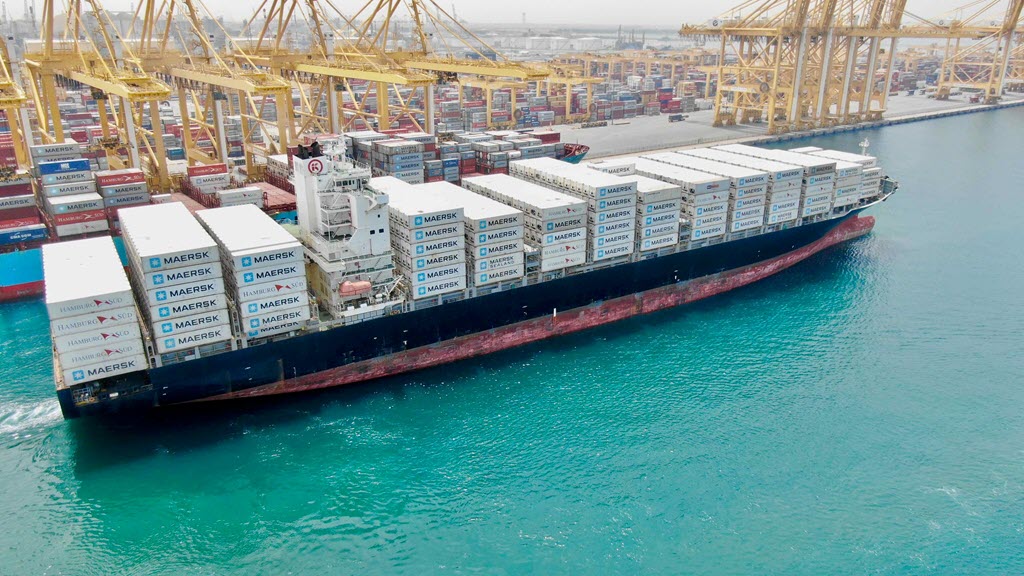
East African ports are absorbing a surge in diverted global cargo as the US-Israel war on Iran continues to block the Strait of Hormuz to most commercial shipping. The world’s four largest container lines — Maersk, CMA CGM, Hapag-Lloyd, and MSC — suspended or halted Hormuz and in the first days of March, rerouting their fleets around the Cape of Good Hope. The moves ended a Red Sea resumption the carriers had only just begun, after two years of Houthi disruption. Shipping analysts assessed as of late March that routine Hormuz transit is unlikely to resume for the remainder of 2026.
Lamu in Kenya Is Emerging as a Strategic Alternative for Global Shippers
Kenya’s Lamu Port, which opened in 2021 with three of its planned 32 berths completed, is among those seeing a heightened role in global shipping and trade. The facility received 74 vessels in the first two and a half months of 2026, about a third of all calls since it opened, according to Kenya Ports Authority. The port received just two container ships in the first quarter of 2025.
“Conflicts come with both negative and positive impacts,” said KPA Managing Director Capt. William Ruto. “We are experiencing a lot of traffic, more so transshipment, in Lamu and Mombasa.” He emphasized that though only three berths are operational, the port is seeing real commercial benefit as it develops future capacity.
Digitalization Is Replacing Manual Systems at the Region’s Busiest Terminals
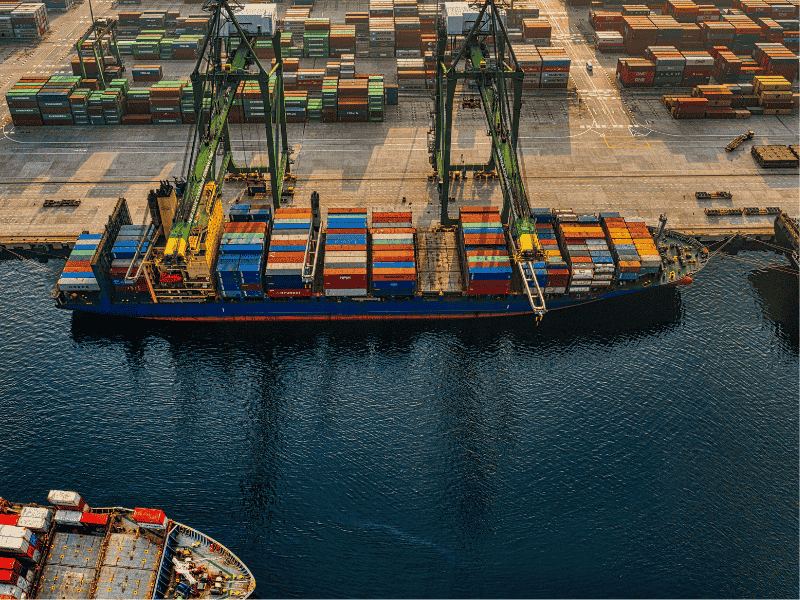
Both Kenya and Tanzania are accelerating digital overhauls that were underway prior to the Hormuz crisis. At Dar es Salaam, the Tanzania Ports Authority (TPA) has rolled out the Tanzania Electronic Single Window System, an AI-powered digital platform that consolidates documentation across customs, shipping agents, and port operators. The port also upgraded the Tanzania Customs Integrated System to its fifth generation. A partnership with logistics provider DP World has brought container vessel waiting times at Dar es Salaam from as long as 30 days to near-zero, with cargo turnaround now running at 36 to 48 hours.
At Mombasa, KPA is upgrading its Terminal Operating System and automating port gates, reducing container dwell times to approximately 4.5 days. Its e-Citizen platform enables real-time cargo tracking and digital payment. The UN Conference on Trade and Development has cautioned that both Mombasa and Dar es Salaam still lack the operational depth to absorb large volumes of major container vessels at scale, but streamlined digitalization driven by Middle East overflow are pushing the facilities closer to that goal.
Hormuz Crisis Is Forcing Coastal States to Compete for Landlocked Markets
The diverted cargo surge is deepening political competition for market share among East Africa’s landlocked neighbors. Under the African Continental Free Trade Area (AfCFTA), corridor access has become a strategic asset. The coastal state that can move goods from the African interior most efficiently stands to capture a bigger share of the region’s shipping revenues.
Kenya and Tanzania are the two principal competitors, each operating a major inland trade route to the same landlocked markets: Kenya’s Northern Corridor from Mombasa and Tanzania’s Central Corridor from Dar es Salaam. The Democratic Republic of the Congo (DRC) accounts for 11.8% of transit cargo through Mombasa and leads Central Corridor volumes through Dar es Salaam at more than 42% since 2020, according to Tanzania Ports Authority data. Studies by the East African Community and TradeMark East Africa suggest that without continued Northern Corridor upgrades, up to 40% of Rwanda-Burundi transit traffic could shift from Kenya to Tanzania by 2030.
Each government is now moving to lock in its position. The African Development Bank (AfDB) approved a $696 million partial credit guarantee in 2024 to unlock $3.9 billion for the Central Corridor Standard Gauge Railway connecting Tanzania to Burundi and the DRC. Kenya, in parallel, secured a $239 million AfDB commitment to complete the Mombasa-Kampala-Kigali road network, targeting a reduction in Mombasa-Kigali transit times from the current 7-10 days to 5-6 days.
Lamu’s own corridor ambitions are tied to the LAPSSET Corridor, which envisions an integrated network of roads, railways, pipelines, and airports connecting Kenya to Ethiopia and South Sudan.
East Africa has now absorbed two consecutive global shipping crises, and each has left its port infrastructure better capitalized and more integrated into the routing decisions of the world’s major carriers. The AfCFTA framework and corridor investment pipeline suggest demand for these routes exists independently of the conflict driving traffic through them now. The pace of infrastructure delivery will determine how much of that demand East Africa retains.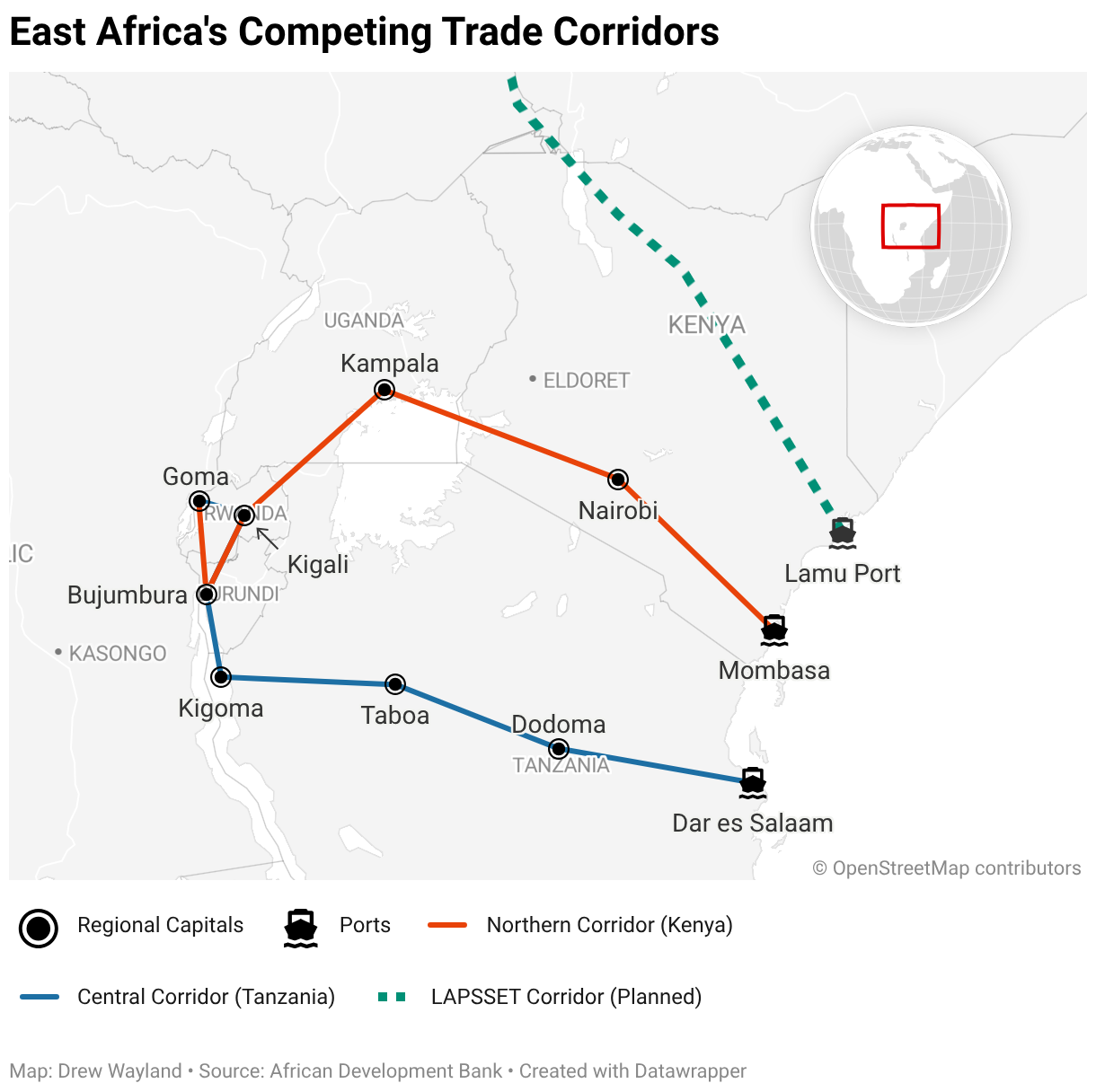
Related Articles
Transport & Logistics in Action – Connecting the M...
22 Oct, 2025 08:40
Appeal made for cargo harmonization across the SSA...
22 Oct, 2025 08:46
4 deals signed between Turkiye, Kuwait...
22 Oct, 2025 13:31
Beit Logistics invests $10.50mln to develop Safaga...
23 Oct, 2025 12:18
Khalifa Port rises to 39th position in Lloyd’s Lis...
23 Oct, 2025 12:24
ASCELA awarded Africa Logistics Zone Development P...
23 Oct, 2025 12:49
FG begins procurement for port modernization proje...
23 Oct, 2025 12:56
NZF delay extends unlevel playing field for EU por...
27 Oct, 2025 09:30
DP World Launches $85 Million Logistics Hub in Egy...
27 Oct, 2025 10:48