
Energy Other

Iran war’s gas supply shock pushes top consumers back to coal


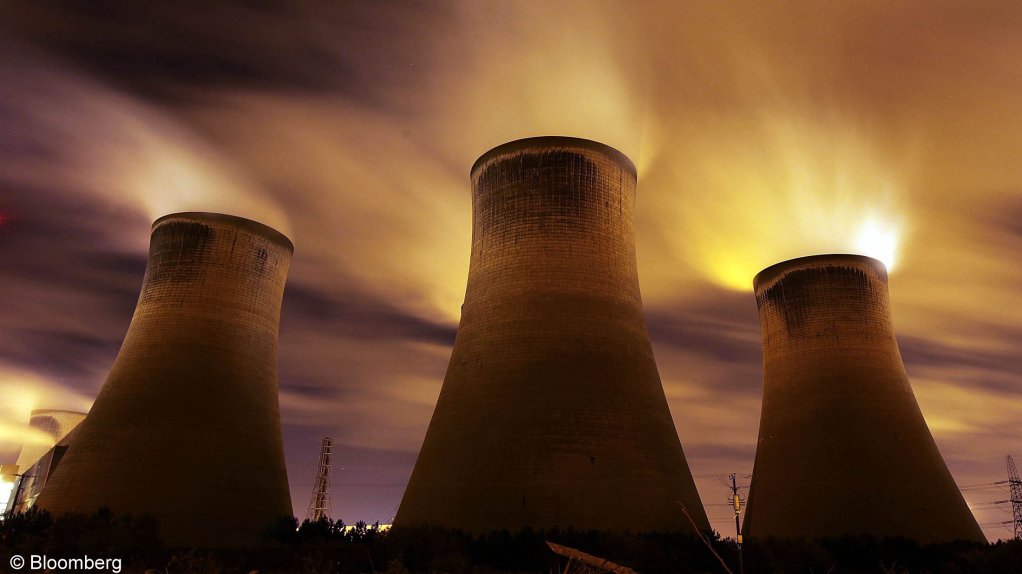
Climate negotiators have been trying for decades to consign coal to history. That task was already challenging before last month, thanks to expanding energy demand in Asia, a growing focus on domestic self-reliance and faltering programs to wean emerging economies onto greener power.
Now, however, a second gas supply crunch in just over four years is pushing countries across Europe and Asia to fall back on the black stuff, perceived as a readily available alternative. Add in US political support, and coal’s long goodbye begins to look even more protracted, a reversal that threatens to undo years of progress on curbing harmful emissions.
Japan, one of the world’s largest gas importers, on Friday said it would expand the use of less-efficient coal power plants, as it tries to diversify its generation capabilities. In Bangladesh and India, coal plants are already shouldering the burden of shortfalls elsewhere.
Even in Europe, where plenty of dirty power has been phased out, the Netherlands, Poland and the Czech Republic could all see more coal use if gas prices remain high. Germany is considering reactivating mothballed coal-fired plants as a way to curb electricity prices.
“We are now seeing a second, very large energy supply shock,” said Samantha Dart, global co-head of commodities research at Goldman Sachs Group Inc. “If you’re sitting in Asia, going through this again, it’s possible you change your strategy long term — rely more on coal for longer, build out your renewables faster and reduce your exposure to natural gas.”
Gas has long been sold to the emerging world as a bridge fuel — a cleaner alternative to coal that is affordable and reliable, and a step on the path to zero-emissions power generation.
The claim became harder to sustain after the upheaval that followed Russia’s invasion of Ukraine, with the price surge and industrial demand destruction that followed. Then came US and Israeli strikes on Iran and a retaliatory attack on Qatar’s giant Ras Laffan plant that could mean years of disruption.
Gas prices in Europe and Asia have yet to reach 2022 levels, but they have already soared — pricing many emerging economies out, with industrial clients already severely impacted across Asia.
“High energy prices will lead governments, industries and households to look at other options,” said Fatih Birol, director of the International Energy Agency. “I wouldn’t be surprised if there were, at least temporarily, upward pressure on the use of coal both for electricity generation, but also for the industry sector.”
Europe’s push into renewable energy has helped to reduce the need for fossil fuel generation, cushioning the blow. The number of coal plants has also decreased, limiting the switching option. Indeed, since 2015 coal capacity across Europe decreased by 45%, according to BloombergNEF.
But with renewables unable to meet the full extent of demand, rising gas prices will still push some consumers to turn to coal. Power analysts with the London Stock Exchange Group estimate European countries could generate around 20% more electricity from coal this summer than last, if the European gas benchmark averages about 50 euros per megawatt-hour. That figure currently stands at around 54 euros.
“This is a bigger disruption than the Russian war,” said Tony Knutson, global head of thermal coal markets at consultancy Wood Mackenzie, given the impact on a larger number of countries. Those without enough gas will be forced to pull the coal lever, he added. “I don’t think they have a choice.”
The biggest swing to coal is likely to be in Asia, where a heavy reliance on oil and gas from the Middle East — and in many cases a limited ability to absorb higher costs — is already causing acute pain. Newcastle coal futures, the benchmark for the power plant fuel in Asia, has climbed by roughly a third this year, hitting the highest level since 2024 earlier this month.
Large economies like Japan, South Korea and Taiwan are major liquefied natural gas importers and also maintain large coal fleets, giving them the ability — and in some cases the incentive — to burn more dirtier fuel as LNG supplies tighten. Japan will allow more coal-fired plants in capacity auctions, and South Korea has also said it is considering moving away from its own curbs on more polluting power.
For top consumers that are also large producers, like India, war-driven fuel shortages strengthen the case for coal — especially as temperatures begin to climb ahead of the summer, lifting demand.
Authorities plan to ask coal plants to defer voluntary maintenance shutdowns until peak demand passes and have instructed Tata Power Co.’s four‑gigawatt plant in Gujarat, which was shut for months, to operate at full capacity until June, when rains usually begin to cover the country.
Coal India, the world’s largest producer of the fuel, saw shares rise to the highest since 2024 earlier this month.
“This crisis has given a new leverage to coal in India,” said Anandji Prasad, technical director at Western Coalfields, a unit of Coal India. “We have been looking at aggressively developing coal for power generation, but this crisis has brought in focus the need to substitute petroleum products and gas with coal.”
The country’s cement plants, long reliant on petcoke, a by-product of oil refining, were among those forced to reconsider when prices began to soar.
“We’re stocking up coal for the next 2-3 months, but this can’t be a long-term solution,” said Hari Mohan Bangur, chairman of Shree Cement, pointing to the lower ash content and higher calorific value of the standard feedstock. “The cement industry needs petcoke.”
Neighboring Bangladesh’s new government has been forced to seek $2-billion in loans to be able to import enough fuel to survive the summer. The country is also set to run coal-fired plants at maximum levels in the near-term as LNG prices rise and power shortages deepen, said Shafiqul Alam, lead analyst for the country at the Institute for Energy Economics and Financial Analysis.
China, as the world’s largest consumer, is theoretically vulnerable. In fact, it has been reaping the benefit of a long-standing campaign to diversify energy supply and — after a series of power shortages in 2021 and 2022 — to double down on domestic coal production.
Still, the most insulated major economy appears to be the US. Massive shale production, combined with export capacity that was maxed out even before the war, have kept gas prices little changed since the start of the war, providing little fresh incentive to eye coal.
Even so, political support from President Donald Trump’s administration has given the fuel a boost. Earlier this month, Terra Energy Center announced a $1-billion investment in what would be the first new coal power project in more than a decade in the country.
Globally, coal demand had been expected to start declining this decade. In December, the IEA said usage in 2025 had edged up to 8.85 billion metric tons and it was forecast to fall 1.4% through 2027.
That now looks far less likely — even if the current setback proves a temporary one, on a path that will ultimately push countries toward more clean energy.
“My gut tells me that in 2026 it’s certainly not going to decrease in line with projections that were using pre‑war assumptions,” said Doug Arent, senior fellow at the WRI Polsky Center for the Global Energy Transition. “The most important thing is to keep the lights on and your productivity moving.”
Related Articles
Kuwaiti oilfield comes onstream officially after 1...
22 Sep, 2025 12:56
African Energy Week (AEW) 2025: Unlocking the Pote...
22 Sep, 2025 13:22
South Africa warns illegal car imports threaten ne...
23 Sep, 2025 06:31
South Africa Confronts EU Carbon Border Mechanism...
23 Sep, 2025 12:33
South Africa, China Deepen Investment Ties in Key ...
24 Sep, 2025 07:35
Raysut Cement’s Expansion into Libya and North Afr...
24 Sep, 2025 07:40
Nextchem opens regional office in Abu Dhabi...
24 Sep, 2025 08:10
Ghanaian students win top honours in IAEA’s Female...
24 Sep, 2025 09:32
Key Sectors Linking Mauritania and Gambia...
24 Sep, 2025 09:40