Mining Other

Canadian firm launches feasibility study for Morocco polymetallic project


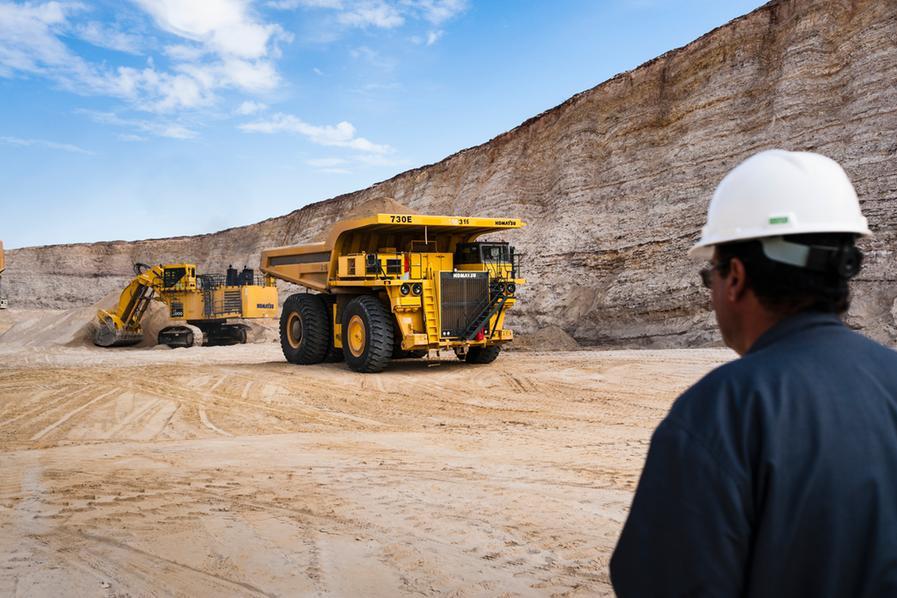
Canadian mining company Aya Gold & Silver has begun a feasibility study for the Boumadine polymetallic project in the east-central Moroccan Province of Errachidia, advancing one of the most closely watched undeveloped precious metal assets in the region.
The company made the announcement last week following a positive preliminary economic assessment released in November 2025.
The Boumadine site sits approximately 220 km east of Ouarzazate and 70 km southwest of Errachidia. The project holds a mining license covering 32 square kilometers.
The feasibility study will refine project design and sharpen capital and operating cost estimates.
Aya has assembled a team of qualified engineers and technical firms including Lycopodium Minerals Canada for process engineering, SRK Consulting for mineral resource estimation, SGS Canada for metallurgical testwork, Epoch Resources for tailings facility design, and SLR Consulting for the environmental and social impact assessment.
The company expects to complete the study by the second half of 2027.
The 2025 preliminary assessment outlined a potential 11-year mine combining open-pit and underground operations at a processing rate of 8,000 tonnes per day.
Six open pits would be mined along a 6 km trend, mainly above 350 metres depth, with underground mining starting in year two across the North, Central, and South zones.
Average annual production over the first five years has been estimated at 401,000 gold-equivalent ounces. The assessment projected a post-tax net present value of $1.5 billion, an internal rate of return of 47 percent, and life-of-mine revenue of $7 billion, based on assumed prices of $2,800 per ounce of gold and $30 per ounce of silver.
Initial capital investment was estimated at $446 million.
Gold accounts for an estimated 61 percent of project revenues, followed by silver at 21 percent, zinc at 13 percent, and lead at 5 percent. The project’s indicated mineral resource stands at 74 million silver-equivalent ounces at 448 grammes per tonne, with an inferred resource of 378 million silver-equivalent ounces at 402 grammes per tonne.
Related Articles
Endeavour announces transaction in own shares...
10 Sep, 2024 07:27
Ivanhoe Mines Announces MOU with Government of Zam...
10 Sep, 2024 12:24
Feasibility Study on Lumwana Super Pit Expansion E...
12 Sep, 2024 14:21
Endeavour achieves commercial production at BIOX e...
13 Sep, 2024 08:20
Roscan Gold Announces Changes to the Board of Dire...
16 Sep, 2024 10:40
Minerals Council pays tribute to Pravin Gordhan...
16 Sep, 2024 12:17
Notification of an acquisition of beneficial inter...
18 Sep, 2024 08:39
Newmont on track to get at least $2 billion from a...
18 Sep, 2024 10:49
UAE firm plans to invest $500m in Tanzania...
19 Sep, 2024 08:37