Precious Metals

Dalaroo expands Gold Ridge system


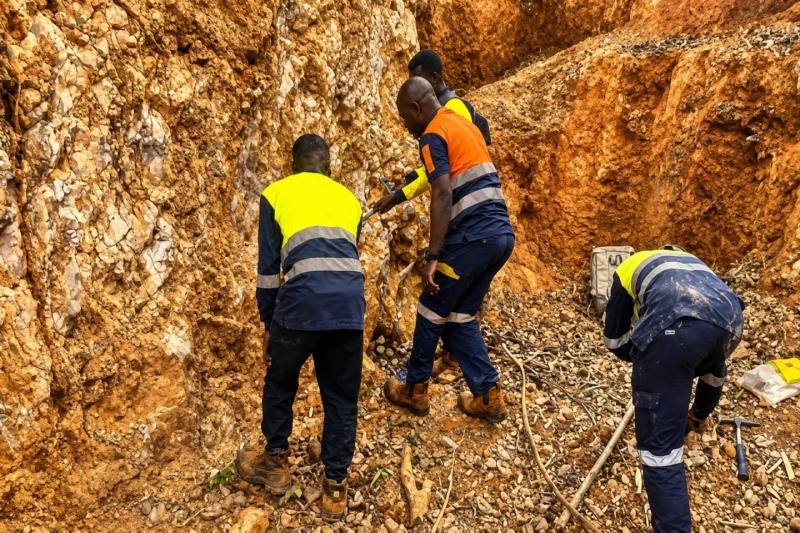
Dalaroo Metals (ASX:DAL) has expanded the known gold system at Gold Ridge within the Bondoukou Project with the identification of a 7km gold corridor from soil geochemistry results.
The company has returned soil results including 23.26 grams per tonne gold, 3.25g/t gold, 2.54g/t gold, 2.09g/t gold, 1.96g/t gold, 1.72g/t gold, and 1.21g/t gold.
The gold anomaly comprises 529 samples exceeding 25 parts per billion (ppb), including 127 samples above 100ppb and 19 samples above 500ppb.
The gold mineralisation anomaly extends 7km in length across three target areas. The system remains open.
Dalaroo’s target areas include the Northern-Mag prospect area, the Central-Wilfred prospect area, and the Southern-Ali prospect area.
The feature correlates with an interpreted magnetic geophysical corridor, which Dalaroo says will assist with future targeting.
The company will begin a 20,000m reverse circulation (RC) drilling campaign at Bondoukou in July 2026.
CEO John Morgan says Gold Ridge has evolved into what Dalaroo believes to be a “district-scale gold system with significant discovery potential”.
“The definition of a coherent 7km gold corridor, supported by favourable geology, geophysical signatures, widespread artisanal workings and multiple high-grade soil anomalies, represents a major milestone in our understanding of the project and reinforces our confidence in the scale of the underlying mineralised system,” Morgan says.
“Importantly, despite these highly encouraging results, the corridor remains untested by drilling.
“With auger drilling now underway and a 20,000m RC drilling program scheduled to commence in July 2026, we are rapidly advancing towards the next phase of exploration aimed at evaluating the source and continuity of this extensive gold anomalism.”
Dalaroo Metals is an exploration company focused on the discovery and development of gold and critical mineral projects in Côte d’Ivoire, Greenland, and Australia.
Related Articles
China’s ‘encouraging’ hydrogen progress witnessed ...
03 Mar, 2026 07:55
Lucara posts lower 2025 revenue, says additional f...
04 Mar, 2026 07:48
Gold bulls say broader rally is intact despite inv...
04 Mar, 2026 08:00
WorldVest Launches Gold Finance Africa, Building a...
04 Mar, 2026 10:44
Gold and silver rallies likely on pause despite ne...
04 Mar, 2026 11:49
Gold prices climb over 1 percent to $5,164 as Midd...
04 Mar, 2026 11:59
‘Extremely robust’ platinum investment demand expe...
04 Mar, 2026 13:08
Trigon Metals Launches Silver Exploration Drive in...
05 Mar, 2026 08:00
The Ekapa Mine liquidation – A tragedy compounded...
05 Mar, 2026 08:05