Logistic Other

Air cargo drives trade resilience through 2025 AI boom surge



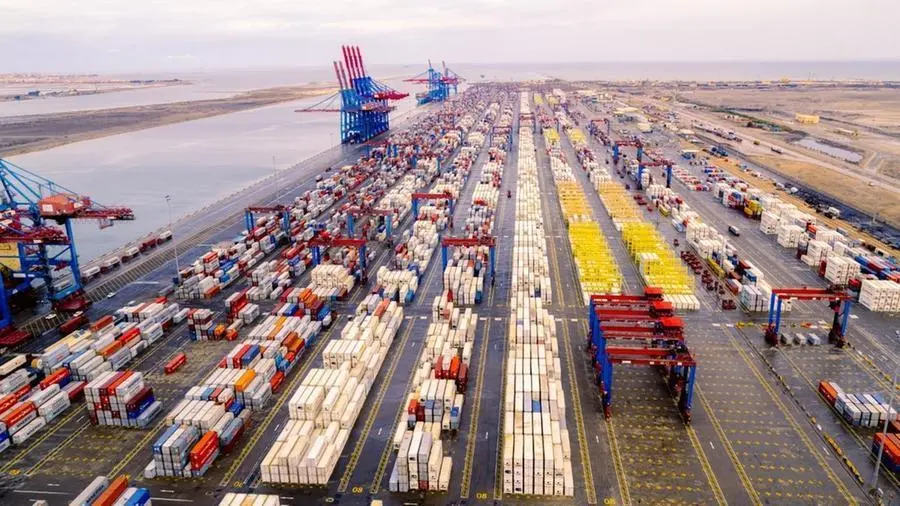
Global air cargo played a decisive role in sustaining international trade during 2025 as businesses adapted to a volatile policy environment and accelerated investment in artificial intelligence infrastructure.
Air freight enabled rapid adjustments in supply chains while supporting high value technology shipments that became central to economic expansion.
Research from the International Air Transport Association indicates that global trade still expanded by 2.4% during the year despite heightened policy uncertainty and higher tariffs in major markets.
Global GDP grew by 3.2% over the same period as investment in AI technologies intensified and supply chains adapted through faster logistics solutions.
Air transport proved particularly important for high value and time sensitive commodities, which rely on speed and reliability to maintain global production networks.
Air cargo enables rapid trade adjustments
Businesses responded to shifting trade policies by accelerating shipments and redirecting goods toward alternative markets.
Analysts calculate that imports into the United States during the first quarter of 2025 increased by $193bn compared with the same period in 2024, reflecting a 21% year on year rise.
Air cargo accounted for a significant portion of this surge. Industry data indicates that air freight supported approximately $157bn of additional imports during the period, representing 82% of the total increase.
Air transported trade rose by 81% year on year during the quarter while other transport modes expanded by just 6%.
The figures highlight the strategic function of aviation logistics in maintaining trade continuity when policy conditions shift quickly.
By enabling faster delivery cycles and flexible routing, air cargo helped companies secure market access before tariff changes took effect and diversify suppliers when traditional routes became less competitive.
Air freight also continued to handle a disproportionately large share of high value trade. Although it represents less than 1% of global trade by weight, it carries nearly one third of global trade value.
Electronics, pharmaceuticals and specialised perishables remain among the sectors most dependent on air transport.
AI investment
The expansion of AI technologies generated a second major driver of air cargo demand during 2025. Global trade in AI related goods reached nearly $3.9tn as companies expanded data centre capacity and invested in advanced computing hardware.
Industry economists estimate that around three quarters of AI related trade moves by air due to the high value and time critical nature of components such as servers, memory chips and data storage equipment.
Equipment accounts for roughly 31% of AI trade and is transported by air in two thirds of cases, while intermediate inputs move by air in about 74% of transactions.
The aviation sector therefore became closely linked to the expansion of AI infrastructure. Data indicates that AI related goods represented more than half of the total value of air transported trade in 2025 while accounting for only a small share of physical cargo volume.
Economists conclude that without air cargo capacity the rapid scaling of AI investment would have faced logistical constraints, potentially limiting economic growth and slowing the expansion of global technology supply chains.
As policy uncertainty persists and technology investment continues, analysts expect air cargo to remain a critical pillar of global trade resilience through 2026.
Related Articles

South African table grape industry and Transnova A...
22 Oct, 2025 08:25
Spiro Raises US$100 Million in Africa’s Largest-Ev...
22 Oct, 2025 09:33
NXN and SAEED unite within Sharjah’s logistics sec...
24 Oct, 2025 07:48
TAHA Unveils HortiMarket A Digital Platform Revolu...
24 Oct, 2025 08:21
Chinese technology takes center stage at Ghana's t...
27 Oct, 2025 09:17
Kenya Airways flies first African route, from Nair...
27 Oct, 2025 09:23
Madbouly inaugurates $85mln DP World's logistics p...
27 Oct, 2025 12:56
Airbus cargo outlook shows 3.3% annual growth and ...
28 Oct, 2025 08:21
Nominations now open for the Logistics Saudi Award...
28 Oct, 2025 08:27