Energy Other

Sudan Revives Petroleum Corporation as Output Lags 64,000 bpd Target


By: OrePulse
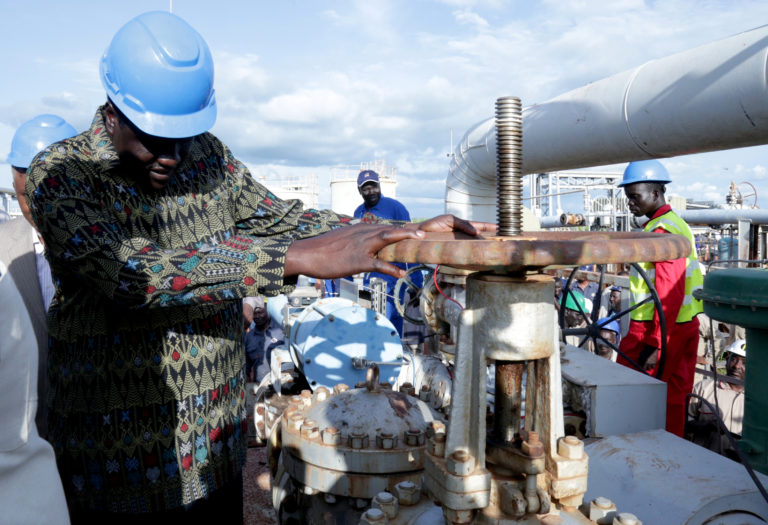
Sudan's Sovereignty Council Chairman Abdel Fattah al-Burhan ordered the reinstatement of the Sudanese Petroleum Corporation, seven years after the state oil body was dissolved in 2019, as part of a wider reorganization of the country's energy-sector institutions.
The reinstatement comes as Sudan's government looks to strengthen cooperation with regional and international partners, aiming to attract investment and technical expertise into the country's oil infrastructure as domestic crude output continues to lag and supplies of petroleum products remain constrained.
The decision reconstituted the Oil Council under al-Burhan's chairmanship. Its members, as set out in the decision, include the oil, finance and justice ministers, the head of Sudan's General Intelligence Service, the head of the National Investment Authority and a small number of oil-industry specialists.
In a separate order, al-Burhan appointed Dr. Ismail Osman al-Hussein Abu Shouk, a retired senior Sudanese naval officer whose exact rank is reported inconsistently [uncertain], as secretary-general of the Petroleum Corporation, giving him administrative responsibility for the body going forward.
According to the decision, the restructuring brought oversight of oil, financial, legal and investment matters that had previously been handled by separate bodies under one structure, with the stated aim of coordinating management of the sector and setting its development priorities.
Sudan created the Petroleum Corporation under a 1998 oil-wealth law, giving it status as a public body with its own legal standing and a headquarters in Khartoum. Until it was dissolved in 2019, it had handled the state's oil activities from exploration and production through to refining, transport, storage and marketing, while also setting certain quality standards for petroleum products. Its mandate also covers contributing to the country's petroleum product needs and maintaining a strategic fuel stock.
Sudan's oil sector also includes other entities, among them Sudapet, which invests in exploration and production, and the Bashaer Pipelines Company, along with unnamed companies active in refining and distribution. The scope of the reinstated corporation's authority, and its relationship with those other bodies, has not yet been defined pending further executive detail.
Sudan produced about 22,000 barrels per day of crude oil in September 2026, according to data from the Organization of the Petroleum Exporting Countries, against a production target of about 64,000 bpd. The gap has been attributed to halted operations, facility damage and supply and maintenance setbacks that also limit refined-fuel supply and the efficiency of Sudan's refineries, transport and storage systems, which require new investment and technical expertise to restore to capacity.
Separately, Sudan's Minister of Energy and Oil, Al-Mutasim Ibrahim Ahmed Ali, met Saudi Deputy Minister of Energy Mohammed Abdulrahman Al-Ibrahim on the sidelines of the International Energy Forum and the World Petroleum Congress in Saudi Arabia, where the two sides discussed cooperation on Sudan's energy sector.
Four potential areas of cooperation were raised in the talks: bringing in petroleum products via a partnership with Saudi Aramco; exploring for oil in Red Sea blocks; constructing a refinery at Port Sudan; and rehabilitating Sudan's electricity sector. No agreements were announced.
Related Articles
South African rand falls to 3-month low as soaring...
09 Mar, 2026 08:35
NamPower warns N$700 million in unpaid bills threa...
17 Mar, 2026 08:20
Middle East oil becomes most expensive in the worl...
17 Mar, 2026 08:43
Libya’s NOC launches Faragh-Brega pipeline project...
17 Mar, 2026 09:32
TotalEnergies’ global output down 15% amid Middle ...
17 Mar, 2026 09:39
Why Ethiopia’s Gas-to-Fertilizer Bet Matters for E...
19 Mar, 2026 12:58
Alake Advocates Regional Hubs to Power Africa’s Mi...
23 Mar, 2026 10:09
NTPC, Africa50 Discuss Joint Power Projects and En...
23 Mar, 2026 10:24
India and Africa Advance Strategic Energy Partners...
23 Mar, 2026 10:29