Energy Other

India and Africa Advance Strategic Energy Partnership at Bharat Electricity Summit 2026


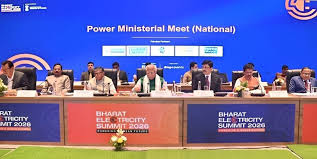
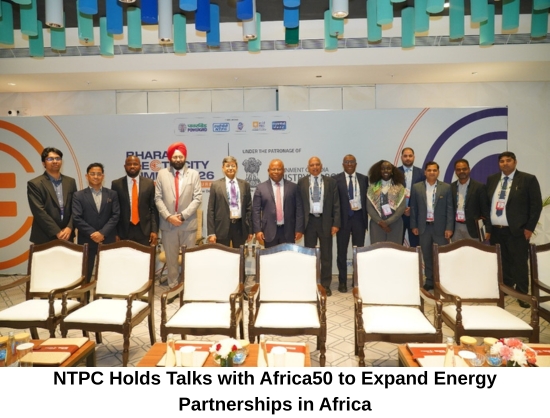
India and African nations have reaffirmed their commitment to a deeper, action-oriented energy partnership during the India–Africa Strategic Partnership Meet held on March 21, 2026, as part of the Bharat Electricity Summit 2026 in New Delhi.
The high-level meeting was chaired by Manohar Lal and brought together key stakeholders including Shripad Naik, Nayab Singh Saini, Jean Mathanga, and Alain Ebobissé, along with representatives from multiple African governments, the African Union, financial institutions, and industry leaders.
The discussions outlined a forward-looking roadmap for India–Africa energy cooperation, with both sides agreeing to strengthen collaboration across renewable energy expansion, interconnected grid systems, energy storage solutions, and institutional capacity building. The meeting emphasised leveraging India’s technical expertise and Africa’s growing energy potential to deliver reliable, affordable, and sustainable power access.
Addressing the gathering, Manohar Lal highlighted the critical role of energy in driving economic growth and reiterated India’s vision of One Sun, One World, One Grid as a pathway for global energy connectivity. He underscored India’s transition from an energy-deficit to a surplus nation, positioning it as a scalable model for Africa’s development journey.
The Minister also pointed to ongoing collaborations, including partnerships involving Africa50 and Power Grid Corporation of India Limited, as examples of how innovative financing and public-private partnerships can enable resilient infrastructure development.
Echoing the need for tangible outcomes, Shripad Naik stressed that the partnership must move beyond intent to execution, positioning energy access as a key driver of economic transformation. Meanwhile, Nayab Singh Saini highlighted Haryana’s governance model, advocating cooperation-driven partnerships in areas such as energy management, digital governance, and agriculture.
From an investment perspective, Alain Ebobissé emphasised Africa’s shift towards bankable projects and private capital mobilisation, stating that the continent is seeking investment-driven partnerships rather than aid. He noted the growing focus on transmission expansion and integrated energy planning.
Adding to the dialogue, Jean Mathanga called for accelerated efforts in electrification, renewable energy deployment, and grid infrastructure development, particularly in rural and underserved regions. She highlighted opportunities for collaboration in smart metering, microgrids, and decentralized energy systems aligned with Africa’s inclusive energy agenda.
The India–Africa partnership continues to gain momentum through platforms such as the International Solar Alliance, promoting investment, technology transfer, and scalable clean energy solutions including rooftop solar, hybrid systems, and mini-grids.
Overall, the meeting reinforced a transformational approach to India–Africa cooperation, centred on co-creation, investment-led growth, and long-term socio-economic impact, with energy emerging as a cornerstone for sustainable development across both regions.
Related Articles
South African rand falls to 3-month low as soaring...
09 Mar, 2026 08:35
Aramco’s 13% rally helps Saudi stocks post second ...
13 Mar, 2026 08:02
IEA Members Coordinate Historic Oil Stock Release ...
16 Mar, 2026 08:24
NamPower warns N$700 million in unpaid bills threa...
17 Mar, 2026 08:20
Middle East oil becomes most expensive in the worl...
17 Mar, 2026 08:43
Libya’s NOC launches Faragh-Brega pipeline project...
17 Mar, 2026 09:32
TotalEnergies’ global output down 15% amid Middle ...
17 Mar, 2026 09:39
Why Ethiopia’s Gas-to-Fertilizer Bet Matters for E...
19 Mar, 2026 12:58
Alake Advocates Regional Hubs to Power Africa’s Mi...
23 Mar, 2026 10:09