Energy Other

South African rand falls to 3-month low as soaring oil prices spur inflation worries


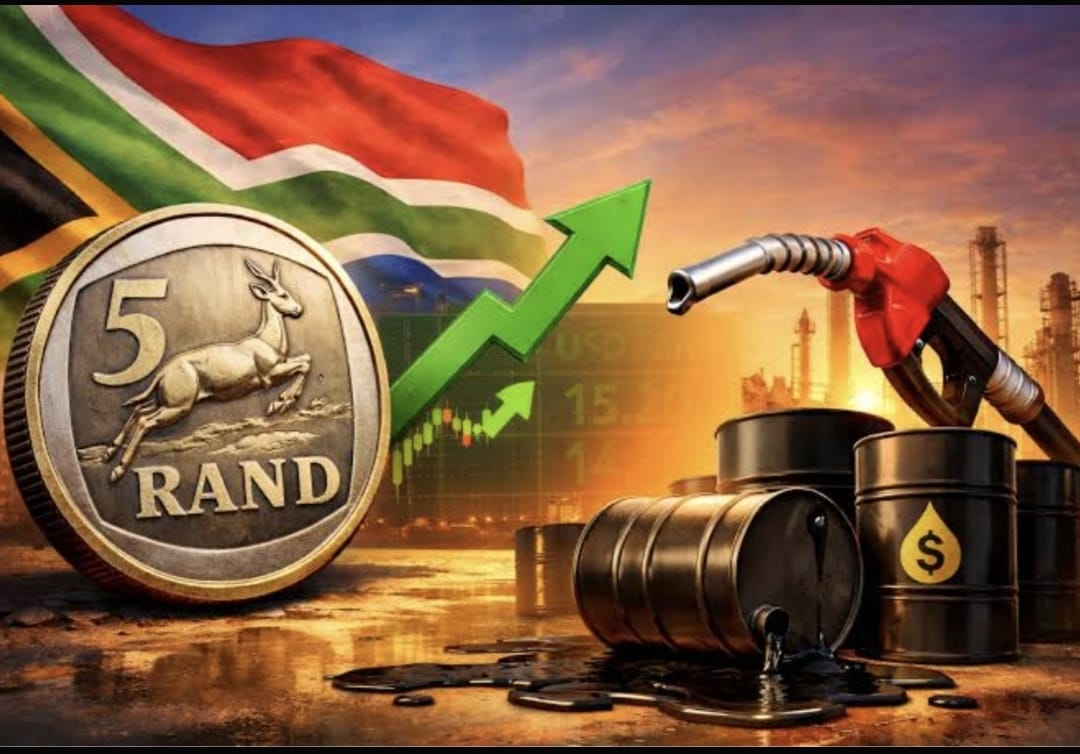
South Africa's risk-sensitive rand started the week sharply weaker as investors, unnerved by surging oil prices and the potential effect on global inflation and growth, dumped risk assets and took profit on some of their best-performing trades.
The rand traded at 16.85 per U.S. dollar at 0722 GMT on Monday, shedding 2% from its previous close and hovering around its weakest since mid-December.
South Africa's benchmark 2035 government bond also weakened in early deals, with the yield rising 1.5 basis points to 8.505%.
Crude oil prices surged more than 25% as the expanding U.S.-Israeli war with Iran led some major Middle Eastern oil producers to cut supplies amid fears of prolonged disruption to shipping through the Strait of Hormuz.
Analysts said the rand is likely to remain weak as a rise in global risk aversion and higher oil prices weigh on South Africa, a net importer of energy.
"The stars have aligned for the rand to come under considerable pressure, and the only response the South African Reserve Bank (SARB) might have to combat the outflow from bonds and the volatility that might well be reflected in the rand is through rate hikes," said ETM Analytics in a note.
The SARB's governor told Reuters last week that it will revise its risk scenarios for its next policy meeting as the Middle East conflict continues to push oil prices higher.
The bank is due to announce its interest‑rate decision on March 26, after leaving its main lending rate unchanged at 6.75% in a split vote in January, saying at the time that policymakers wanted to see inflation expectations ease further.
On the Johannesburg Stock Exchange, the Top-40 index (.JTOPI), opens new tab was down 0.6% in early trade.
Domestically focused investors this week will look to the country's statistics agency's release of fourth quarter gross domestic product (ZAGDPY=ECI), opens new tab data and January mining (ZAMNG=ECI), opens new tab and manufacturing (ZAMAN=ECI), opens new tab figures for clues on the health of the continent's most industrialised economy.
"Until there is clarity on the duration and scale of the conflict, markets are likely to remain volatile with investors favouring defensive positioning," said Andre Cilliers, currency strategist at TreasuryONE.
Related Articles
Aramco’s 13% rally helps Saudi stocks post second ...
13 Mar, 2026 08:02
IEA Members Coordinate Historic Oil Stock Release ...
16 Mar, 2026 08:24
NamPower warns N$700 million in unpaid bills threa...
17 Mar, 2026 08:20
Middle East oil becomes most expensive in the worl...
17 Mar, 2026 08:43
Libya’s NOC launches Faragh-Brega pipeline project...
17 Mar, 2026 09:32
TotalEnergies’ global output down 15% amid Middle ...
17 Mar, 2026 09:39
Why Ethiopia’s Gas-to-Fertilizer Bet Matters for E...
19 Mar, 2026 12:58
Alake Advocates Regional Hubs to Power Africa’s Mi...
23 Mar, 2026 10:09
NTPC, Africa50 Discuss Joint Power Projects and En...
23 Mar, 2026 10:24