Trucks

S.Africa unveils truck stop rating system to curb driver fatigue


By: OrePulse
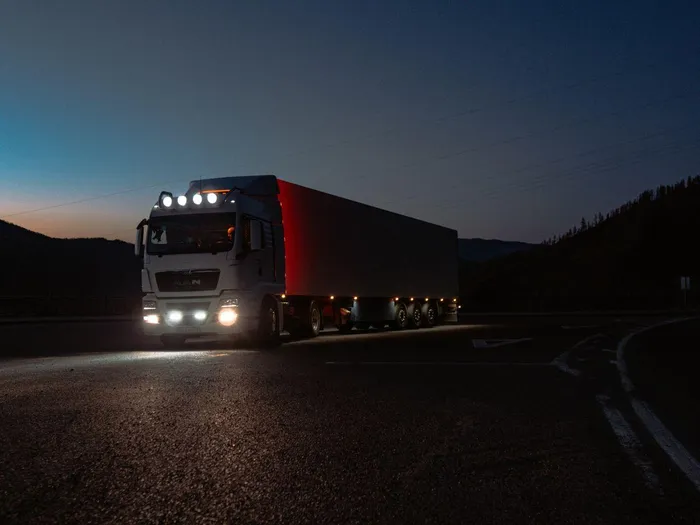
South Africa has introduced a National Truck Stop Framework meant to standardize how rest facilities for commercial drivers are planned, rated, and funded along the country's freight corridors. Transport Minister Barbara Creecy unveiled the policy this week at the Sasol N17 Truck Stop in Mpumalanga, presenting it as a response to years of inconsistent and, in some cases, unsafe conditions faced by truck drivers on long-haul routes.
The framework established a ratings system that scored truck stops on the security measures and services they offered, giving provinces, municipalities, state-owned entities, current site operators, and prospective private investors a shared benchmark. Officials said the aim was to close gaps that left drivers exposed to unsafe roadside parking and to facilities whose quality varied sharply from corridor to corridor.
Government researchers who inspected truck stops along major freight routes reported finding dim or missing lighting, poorly maintained bathrooms and showers, and little dedicated space for driver rest and recovery at several sites. Creecy said some drivers, finding no suitable place to stop, had pulled over on roadsides or in other precarious spots instead.
"These conditions have implications beyond driver comfort. They affect road safety, driver fatigue, freight efficiency, cargo security, the dignity of drivers and ultimately the performance of our logistics system," she said.
Fatigue remained a major factor behind crashes involving freight vehicles, according to Creecy, who called on transport companies to build rest breaks into their scheduling practices rather than treating them as optional downtime.
"Our objective must be to create an environment where taking a proper rest break is not regarded as an inconvenience, but as a normal and essential part of professional freight operations," she said.
Women drivers faced a related shortfall, the department found: too few truck stops were set up to accommodate them, which officials said discouraged more women from entering commercial trucking. Beyond physical upgrades, the policy left room for newer technology at truck stops, including systems for managing site access digitally, tools tied to intelligent transport systems, and clean-energy additions such as electric-vehicle charging points, as facilities were built or renovated over time.
According to Creecy, scaling up safe and commercially sustainable truck stops nationwide would depend on government and private industry working together. That framework, she added, gave operators and prospective developers clearer rules to plan around when deciding whether to invest in new or upgraded truck stops.
Creecy cautioned that the framework's real test would be implementation, not the document itself. "Our success should ultimately be measured not by the number of documents we produce, but by the changes on the ground for truck drivers and the freight industry," she said.
Related Articles
RTA, Dubai Police lift truck restrictions on emira...
03 Mar, 2026 08:34
MAN unveils new flagship truck tractor & D26 Effic...
05 Mar, 2026 09:09
Kuwait Customs activates emergency plan to secure ...
23 Mar, 2026 12:06
DHL builds humanitarian logistics academy in Afric...
05 Jun, 2026 10:09
DP World strengthens GCC logistics network with 70...
10 Jul, 2026 12:03
Durban Truckers Demand Transparency as Terminal Sl...
16 Sep, 2026 12:41