
Precious Metals

Asante Gold shares sink over 40% as Ghana miner cuts guidance again


By: OrePulse
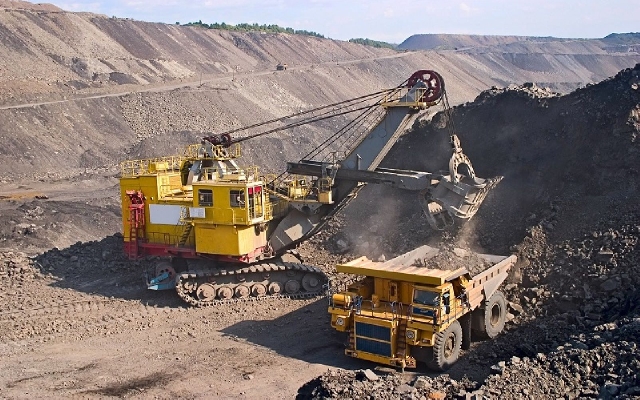
Shares in Ghana-focused gold producer Asante Gold Corporation fell sharply for a second straight trading day after the company withdrew its 2026 production and cost guidance for the second time this year, citing equipment shortages, weaker plant recoveries, power interruptions and delays at its Bibiani mine.
Asante's TSX Venture-listed shares fell 33%-34% on Friday, when the company released third-quarter results alongside the guidance withdrawal, then dropped a further 42%-45% in Monday trading to as low as 23-24 Canadian cents, according to separate reports from MiningMX and The Northern Miner. The slide left the company with a market valuation of about C$210 million (US$143 million), down roughly 86%-87% since the start of the year.
The withdrawn guidance, issued in August, had called for 275,000 to 300,000 ounces of gold production in 2026 at all-in sustaining costs (AISC) of $3,200 to $3,600 per ounce; Asante's original 2026 guidance had forecast 400,000 to 500,000 ounces. As of September 30, the company had produced 165,594 ounces of gold this year. Group output in the third quarter was 48,517 gold-equivalent ounces at an AISC of $4,860 per ounce, with gold realized at an average price of $4,178 per ounce for the period.
Costs at Asante's two Ghanaian mines diverged sharply in the quarter. AISC at the Chirano mine rose to $3,722 per ounce, close to the spot gold price, while Bibiani's AISC, though improved from $8,776 per ounce a year earlier, remained elevated at $7,681 per ounce. For the first nine months of the year, Asante's overall AISC rose 12.5% to $4,308 per ounce, even as gold production for the period improved 41%.
Asante said it had already deferred or canceled about $50 million of planned capital expenditure. At Bibiani, a second contractor is clearing waste from a pit-wall failure that occurred in January, with that work targeted for completion in early December and ore access expected to resume in the first quarter of 2027.
Asante had $64 million in cash as of September 30 against a working-capital shortfall of $309.7 million. The company had raised C$179.4 million in January by selling shares at C$1.60 each. Its lenders and hedging counterparties, including South Africa's RMB, which had underwritten an initial $110 million, have extended funding deadlines, and lenders have asked Asante to raise $100 million, which the company could do in part by selling more gold forward; about 30% of its gold production is already sold below spot prices. Spot gold was trading in the $3,800-to-$3,900-per-ounce range, which some analysts expect to rise further. Asante's gold is delivered to Fujairah Holdings, a state-backed investment company in the United Arab Emirates that is also a shareholder in Asante; other shareholders and counterparties include UK-based Appian Capital Advisory, while Ghana's government holds a 10% stake in each of Asante's two mines.
Acting chief executive Campbell Baird, who was appointed chief operating officer in March and later took on the CEO role after Dave Anthony announced his retirement, said a broader operating turnaround plan setting out corrective measures, milestones and capital needs is expected in January 2027. "We continue to make progress in resetting the business, although there is still considerable work ahead of us," Baird said.
Separately, the company said Monday that an exploration hole drilled in the Bridge zone, which sits between Bibiani's Main Pit and the neighboring Cut 5 pit, intersected 60 meters grading 3.13 grams of gold per tonne starting 103 meters below surface, while a second hole intersected 6 meters at 62.48 grams per tonne beginning at a depth of 136 meters. The drilling is part of an 8,000-meter program, and Asante is studying whether an expanded open pit could incorporate material currently assigned to underground mining plans, potentially deferring underground development spending planned for 2027-28; revised project economics are still being assessed. "Alongside the remaining drilling and test work, we are now prioritizing how best to mine this mineralization," said Glenn Baldwin, Asante's chief development officer. Bibiani, located about 80 kilometers southwest of Kumasi, and Chirano are Asante's two producing mines in Ghana. Bibiani was acquired from Resolute Mining in 2021 for $90 million in cash while in mothballs, and Chirano was acquired from Kinross Gold in 2022 for $225 million in cash and shares.
Related Articles

African Rainbow Minerals half-year profit up 10% o...
06 Mar, 2026 10:41
Trafigura, Venezuelan mining firm sign deal for up...
18 Mar, 2026 07:05
South Africa's gold producers stay in the shallows...
24 Mar, 2026 12:01
South Africa's gold mines find new life with price...
01 Apr, 2026 14:02
Ghana awards Gold Fields’ Damang mine lease to loc...
08 Apr, 2026 06:44
Malawi sells gold and asked Afreximbank for $120 m...
22 Apr, 2026 10:43
Turkey central bank data shows 31 tonnes of gold r...
24 Apr, 2026 12:52
South Africa's Gold Fields Faces Contractor Claim,...
11 May, 2026 06:51
Caledonia benefits from high gold price, despite l...
12 May, 2026 08:25