Energy Other

Nigeria’s Oil Crossroads in 2026: From Barrel Count to Value Creation


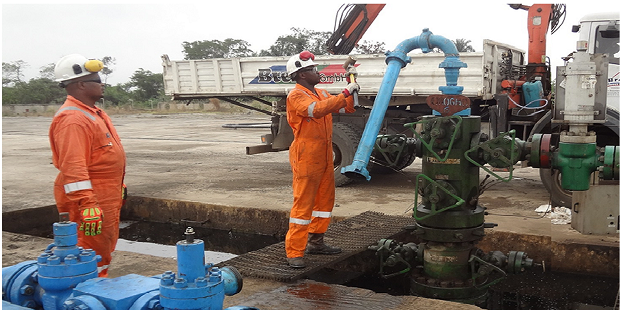
Nigeria’s oil position has improved materially in 2026, but the country now faces a more strategic test than simply producing more barrels. Higher crude output, the scale-up of Dangote Refinery, and continued OPEC+ market management have created an opening for Nigeria to move from a volume-led oil model to a value-led energy strategy. The core policy challenge is to balance export earnings, domestic refining, fiscal stability and industrial growth in a period of elevated geopolitical uncertainty.
“In a quota-constrained world, value per barrel matters more than volume in isolation.
“The most effective oil strategy for Nigeria now is not maximalist. It is disciplined: produce steadily, export strategically, refine locally, save windfalls, and build downstream industry.”
Nigeria’s oil conversation has changed materially this year and continues to track global geopolitical instability. The critical policy challenge is no longer whether the country can merely benefit from higher oil prices or small OPEC+ adjustments. The more urgent question is whether Nigeria can convert a better production profile, a stronger refining position and a more volatile geopolitical landscape into durable economic advantage.
That question matters because the 2026 fiscal framework still leaves very little room for policy error. The federal budget was built on an oil benchmark of about $64.85 per barrel, production of roughly 1.84Million barrels per day and a deficit already estimated more than ₦23Trillion. Even before the latest market shifts, that was a narrow balancing act. Since then, the external environment has become both more promising and more dangerous.
“The most effective oil strategy for Nigeria now is not maximalist. It is discipline. Produce steadily. Export strategically. Refine locally. Save windfalls. Incentivize capacity to leverage inevitable future windfalls. Build downstream industry beyond a one-horse army. Use oil to reduce fragility,
The first major development is that Nigeria’s production position has improved. By June 2026, the country’s crude oil output had risen to about 1.56Million barrels per day, above its OPEC quota of 1.5Million barrels per day, while combined crude and condensates climbed to roughly 1.74Million barrels per day. That is significant for two reasons. It shows that Nigeria is finally regaining some operational ground after years of underperformance. It also weakens the old argument that the country was being sidelined by OPEC+ simply because it could not meet even its existing allocation.
Yet this is not a moment for complacency. OPEC+ remains in the middle of a careful and politically charged unwinding of earlier production cuts. The group has continued approving additional increments of 188,000 barrels per day for a select set of core producers, Nigeria excluded, while maintaining the broader framework through the end of 2026 and carrying out a review of members’ sustainable production capacity for 2027 baselines. Nigeria supports that review, which it hopes to benefit from if it manages to consistently meet its 1.5Million barrels quota.
And rightly so. If the country can sustain current production gains, it stands a better chance of arguing for a stronger future baseline. But sustaining gains is different from announcing them. Nigeria’s history of pipeline vandalism, theft, maintenance bottlenecks and export disruption still warns against treating one strong month as a permanent trend.
The second major development is more structural: refining has moved from aspiration to strategy. Dangote Refinery is no longer just a symbol of industrial ambition. It has become a regional energy factor. The plant has operated at its 650,000 barrel per day design capacity and, during testing, even exceeded 700,000 barrels per day. It is exporting products not only within West Africa but also to Europe, the United States and Saudi Arabia. More importantly, Nigeria crossed a historic threshold in March 2026 when it became a net exporter of petrol. That would have seemed improbable not long ago in a country that spent decades exporting crude and importing refined fuel.
This refining shift should change how Nigeria thinks about oil policy. For too long, strategy was dominated by a simple instinct: maximize crude exports, earn foreign exchange, and use the proceeds to patch the budget. That instinct is now outdated. In a quota-constrained world, value per barrel matters more than volume in isolation. A barrel refined domestically can support industrial activity, reduce import dependence, save foreign exchange, stabilize product supply and create downstream employment. A barrel exported as crude may bring immediate revenue, but it often leaves broader economic value on the table.
This does not mean Nigeria should abandon crude exports. Export earnings remain critical for fiscal stability, debt service, reserve management and exchange-rate confidence. OPEC has itself noted that Nigeria’s near-term outlook is supported by stronger oil production and reform momentum, even as high borrowing costs and inflation remain major risks. That warning is important. The real constraint on Nigeria’s oil advantage may no longer be purely production. It may increasingly be the cost of money, the cost of macro instability and the difficulty of translating oil-sector gains into wider economic relief.
That is why the right framework is not export revenue versus local growth. It is export revenue in service of local growth. Nigeria should be managing four linked priorities at once.
First, production must become more reliable than spectacular. The objective should be to hold crude output above quota consistently and keep total liquids rising through better field uptime, improved evacuation, stronger security architecture and faster maintenance execution. In the current environment, the cheapest new barrel is often the one already discovered but currently lost to theft, deferred maintenance or infrastructure weakness.
Second, domestic refinery supply should be treated as a strategic national allocation, not an afterthought. The country should ensure predictable crude feedstock for high- performing local refineries, especially where domestic processing lowers import bills and supports regional product exports. The gain from this approach is not only cheaper fuel.
It is the creation of a broader domestic value chain in petrochemicals, logistics, fertilizer, plastics and industrial service.
Third, Nigeria should reposition itself as a regional products and energy hub rather than a country defined only by crude exports. Dangote’s growing exports have already shown that Nigeria can help ease African supply shortages during geopolitical disruption. That opens a strategic lane: use local refining and product exports to deepen commercial influence across West and Central Africa, while also building more resilient foreign exchange earnings beyond crude cargoes alone.
Fourth, government must resist the old temptation to treat every oil upswing as permission for fiscal relaxation. With deficits still high and debt metrics still uncomfortable, prices above the budget benchmark should be treated as upside to be saved or deployed into infrastructure, not simply absorbed into recurrent spending. That is the only way the oil sector can help reduce fiscal vulnerability instead of recycling it.
The geopolitical background makes this discipline even more necessary. The after-effects of the Iran crisis, shipping insecurity around Hormuz, the renewed contest for market share among Gulf producers and the visible weakening of OPEC cohesion all point to a less predictable oil market. Nigeria may benefit from some of this turbulence at the margin, especially when supply disruptions support prices or redirect product flows toward African refiners. But the same instability can just as easily weaken planning assumptions, compress margins and expose how dependent public finance remains on forces outside Abuja’s control.
That is why 2026 should be understood as a strategic turning point. Nigeria can finally produce more credibly, refine at scale and export more intelligently. But these gains will matter only if policy also evolves. The country must stop asking only how many barrels it can produce and start asking how much value each permitted barrel can generate across the full economy.
“Nigeria’s history of pipeline vandalism, theft, maintenance bottlenecks and export disruption still warns against treating one strong month as a permanent trend.”
The most effective oil strategy for Nigeria now is not maximalist. It is discipline. Produce steadily. Export strategically. Refine locally. Save windfalls. Incentivize capacity to leverage inevitable future windfalls. Build downstream industry beyond a one-horse army. Use oil to reduce fragility, not deepen dependence.
If Nigeria takes these sensible steps, the current moment will be remembered not as another temporary oil upswing, but as the point at which Africa’s largest producer finally began to behave like a modern energy economy.
Related Articles

South African rand falls to 3-month low as soaring...
09 Mar, 2026 08:35
NamPower warns N$700 million in unpaid bills threa...
17 Mar, 2026 08:20
Middle East oil becomes most expensive in the worl...
17 Mar, 2026 08:43
Libya’s NOC launches Faragh-Brega pipeline project...
17 Mar, 2026 09:32
TotalEnergies’ global output down 15% amid Middle ...
17 Mar, 2026 09:39
Why Ethiopia’s Gas-to-Fertilizer Bet Matters for E...
19 Mar, 2026 12:58
Alake Advocates Regional Hubs to Power Africa’s Mi...
23 Mar, 2026 10:09
NTPC, Africa50 Discuss Joint Power Projects and En...
23 Mar, 2026 10:24
India and Africa Advance Strategic Energy Partners...
23 Mar, 2026 10:29