Energy Other

Egypt's oil minister, UAE's IRH discuss LNG supply, financing


By: OrePulse
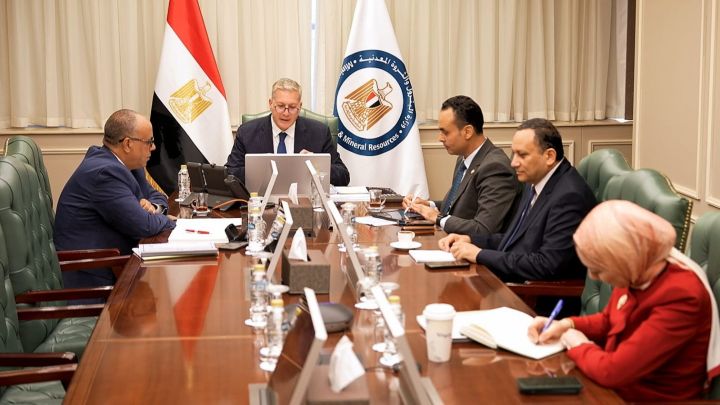
Egypt's Minister of Petroleum and Mineral Resources, Karim Badawi, met the chairman and chief executive of UAE-based trading house IRH Global Trading, Vineet J. Mehra, to discuss supplying Egypt with liquefied natural gas and petroleum products and setting up new mechanisms to finance the country's fuel imports.
The talks, which included Mehra's delegation, covered LNG cargo shipments, trade in petroleum products, and new financing models for Egypt's energy purchases, according to a ministry statement. Badawi pointed to the value of IRH's expertise and global trading network for Egypt's supply needs. Mehra said Egypt was important to the company's strategy and that IRH aimed to expand, roughly doubling, its business in the country. Both sides agreed that their working teams would continue coordinating to study the proposals discussed.
The meeting comes as Egypt's LNG imports have been running below last year's levels. Imports totaled about 0.84 million tonnes in October, down roughly 24% from 1.10 million tonnes in October 2025. In the first half of November, Egypt brought in about 0.35 million tonnes of LNG across five cargoes, with two more tankers expected to arrive at the Ain Sokhna terminal before the end of the month. From January 1 through November 15, cumulative LNG imports reached about 11.7 million tonnes, with the United States supplying roughly 10.54 million tonnes, or about 90% of the total.
Egypt's fuel oil imports have also picked up, reaching about 0.89 million tonnes so far in November, the highest monthly level since October 2024. Analysts at data provider Kpler expect greater use of fuel oil in power plants as temperatures fall, which could reduce the volume of LNG Egypt needs to import toward the end of the year.
The talks also come against a backdrop of domestic gas production that has held roughly flat for two straight months. Egypt produced about 3.63 billion cubic feet of gas a day in September, around 12.5% below the 4.15 billion cubic feet a day recorded in September 2025, a gap that has pushed the country to rely more heavily on imported LNG and fuel oil to meet demand from its power plants and industrial users.
Egypt has increasingly turned to LNG imports and trading-house partnerships in recent years to cover the gap between domestic gas output and demand, particularly through the winter and summer peak-demand periods. New import-financing mechanisms, of the kind discussed with IRH Global Trading, would give Cairo more flexibility in paying for cargoes at a time when its own gas production has not kept pace with consumption.
Related Articles

South African rand falls to 3-month low as soaring...
09 Mar, 2026 08:35
Hormuz closure divides the fortunes of Middle East...
07 Apr, 2026 13:41
South Africa's Sasol aims for green jet fuel expor...
23 Apr, 2026 11:47
Africa's richest man offers to build East Africa o...
24 Apr, 2026 08:06
Jet fuel crisis boon for Nigeria's Dangote but dee...
27 Apr, 2026 14:29
IEA says Middle East conflict altering medium-term...
07 May, 2026 12:53
Algeria’s Rising Role in Global Energy Geopolitics...
12 May, 2026 08:29
Senegal Unveils Six-Point Plan to Shield Economy f...
12 May, 2026 09:36
Nigeria's airlines face trouble as jet fuel threat...
12 May, 2026 10:53