Energy Other

Africa’s renewable energy potential takes centre stage as investors seek path from clean power to industrial growth


By: African Sustainability Matters
Africa’s enormous renewable energy potential and the investment frameworks needed to convert it into industrial growth will be central to discussions at the Future Economics Forum during African Energy Week 2026, scheduled for October 12–16 in Cape Town. The session, hosted by the Zayed Sustainability Prize and titled From Power to Position: Industry and Sovereignty in Africa’s Next Economy, will examine how proven clean-energy technologies, stronger investment structures and commercially viable projects can help African economies move beyond electricity generation towards industrial value creation, energy security and greater economic sovereignty.
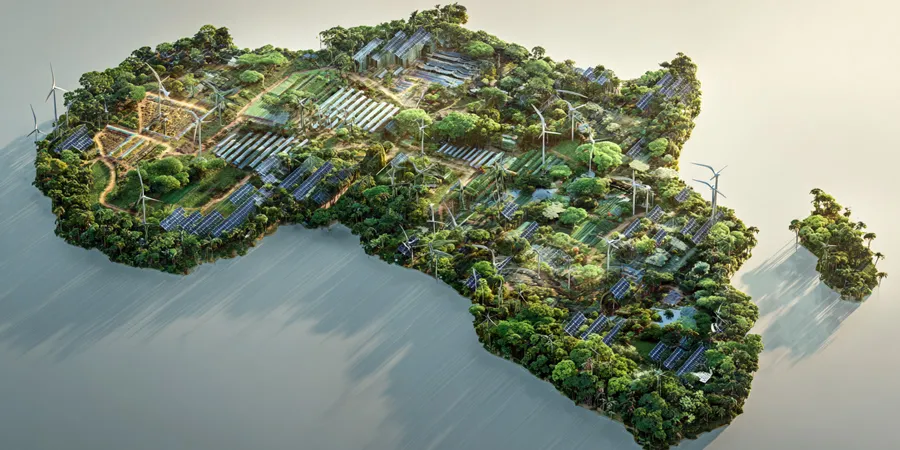
The discussion comes as governments and investors confront a fundamental imbalance in Africa’s energy economy: the continent possesses some of the world’s richest renewable resources, yet large portions remain commercially undeveloped. Africa has an estimated 850 terawatts of wind and solar technical potential, according to the International Renewable Energy Agency, but renewable-energy investment remains concentrated in a relatively small number of markets and projects.
The challenge is therefore increasingly one of capital mobilisation rather than resource availability. Solar radiation, wind corridors and other renewable resources are abundant across the continent, but converting those resources into productive assets requires bankable projects, credible offtake arrangements, predictable regulation, transmission infrastructure and financing structures capable of attracting institutional and private capital.
That investment gap has direct consequences for industrialisation. Africa’s electricity deficit has long constrained manufacturing, mining, agricultural processing and digital services. The International Energy Agency estimates that around 600 million people in Africa still lack access to electricity, while electricity consumption per capita remains among the lowest globally. Expanding renewable generation alone will not resolve those constraints unless new capacity is connected to industrial demand and supported by reliable transmission and distribution networks.
The Future Economics Forum’s focus on moving “from power to position” reflects this wider economic question. For African economies, the strategic value of renewable energy lies not simply in generating electricity but in using relatively low-cost clean power to support industries such as green hydrogen, fertiliser production, minerals processing, data centres, electric mobility and manufacturing.
Recent investment activity suggests that this transition is beginning to attract larger pools of capital. Masdar and Africa50, for example, have established a partnership targeting the development of 10 gigawatts of renewable energy capacity across Africa by 2030, supported by an intended investment programme of up to US$10 billion. The initiative illustrates the growing role of blended public-private investment structures in developing large renewable portfolios.
Egypt’s renewable-energy ambitions provide another example. The country is developing one of Africa’s largest wind projects in the Gulf of Suez, while broader plans for renewable power and green hydrogen are positioning Egypt as a potential supplier to European and international markets. Morocco is similarly pursuing large-scale green hydrogen development, building on its extensive solar and wind resources and proximity to European energy markets.
These projects point to a broader shift in Africa’s energy investment landscape: renewable electricity is increasingly being treated as an industrial input rather than an end product. Countries with competitive renewable resources can potentially use clean power to lower the carbon intensity of export industries and produce commodities that face growing environmental requirements in international markets.
Green hydrogen is particularly relevant to this strategy. Countries such as Egypt, Morocco, Namibia and South Africa are developing hydrogen projects aimed at producing derivatives including green ammonia, methanol and sustainable aviation fuels. The commercial viability of many of these projects remains under development, but the underlying investment proposition is increasingly linked to global demand for lower-carbon industrial products.
The forum will also examine the relationship between energy infrastructure and Africa’s rapidly expanding digital economy. The continent currently accounts for less than 1% of global data-centre capacity, despite growing demand for cloud computing, artificial intelligence, digital payments and other technology services.
That mismatch creates both an infrastructure deficit and an investment opportunity. Data centres require large volumes of reliable electricity, making energy availability an increasingly important factor in decisions about where digital infrastructure is developed. Renewable power, combined with storage and grid investment, could therefore become an important component of Africa’s digital infrastructure strategy.
The relationship works in both directions. Digital infrastructure can create predictable electricity demand that helps underpin renewable-energy projects, while reliable clean power can make African markets more attractive to technology companies seeking to expand cloud and computing capacity. The emergence of artificial intelligence is likely to intensify this relationship because AI-related computing requires substantially more electricity than many traditional digital services.
The investment challenge, however, remains significant. Renewable-energy projects often require substantial upfront capital while facing currency risks, uncertain offtake arrangements, weak transmission networks and lengthy regulatory processes. These factors can increase the cost of capital, particularly in African markets where investors perceive higher political, currency and counterparty risks.
This is why policy certainty is likely to be a central theme of discussions at the forum. Investors need clarity over electricity tariffs, land access, grid connections, taxation, foreign-exchange arrangements and the rules governing power purchases before committing billions of dollars to infrastructure with investment horizons extending over several decades.
The Zayed Sustainability Prize brings another dimension to the discussion by focusing on the commercial and development potential of innovative solutions. Its experience supporting sustainability initiatives reinforces the importance of moving promising technologies from demonstration projects into scalable businesses capable of attracting larger pools of capital.
According to NJ Ayuk, Executive Chairman of the African Energy Chamber, Africa’s investment challenge is closely connected to investor confidence. The continent’s renewable resources alone cannot attract sufficient capital without projects that demonstrate technical performance, commercial viability and predictable returns.
For African governments, this creates a need to strengthen the entire project-development ecosystem. Bankable feasibility studies, credible power-purchase agreements, transparent procurement, stronger utilities and well-capitalised development finance institutions can reduce risks sufficiently to bring commercial investors into projects that might otherwise remain on the drawing board.
Development finance institutions are already playing an important role in this process. The African Development Bank, Africa50, regional development banks and international financial institutions have increasingly focused on using concessional capital and guarantees to mobilise private investment into renewable energy and infrastructure.
The wider significance is industrial. Africa’s energy transition could generate greater economic value if renewable electricity is increasingly linked to domestic manufacturing and value addition. Rather than exporting raw minerals or agricultural commodities while importing energy-intensive finished products, countries could use abundant clean electricity to process resources closer to their source.
This approach is particularly relevant to the continent’s critical-minerals economy. Copper, cobalt, lithium, manganese, graphite and other minerals required for clean-energy technologies are concentrated in several African countries. Reliable renewable electricity could help support processing and refining capacity, allowing more value to remain within African economies.
There are also implications for public finances. Large-scale renewable investment can reduce exposure to imported fossil fuels and the foreign-exchange pressures associated with petroleum imports. At the same time, governments must ensure that investment incentives, subsidies and public guarantees are structured carefully so that the fiscal risks associated with infrastructure projects do not undermine the benefits of new investment.
The Future Economics Forum therefore arrives at a pivotal point for Africa’s energy strategy. The continent’s challenge is no longer simply demonstrating that renewable energy works. The more difficult task is developing the institutions, financial structures and industrial policies needed to deploy it at scale and connect it to productive economic activity.
If Africa can bridge that gap, renewable energy could become an industrial competitiveness strategy rather than solely a climate response. The ability to combine clean electricity with manufacturing, mineral processing, agriculture, digital infrastructure and new export industries could determine whether the continent’s extraordinary renewable resource base becomes a source of long-term economic transformation or remains largely an unrealised opportunity.
Related Articles

South African rand falls to 3-month low as soaring...
09 Mar, 2026 08:35
NamPower warns N$700 million in unpaid bills threa...
17 Mar, 2026 08:20
Middle East oil becomes most expensive in the worl...
17 Mar, 2026 08:43
Libya’s NOC launches Faragh-Brega pipeline project...
17 Mar, 2026 09:32
TotalEnergies’ global output down 15% amid Middle ...
17 Mar, 2026 09:39
Why Ethiopia’s Gas-to-Fertilizer Bet Matters for E...
19 Mar, 2026 12:58
Alake Advocates Regional Hubs to Power Africa’s Mi...
23 Mar, 2026 10:09
NTPC, Africa50 Discuss Joint Power Projects and En...
23 Mar, 2026 10:24
India and Africa Advance Strategic Energy Partners...
23 Mar, 2026 10:29