أسواق الطاقة

Qatar and Iran Gas Field Strikes Threaten Global LNG Supply, $5.8bn Repair Bill


By: OrePulse
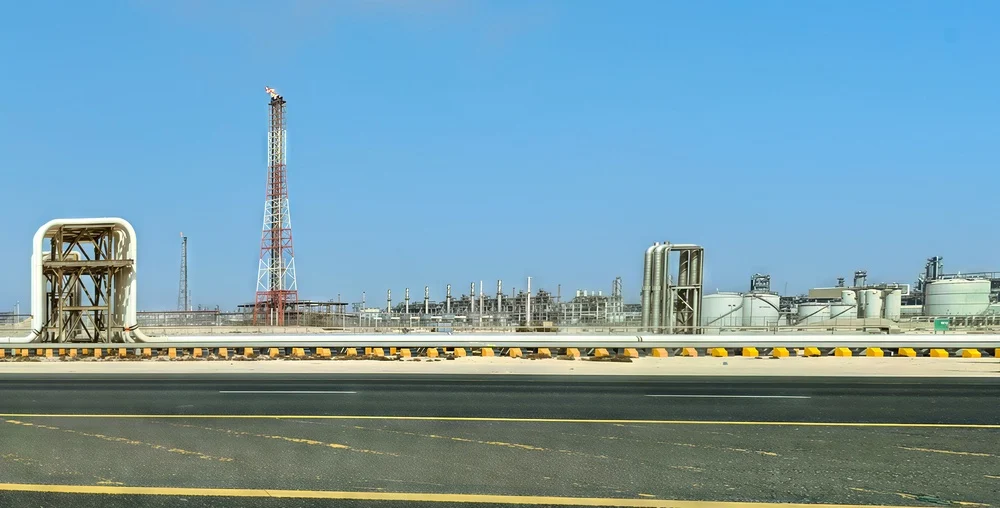
Wood Mackenzie estimates that strikes on Qatar's North Field and Iran's South Pars gas fields have taken about 4.5 billion cubic feet a day of Qatari processing capacity offline, with repairs likely to take between four months and a year, as the disruption feeds a global liquefied natural gas supply crunch that has pushed prices to their highest since late 2022.
North Field and South Pars together form the world's largest known gas accumulation, a single reservoir spread across roughly 9,000 square kilometers of the Qatar Arch. The combined fields contain over 2,200 trillion cubic feet of remaining gas — close to a quarter of the world's total — and produce roughly one-tenth of global gas output.
On the Qatari side, a March strike at the Pearl gas-to-liquids complex and a June explosion at the Barzan gas plant account for most of the lost capacity. Those outages also take two LNG production trains offline; their combined 12.7 million tons a year of capacity equals about 17 percent of everything Qatar normally exports as LNG. Wood Mackenzie pegs the repair bill at about $5.8 billion and estimates the Pearl GTL outage alone leaves close to a tenth of Shell's upstream cash flow exposed.
"Qatar is managing US$5.8 billion in repairs and recovery timelines of up to twelve months while commissioning the largest LNG expansion program in the world," said Alexandre Araman, Wood Mackenzie's director for Middle East upstream.
Across the maritime border, Iran's share of the same reservoir — South Pars — has also lost output. Strikes hit the Assaluyeh processing hub, which normally handles roughly 30 percent of South Pars gas, as well as Phase 13 facilities at nearby Kangan.
The damage lands just as Qatar is trying to bring three new expansion phases — North Field East, North Field South and North Field West — into service; combined, those projects are meant to add 48 million tons a year of LNG capacity and push plateau gas output to 28 billion cubic feet a day by 2033. Wood Mackenzie projects Qatar will still have 54 million tons a year of LNG not yet under contract by 2035. Beyond LNG cargoes, output from the field also underpins Qatar's condensate refining, natural gas liquids, methanol, ammonia and GTL businesses, plus about a third of the world's helium supply — and the country shipped more than 80 million tons of LNG in 2025, a volume the consultancy said buyers will now be weighing against how fast repairs proceed.
The fallout is already showing up in spot markets. Northeast Asian LNG cargoes rose $2.70 over the past week to $28.40 per million British thermal units, and traders and analysts think prices still have room to climb by roughly a third from where they stand now. Part of the reason is Europe: the continent is heading into winter with storage sites under 70 percent full, compared with 82 percent at the same point last year and a five-year average above 80 percent, one of the leanest refill seasons in two decades. With Qatari and Emirati LNG still largely bottled up behind the Strait of Hormuz, European and Asian buyers are bidding harder against each other for gas that can reach them by other routes.
"Right now, where we stand in Europe is at a historically low storage level heading into the end of fall," Cederic Cremers, president of integrated gas at Shell, said at the Gastech conference in Bangkok.
A harsh winter would be the real test, since flows through Hormuz are not expected to normalize before year-end. Simon Flowers, Wood Mackenzie's chairman, told the same conference that in a colder-than-usual winter, LNG could climb from nearly $30 per million British thermal units to $40 — a level he equated to roughly $ 240 a barrel of Brent crude, and one he said would be high enough to start destroying demand.
مقالات ذات صلة

Oil prices jump over 3 percent to $84.41 as supply...
05 مارس, 2026 07:30
Oil prices fall 1 percent to $84.56 as U.S. grants...
06 مارس, 2026 07:40
Oil prices drop to $86.98 on report of IEA plannin...
11 مارس, 2026 07:16
Oil prices surge back above $100 as Mideast tensio...
12 مارس, 2026 08:07
Oil gains 9 percent this week as prices remain abo...
13 مارس, 2026 07:50
Oil prices surge to $104.87 as Trump seeks naval c...
16 مارس, 2026 07:48
Oil prices recoup losses, surge to $102.85 as supp...
17 مارس, 2026 08:01
Oil prices contract by 2.21 percent to $101.13 fol...
18 مارس, 2026 11:34
Oil prices rise to $107.34 as investors balance ge...
23 مارس, 2026 08:30