مجالات الطاقة الأخرى

OPEC+ Ends Output Increase Cycle as 2027 Quota Talks Loom


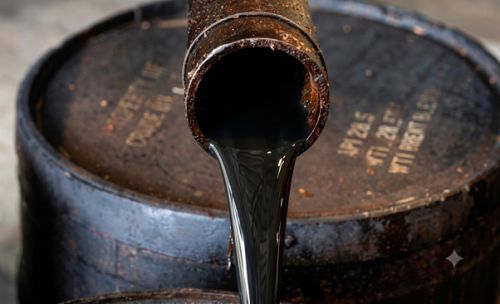
OPEC+ approved a 188,000-barrel-per-day increase in production quotas for September, marking the final step in a supply increase cycle that began in April. The pause that follows will usher in negotiations over future production quotas, with member states holding increasingly divergent positions, according to sources familiar with the matter cited by Reuters.
The September increase completes the reversal of the alliance's 1.65 million-barrel-per-day voluntary production cut adopted in 2023 and later adjusted following the United Arab Emirates' departure from the arrangement in May. However, these successive quota increases have remained largely theoretical.
Official OPEC+ data showed that the alliance produced 36.28 million barrels per day in June, nearly 7 million barrels per day below pre-war levels because conflicts involving Iran and Ukraine continued to disrupt exports.
Meanwhile, Brent crude, the global oil benchmark, traded between $88 and $89 per barrel on Sunday when OPEC+ announced the increase, according to Trading Economics. Brent then fell to about $83-$84 per barrel on Monday, Aug. 3, a decline of nearly 5%, after U.S. President Donald Trump announced the resumption of negotiations with Iran and the suspension of military strikes.
Pause Leaves 2 Million Barrels per Day Under Review
The pause leaves a second block of 2 million barrels per day in production cuts, introduced in 2022, unchanged.
OPEC+ will negotiate the future of those cuts next year while conducting an audit of the production capacity of its 19 member states to establish the baseline for 2027 production quotas. Several members, including Iraq, want higher individual quotas that better reflect their actual production capacity.
"OPEC+ has completed the unwinding of its voluntary cuts. The next challenge is managing the potential surplus as export flows normalize. Our base case is a pause in the fourth quarter while the group prepares quota negotiations for 2027," said Jorge Leon, an analyst at Rystad Energy, as quoted by Business Recorder.
Complex Negotiations Ahead
The pause comes as the alliance faces growing internal tensions.
Iraq is not the only member seeking changes that could complicate negotiations. Kazakhstan, whose production remains constrained by repeated drone attacks on the Caspian Pipeline Consortium terminal in the Black Sea, wants the 2027 capacity review to grant quotas that reflect its actual production, according to Project54 in late July.
Likewise, Russia faces similar constraints. The International Energy Agency (IEA) said Russian production stood 910,000 barrels per day below its quota in June because Ukrainian strikes disrupted refinery operations. Russian Deputy Prime Minister Alexander Novak acknowledged in June that the country's oil production had declined since the start of the year, according to OilPrice.
Meanwhile, Nigeria, Africa's largest oil producer, achieved 104% of its production quota in June, its strongest performance in 74 months, with combined output reaching 1.735 million barrels per day, according to figures published in July by the Nigerian Upstream Petroleum Regulatory Commission (NUPRC).
Building on that performance, Bashir Bayo Ojulari, chief executive of the Nigerian National Petroleum Company (NNPC), said Nigeria will seek a 2027 production quota of 2 million barrels per day, up from the current 1.5 million barrels per day, representing a 33% increase, according to OilPrice.
The pause in quota increases will give OPEC+ time to complete its production-capacity audit and negotiate new production baselines before deciding its next policy steps.
مقالات ذات صلة
Voltamp Energy secures control of Saudi joint vent...
03 مارس, 2026 08:18
Gold, crude oil prices trend higher amid world’s n...
04 مارس, 2026 07:52
African Development Bank approves US$58 Million fo...
04 مارس, 2026 11:57
Oil prices up 1% as Iran crisis disrupts Middle Ea...
04 مارس, 2026 13:20
East Africa Prepares Regional Power Market to Deep...
05 مارس, 2026 08:04
STEG Seeks €40 Million EBRD Loan For 50 MW Solar A...
05 مارس, 2026 08:21
South African President Says Hormuz Crisis Sharpen...
06 مارس, 2026 11:12
How Aramco can keep oil flowing during Iran confli...
06 مارس, 2026 11:36
CESI Boosts Ancillary Services in Gulf Power Syste...
06 مارس, 2026 12:21