Energy Other

South African President Says Hormuz Crisis Sharpens Africa’s Case for Energy Self-Sufficiency


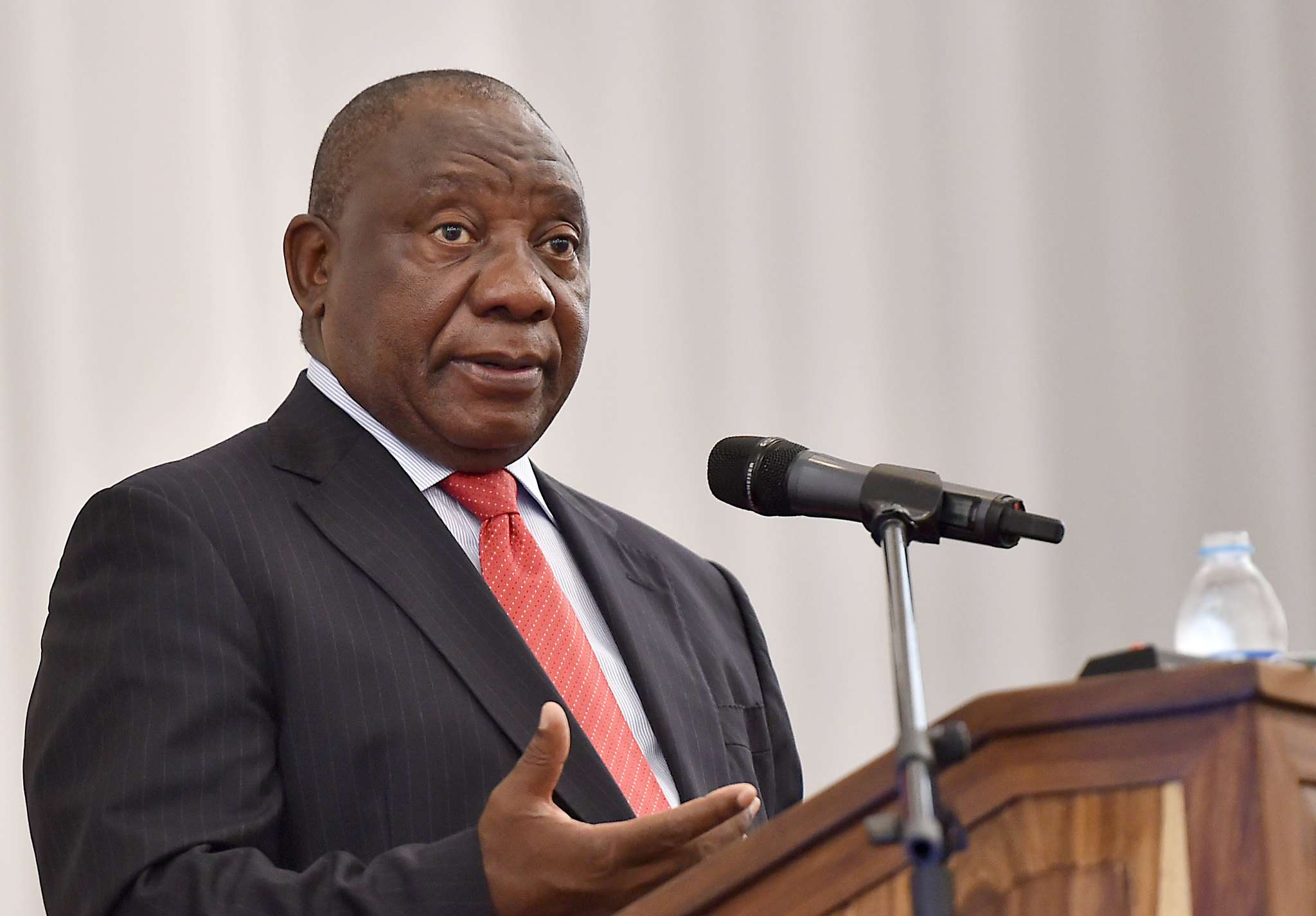
South African President Cyril Ramaphosa warned on March 4 that Africa’s dependence on imported energy is a structural vulnerability that geopolitical crises are rapidly exposing. Speaking in Cape Town, he stated that the continent is already absorbing the impact of the escalating Middle East conflict through disrupted logistics and elevated energy costs.
His remarks came as the Iranian Revolutionary Guard claimed full control of the Strait of Hormuz, through which roughly 20% of the world’s traded oil and liquefied natural gas (LNG) passes. US and Israeli strikes on Iran had already forced shutdowns at regional oil and gas facilities. In response, the US Navy said it was prepared to escort tankers through the passage. Brent crude gained more than $3 in a single session this week on supply disruption fears, as multiple global shipping companies began rerouting cargo around the Cape of Good Hope.
Ramaphosa drew a direct line from the Hormuz closure to earlier supply shocks, noting that the Russia-Ukraine war and the COVID-19 pandemic had demonstrated the same systemic risk. For import-dependent African economies, each crisis compounds the last.
The Infrastructure Response
Ramaphosa pointed to the Ten-Year Africa Energy Infrastructure Investment Plan for Cross-Border Interconnectivity (TYIIP) as the structural answer to that exposure. The plan, launched as a legacy document of South Africa’s 2025 G20 presidency, is coordinated by the African Union Development Agency (AUDA-NEPAD) and covers a pipeline of regional transmission projects to be implemented between 2026 and 2036. It currently identifies 19 projects in advanced stages requiring a combined $19 billion in investment, a further five with completed feasibility studies awaiting capital, and 28 projects at early stages of development.
The TYIIP is built on the vision that African electricity does not need to cross an ocean or pass through a chokepoint to reach its target markets. The plan connects five existing regional power pools into a continental grid capable of moving power from surplus-generating countries to deficit ones. That integration would reduce dependence on emergency fuel imports during demand spikes or outages, and give renewable energy developers, including solar, wind, and hydroelectric, a market large enough to justify the cost. The Hormuz closure is a live demonstration of the value that interconnection could bring to Africa.
“The significance of the TYIIP lies in its ability to organize the pipeline of projects in a manner that is credible to financiers and valuable to economies,” President Ramaphosa said. Public funds alone would be insufficient, he noted, but could play a critical role in de-risking projects and drawing in private capital.
Related Articles
Kuwaiti oilfield comes onstream officially after 1...
22 Sep, 2025 12:56
African Energy Week (AEW) 2025: Unlocking the Pote...
22 Sep, 2025 13:22
South Africa warns illegal car imports threaten ne...
23 Sep, 2025 06:31
South Africa Confronts EU Carbon Border Mechanism...
23 Sep, 2025 12:33
South Africa, China Deepen Investment Ties in Key ...
24 Sep, 2025 07:35
Raysut Cement’s Expansion into Libya and North Afr...
24 Sep, 2025 07:40
Nextchem opens regional office in Abu Dhabi...
24 Sep, 2025 08:10
Ghanaian students win top honours in IAEA’s Female...
24 Sep, 2025 09:32
Key Sectors Linking Mauritania and Gambia...
24 Sep, 2025 09:40