مجالات التعدين الأخرى

Guinea’s Simandou to become largest driver of seaborne iron-ore supply growth


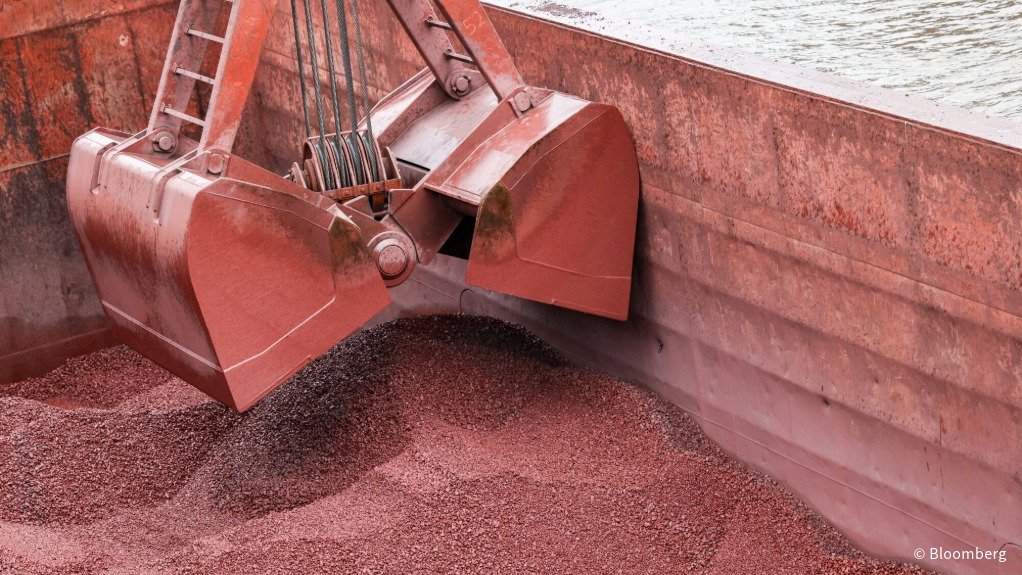
According to consultancy Wood Mackenzie (WoodMac), this project is set to be the primary catalyst for long-term supply growth.
WoodMac says it expects Simandou to export about 16-million tonnes this year, with volumes rising progressively thereafter.
It notes, however, that ramp-up is likely to be uneven, with infrastructure bottlenecks and logistical complexities driving a phased and non-linear increase in output.
After more than two decades of delays, the project has entered execution following Guinea’s political reset in September 2021, which resolved a long-standing development deadlock.
Development has progressed steadily, with early exports now in focus and downstream market impacts beginning to emerge.
Rather than simply adding volume, WoodMac notes that Simandou is expected to displace higher-cost supply, tightening the competitive landscape and reinforcing a sharper cost and quality hierarchy across the seaborne market.
“Simandou will become the single biggest driver of seaborne supply growth over the coming decade.
“But its impact goes beyond volume. These tonnes will increasingly displace higher-cost supply, reshape the cost curve and reinforce the market’s shift toward higher-quality material.
“The ramp-up will not be linear, and that uncertainty will be a key factor shaping market sentiment in the near term,” says WoodMac research director for iron-ore David Cachot.
For Australian producers, near-term impacts remain manageable, says WoodMac.
The consultancy says the Pilbara continues to benefit from blending optionality, with lower-grade ores clearing the market efficiently when combined with higher-quality material.
However, this advantage is expected to erode over time.
As Simandou ramps up and demand preferences shift toward higher-quality feedstocks, competitive pressure is likely to emerge first in lower-grade supply.
“This does not imply an abrupt displacement of Pilbara volumes.
“Rather, it highlights where pressure will emerge first, as marginal tonnes become increasingly vulnerable in a more quality-sensitive market,” Cachot notes.
The competitive interaction with Brazil is more direct, adds WoodMac, noting that Brazilian producers, particularly Vale, compete head-to-head with Simandou on quality, prompting a shift toward greater portfolio flexibility.
Rather than defending every premium tonne, producers are increasingly optimising product mix, including blending strategies and selective use of third-party material.
While high-grade Brazilian supply remains well positioned over the longer term, increased competition in premium segments may place pressure on realised premia, WoodMac notes.
Additionally, the consultancy points out that Simandou sits within a broader wave of African supply development, alongside emerging projects in Gabon, Congo and Algeria.
Together, WoodMac explains that these developments point to a more geographically diversified and increasingly Africa-centric supply landscape.
This expansion reinforces Simandou’s role as a catalyst for structural change, accelerating shifts in global trade flows and intensifying competition for incumbent exporters.
Moreover, WoodMac says Simandou’s emergence coincides with broader structural shifts in steelmaking, including industry consolidation, decarbonisation pathways and the growth of direct reduced iron (DRI) production.
The consultancy says these trends reinforce demand for high-grade, low-impurity feedstocks, supporting structurally higher premia for suitable products.
As steelmakers prioritise efficiency and emissions reduction, raw material quality is becoming increasingly central to competitiveness.
“The strategic importance of high-grade iron-ore in enabling lower-emissions steelmaking is becoming increasingly clear.
“DRI and other emerging technologies remain highly sensitive to feedstock quality, reinforcing long-term demand for premium products,” says Cachot.
مقالات ذات صلة
Endeavour announces transaction in own shares...
10 سبتمبر, 2024 07:27
Ivanhoe Mines Announces MOU with Government of Zam...
10 سبتمبر, 2024 12:24
Feasibility Study on Lumwana Super Pit Expansion E...
12 سبتمبر, 2024 14:21
Endeavour achieves commercial production at BIOX e...
13 سبتمبر, 2024 08:20
Roscan Gold Announces Changes to the Board of Dire...
16 سبتمبر, 2024 10:40
Minerals Council pays tribute to Pravin Gordhan...
16 سبتمبر, 2024 12:17
Notification of an acquisition of beneficial inter...
18 سبتمبر, 2024 08:39
Newmont on track to get at least $2 billion from a...
18 سبتمبر, 2024 10:49
UAE firm plans to invest $500m in Tanzania...
19 سبتمبر, 2024 08:37