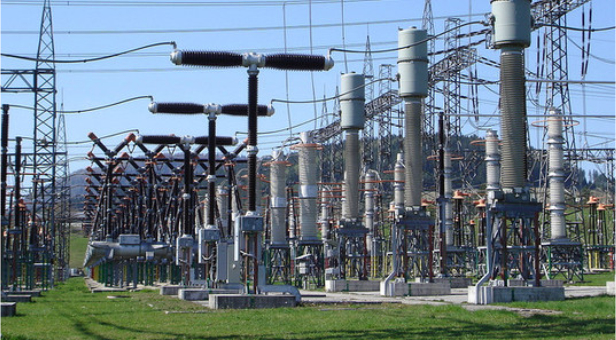
Storage

Egypt’s Giant West Minya Solar-Storage Project Lands US$30 Million in EAAIF Backing


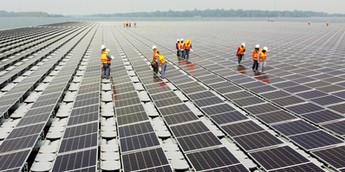
The Emerging Africa & Asia Infrastructure Fund (EAAIF) has committed a $30 million loan to Hassan Allam Utilities to support development of Egypt’s 1,000-megawatt West Minya solar project, one of Africa’s largest planned solar-and-battery energy developments.
The project combines a 1,000-megawatt solar photovoltaic plant with a 660-megawatt-hour battery energy storage system. Developed by Hassan Allam Utilities in partnership with Infinity Power, a joint venture between Masdar and Egypt’s Infinity, West Minya is expected to become one of the continent’s largest integrated solar-and-storage facilities.
The financing addresses one of the biggest challenges facing large-scale renewable energy projects: securing long-term capital before electricity generation begins. Unlike conventional power plants, solar projects require most of their investment upfront, making access to patient, long-term financing essential.
The project is also significant because of its battery storage component. Battery energy storage systems capture excess electricity produced during periods of strong solar generation and release it when demand rises or solar output falls, improving grid stability and reducing reliance on fossil-fuel peaking plants. As countries increase the share of renewable energy in their electricity systems, storage is becoming a critical part of maintaining reliable power supplies. Commenting on the investment, Martijn Proos, Co-Head of Emerging Market Alternative Credit at Ninety-One, which manages EAAIF, said the financing “supports Egypt’s transition to localized renewable power,” adding that combining innovative financing with battery storage “strengthens grid stability and underpins sustainable growth” while providing “a model for other emerging and developing economies seeking to decarbonize.”
The project is part of Egypt’s broader push to expand renewable energy while improving the reliability of its electricity system. Fossil fuels currently account for about 89% of electricity generation, but under its Integrated Sustainable Energy Strategy the government aims for renewables to represent 42% of installed electricity capacity by 2030, supported by large-scale solar, wind and storage projects.
According to the African Development Bank, Africa faces an annual infrastructure financing gap of US$68 billion to US$108 billion, making blended finance and private-sector participation increasingly important for delivering large-scale energy projects.
Related Articles
Nigerian communities seek $310 mln from Shell, wan...
13 Sep, 2024 09:26
Aramco to increase stake in EIG’s MidOcean to 49%,...
17 Sep, 2024 07:50
Saudi Arabia starts operations for the 1st natural...
30 Sep, 2024 13:20
Grid and regulatory hurdles stand in way of Ramokg...
01 Oct, 2024 08:28
Libya Set to Revive Halted Oil Production as Bank ...
01 Oct, 2024 09:10
5th Angola Oil & Gas Opens in Luanda with Calls to...
03 Oct, 2024 11:43
How Heirs Energies turns around OML 17 in 100 days...
22 Oct, 2024 08:28
Oil Updates – crude heads for weekly gain as Middl...
25 Oct, 2024 08:31
Better news for petrol prices in South Africa...
28 Oct, 2024 09:19