أخبار الفيديو / المعادن الثمينة
China's gold market importance probably growing, says precious metals analyst...
By contrast, the hegemonic dominance of the US is continuing to deteriorate amid the Middle East war having a very negative consequence for its global role. (Also watch attached Creamer Media video.)
The gold market is being impacted by scam artists using AI to flood the Internet with bad information and there's also a lot of misinformation about central banks buying much more gold than the correct level of about ten-million ounces a year.
The reason to be bullish on gold is that investment demand is up very sharply and is likely to grow further.
These and many more highlights have been brought to the fore in Mining Weekly’s interview with precious metals analyst Jeffrey Christian, the MD of the CPM Group, which has just published its CPM Gold Yearbook 2026.
Mining Weekly: The chapter on central bank and dollar activity is particularly key. What should be read into it?
Christian: The gold price is at record levels. It’s risen very strongly, primarily driven by investment demand. Central banks have been buying gold but given the secrecy and the opacity and the asymmetrical information in the gold market, there's a lot of misinformation about central banks. Central banks are buying about ten-million ounces a year, but you're hearing much higher numbers that are just not accurate. In addition to that, you keep hearing that the world is moving away from the dollar, that central banks are dumping the dollar, and that foreign investors are not investing in treasury bonds. The amount of dollars that central banks have now is very high. It's up 3% from a year ago or two years ago. It's up 6% on a decade ago, and the amount of treasury securities held by international and overseas investors and governments is also at record levels of more than $9-trillion. It's been increasing at a record 11.6% per annum over the last two years and the dollar’s exchange rate is up 6% or 8% from the beginning of 2025. It’s still up 10% from the 2021 end of the Covid lockdown, and it's up something like 40%, 45% from 2011 after the great recession and global financial crisis. So, the talk in the gold market about how the world's moving away from the dollar and dumping the dollar, and central banks are buying gold hand over fist, is just not true. That's not a reason to not be bullish on gold. The reason to be bullish on gold is that investment demand is up very sharply and is in fact at record levels. But if you understand and you have a more granular view of what's really going on, you might be a little bit less bullish about gold than you would otherwise, and you might have a more rational expectation of where the prices could be.
What impact is the Middle East crisis having on gold and gold prospects?
You’ve seen oil prices rise, although not as much as perhaps one would have thought, and you've seen gold and silver and platinum prices fall, and it's kind of weird that you would see increased political tensions, but lower precious metals prices. I think those lower prices partly reflect that you had a lot of new investors pour into gold in the period September through January, and some of that money has come out of the gold market, because the gold price rose from $4 000/oz to $5 500/oz and it's still at $4 700/oz, so we've seen some investors backing away. That war, and the potential for it, continues to fester, and it could drive gold prices up in the short term, but I think in the long term, it has a very negative consequence for the role of the United States in the world, which sort of sounds diametrically opposed to what I was just saying. The world right now is still beholden to the US dollar for financial transactions. For 50 years there has been a desire to move away from the dollar, but nothing has really succeeded very dramatically. But I think that the war and the United States' attitude and approach to the war and the rationale there, have intermediate-term and long-term implications that are positive for gold, because it means that the hegemonic dominance that the United States has had in the post-war period is continuing to deteriorate. It's going to take a long time to get rid of it, and the United States is probably going to be a thorn in the side of the world, politically, economically, financially, monetarily, culturally, socially. But I think it has done itself a tremendous disservice by attacking Iran the way it did.
How big is China in gold?
China and India are the two largest markets. The Indian market, and all of South Asia and parts of Southeast Asia and the Islamic world, have been hampered by the fact that Dubai has been closed off by the war. You used to see daily air freight of gold scrap into Dubai from Mumbai, and then gold bullion back to Mumbai and other cities in India. That's been disrupted, as have shipments of gold away from Dubai to other parts of the Islamic world, including Turkey, Egypt, Indonesia and Malaysia, but China continues to be very important. It's the largest gold mining country. It's the largest gold refiner. It's one of the two largest sources of fabrication demand for gold use in jewellery. It's one of the two largest investment demand markets, so it's still very important, and it's probably growing in importance to the gold market the same way it's growing in importance to the global economy.
How strong is gold investment demand and gold coin demand?
The coin demand has been strong. It hasn't been as strong as like medallions and one-ounce bars and one-kilo bars, but the gold coin market has been strong. You have seen some pullback in it, simply because the one-ounce coins had very high premia relative to the bullion price. You can find other things, like one-ounce bullion bars that have lower premium and perhaps some maybe as well accepted around the world as are the bullion coins.
What is the present state of the gold recycling market?
Gold recycling has been rising sharply for the last several years. It was up about 8.5% last year. It was up about 4% or 5% the year before. The higher gold price is causing some people to sell their gold – investors and also people who have gold jewellery and decorative items that have a very high gold content, you'll see that really around the world. People tend to think that it has to do a lot with the Asian markets, but it's true throughout the Islamic world, which is 14% of the population, and it's even true in the United States, Canada and Europe, where you'll see people selling their gold jewellery. There's also an increase in gold recycling from electronics and other manufactured products, where the gold content is lower, but with the high gold price and increased environmental restrictions and regulations regarding the end-of-life electronic goods, you've seen increased refining and recovery of gold from electronics. Many countries now say that at the end of life of a piece of electronics, whether it's a cellphone or a stereo or something else, you have to have it recycled, and once the recycling industry has put in the capacity to do that, it's going to continue to do that.
How do you expect AI to impact gold?
Just like any large transitional technology, AI has good things and bad things to it, and we're also already seeing some scam artists using AI to try to separate people from their wealth. But another problem that you have is that AI is what I think computer scientists would say is not real artificial intelligence yet. It's still sort of precognitive. It doesn't have that synapse that human thinking has. What AI is doing right now is it scans the Internet for information, and the most common things that it hears or sees on the Internet about gold, is what it decides probably is the truth, and since the scam artists have flooded the internet with bad information, a lot of that bad information is being presented by AI systems as being accurate, and that is not true. It has increased the asymmetry of information flows within the gold market, so you have a core of people who understand what's really going on and have good access to good data, and then you have a growing volume of investors and mining executives, believe it or not, who rely on AI-generated surveys, and they're getting fed inaccurate data. We've seen a situation just recently where the Banque de France had moved about four-million ounces of gold from the New York Fed to its depositories in Paris. This is gold that it had collected during the Bretton Woods gold dollar system, prior to 1971, and you've seen a lot of misinformation and wrong explanations as to what the Banque de France did, and what it cost them and how they accounted for it.
And what’s the big take away?
The big takeaway is something that we've been talking about for more than a quarter of a century. In late 2020 I gave a speech, and we talked about what we call the gold renaissance. We said that if you looked at the period of free gold from the mid-60s into 2020, the pattern that you saw in the gold market was that economic and political problems would cause investors to buy a lot of gold, more than 20-million ounces, on a net basis in a given year or two, and that would drive the gold price up. After a year or two, things would get better, and investors would buy less than 20-million ounces, and the gold price would fall back and move sideways. That happened repeatedly in the mid-60s, the mid-70s, the late 70s, the mid-80s, in the early 90s. But starting in 2020, we said the political and economic environment was going to be much worse for decades to come, not one or two years, but for several decades, and that was going to cause investors around the world to buy more gold for a longer period of time. We saw this upward shift in the investment demand levels, from 20-million ounces to 40-million ounces to 55-million ounces last year. That was a record net physical gold purchased by investors. There's been this upward shift in the investment demand curve because of the economic and political problems that we're all facing. That's going to continue, and, if anything, it's getting worse this year and last year than it had been. It's probably going to continue to be bad for the next year or two, at least, and probably on a longer-term basis, we'll see that continue. In that environment, investors and central banks will continue to buy gold, and that's going to keep the gold price high and rising.
التالي
UAE energy exports will not be held hostage amid Iran war, presidential adviser says...

Boeing predicts Africa aircraft fleet will more than double by 2045...

Six months into Iran war, almost half of global oil flows from war zones...
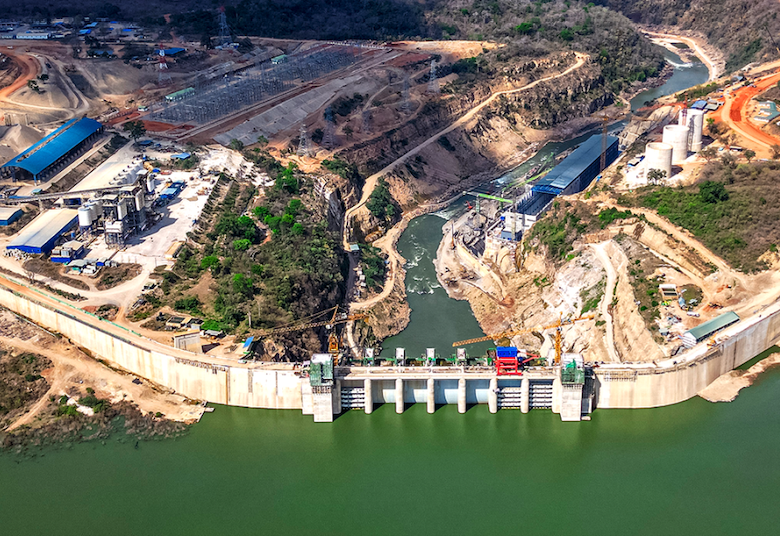
Tanzania commissions country's largest hydropower plant, boosting economic growth hopes...
Archive footage of Saudi Aramco as the company posts 44% rise in net profit...
آخر الأخبار
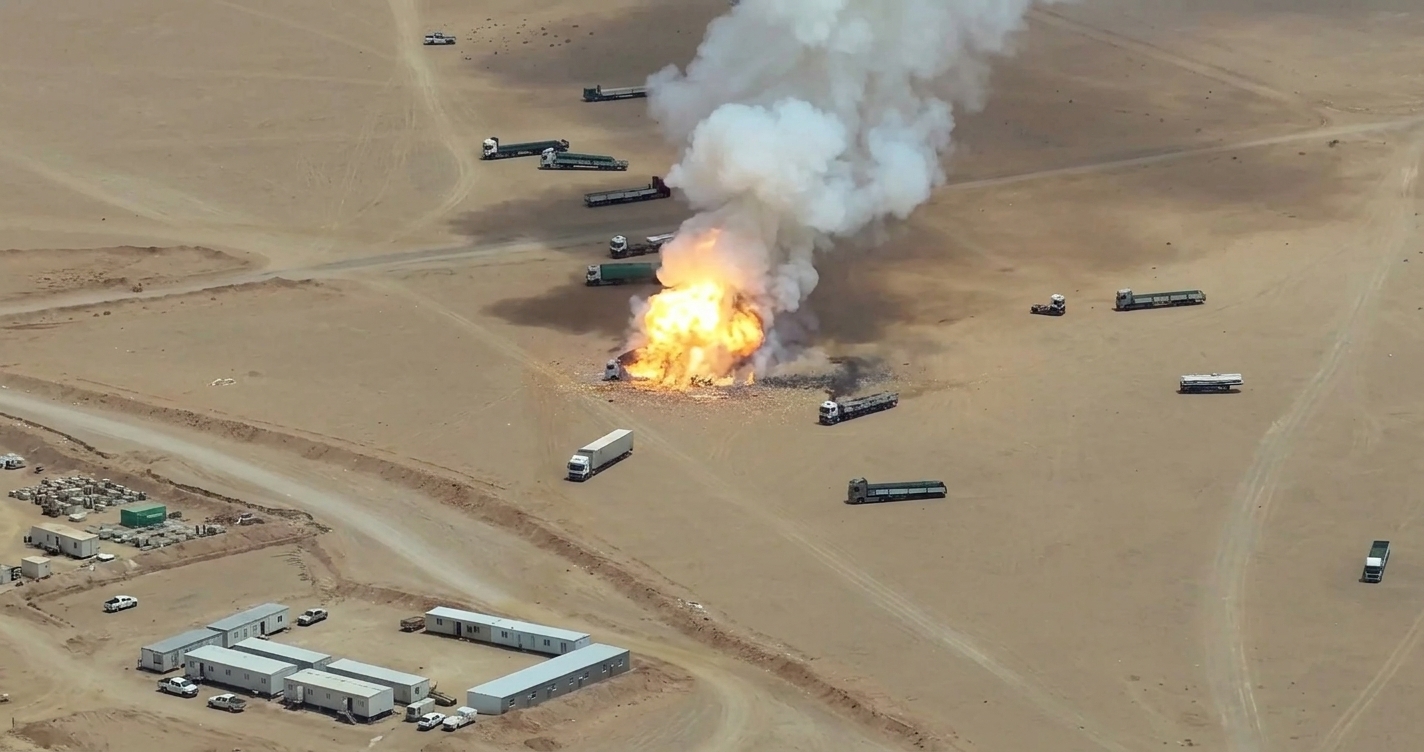
Oil prices surge as Houthi, Iraq-based attacks dis...
18 سبتمبر, 2026 18:46
Dangote Refinery launches $1.62bn IPO on Nigerian ...
18 سبتمبر, 2026 18:26
Oil prices edge lower on easing fears over Saudi s...
18 سبتمبر, 2026 18:03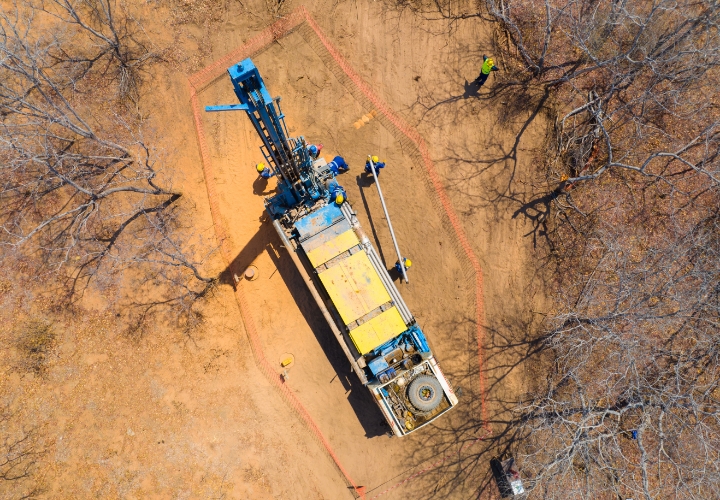
Atomic Eagle Secures $10.85M Funding Commitment to...
18 سبتمبر, 2026 17:48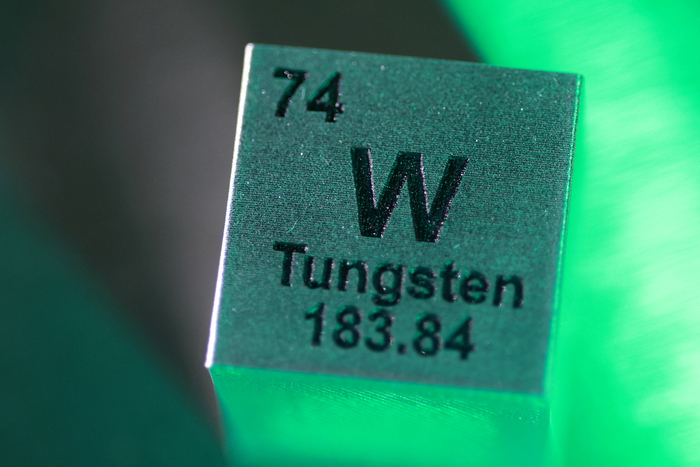
Almonty Industries Signs Binding Tungsten Partners...
18 سبتمبر, 2026 17:33
Manganese Producers Consortium Backs Phase 3 Rail ...
18 سبتمبر, 2026 17:13
African Port Officials Tour US Facilities to Explo...
18 سبتمبر, 2026 16:55
When Both Ends of the Red Sea Corridor Go Dark: Ya...
18 سبتمبر, 2026 16:41
Petrobras Expands West African Footprint With Eigh...
18 سبتمبر, 2026 11:48