المعادن الثمينة

Bokoni Platinum reboot could knock ARM’s cash flow


African Rainbow Minerals (ARM) has a colourful track record picking capital projects. It sold its 40% stake in Zambia’s 70-year-old Lubambe copper mine (formerly Konkola North) in 2017 after a R1.4bn writedown. That was probably a wise move in the end. Lubambe’s new owner, a Chinese firm, has committed to investing $300m before generating revenue. There are probably easier ways to make money from copper.
Other divestments have not been so judicious. ARM sold its greenfield Otjikoto Gold in Namibia in 2010, explaining that it was below its investment threshold. But then the project’s Canadian buyer, B2Gold, made Otjikoto Namibia’s largest gold producer. Its B2Gold Namibia became a national powerhouse contributing more than $19bn to the Namibian economy between 2015 and 2022.
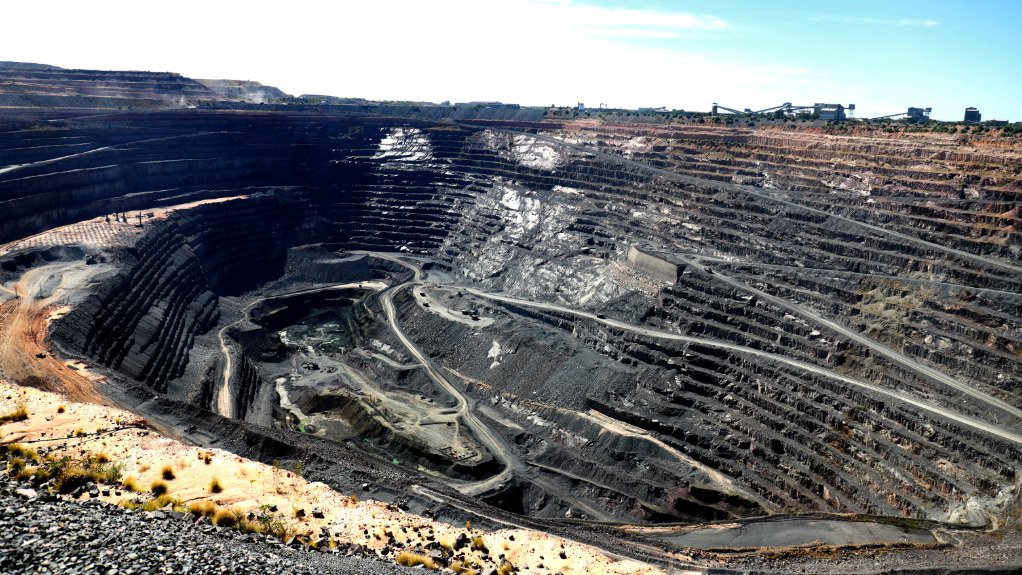
Bokoni Platinum is another of ARM’s deals. A longtime problem child for its previous owner, Anglo American Platinum (Amplats), the platinum group metals (PGMs) mine was taken out of mothballs by ARM in 2021 following its R3.5bn acquisition from the Amplats-Atlatsa Resources joint venture. But three years later, ARM put Bokoni back into mothballs, pending a new feasibility study. Bokoni was also written down for R2.2bn in ARM’s 2025 financial year.
That study now complete, ARM announced on July 23 that it would reopen the mine with a new plan and invest a further R15.2bn over seven years. As part of a phased, hybrid mining approach, and with a new concentrator, the group is targeting up to 400,000 ounces in annual PGMs from about 2030. Bokoni has extremely high grades — the UG2 reef, accounting for four-fifths of the total resource, grades at 6.43g/t — but it is steep dipping. The focus of the feasibility consequently turns on a smaller mine.
On paper, it makes for an exciting prospect for ARM, approximating to two-thirds of last year’s 615,719 oz in attributable group PGMs. But the announcement surprised analysts in its swiftness. “Approval was expected but not forecast,” says UBS analyst Steve Friedman. Similar sentiments have been expressed by RMB Morgan Stanley.
Shares in ARM plummeted on the day. At the time of writing, the share was 8% lower over seven days. It’s also shed 21% this year, in contrast to the other JSE-listed diversified miners, Anglo American and BHP, whose share prices are 20% and 28% higher respectively over the same time.
On the same day as the Bokoni announcement, ARM also said it would reopen the Nkomati nickel mine, another tricky operation, in Mpumalanga (Bokoni is in Limpopo). The nickel market has been volatile, but it has also improved this year. In addition, an offtake agreement with the Swedish Boliden mining group in April has given ARM fresh confidence to step back into nickel. At R750m in capex, it is a sizeable undertaking, but the stakes are far lower than with Bokoni.
Analysts worry that ARM’s cash generation could be negatively affected by Bokoni’s recommissioning, especially if another project, the Two Rivers Merensky project, is approved. Held in a joint venture with Impala Platinum, a commitment to funding Two Rivers, which ARM controls, could tip it into negative free cash flow for two to three years, says RMB Morgan Stanley analyst Brian Morgan.
For all these concerns, however, Bokoni could be worth the stress. “Prudent,” says one analyst on the project. His thinking is the risk is supportable given the market. South African PGM production is falling while the case for automotive demand is revved up again owing to the reduced rate of electric vehicle adoption.
As a result, ARM is expected to generate strong cash flow assuming current PGM basket prices are sustained, says Citi analyst Shashi Shekhar. “The PGM segment is currently generating significant cash for the company on higher prices,” he says.
At R15.2bn in capex, Bokoni implies a capital intensity of R40,500/oz, which is in line with the R30bn in brownfield PGM projects unveiled by Sibanye-Stillwater in June. ARM’s balance sheet is also very strong with a net cash position of R9.5bn at end-June.
Perhaps ARM is right to take the gamble. Perhaps it will succeed on a cost control plan that eluded Amplats (now Valterra Platinum) for more than 20 years. Under its stewardship, Bokoni’s costs were always in the top half of the industry.
But it may ultimately be the vastly improved PGM market that makes the difference. History shows the mine is hard to tame. “The project is not well-regarded by investors we’ve spoken to and news of the approval of the project and quantum of capex is likely to weigh on the stock, we think,” says RMB.
مقالات ذات صلة
China’s ‘encouraging’ hydrogen progress witnessed ...
03 مارس, 2026 07:55
Lucara posts lower 2025 revenue, says additional f...
04 مارس, 2026 07:48
Gold bulls say broader rally is intact despite inv...
04 مارس, 2026 08:00
WorldVest Launches Gold Finance Africa, Building a...
04 مارس, 2026 10:44
Gold and silver rallies likely on pause despite ne...
04 مارس, 2026 11:49
Gold prices climb over 1 percent to $5,164 as Midd...
04 مارس, 2026 11:59
‘Extremely robust’ platinum investment demand expe...
04 مارس, 2026 13:08
Trigon Metals Launches Silver Exploration Drive in...
05 مارس, 2026 08:00
The Ekapa Mine liquidation – A tragedy compounded...
05 مارس, 2026 08:05