توليد الطاقة

Block 47 deal raises hopes for Libya’s upstream oil revival


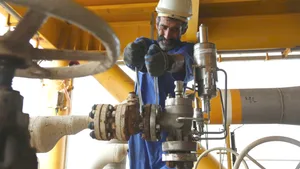
Libya’s recent Exploration and Production-Sharing Agreement (EPSA) for Block 47 marks an important step in reviving the country’s upstream oil sector.
Signed by the National Oil Corporation (NOC), the Libyan Investment Authority (LIA) and Qatar’s UCC Holding, the agreement covers the North Hamada field in the prolific Ghadames Basin. It reflects both Tripoli’s drive to revitalise its hydrocarbon industry and Doha’s strategic expansion into North African energy assets.
The fully financed project aims to increase production from around 33,000 barrels per day to 80,000 bpd – a 142 percent increase.
With an estimated $1 billion investment funded entirely by the Qatari entity through its subsidiary Urbacon Energy Libya, the project is one of the most significant foreign-backed upstream investments in Libya in recent years.
Production growth and economic gains
The agreement also comes at a pivotal moment for the North African state’s wider energy sector.
After years of disruption caused by political instability, blockades and underinvestment, crude production has steadily recovered during the past two years, at times rising above 1.4 million bpd – its highest in more than a decade.
The NOC has combined efforts to restore existing production with a renewed push to attract foreign capital through new licencing rounds and upstream partnerships, as it works towards a long-term production target of 2 million bpd.
For Libya, the commercial and fiscal incentives of Block 47 are substantial. First, the project transfers virtually all exploration and development financing risk to the foreign investor – a crucial advantage given the government’s constrained fiscal position.
Second, the additional 47,000 bpd of crude could generate significant export revenues, strengthening the state’s foreign-currency reserves, provided international oil prices remain supportive.
Beyond oil, the agreement addresses a pressing domestic challenge: chronic electricity shortages.
By capturing and using associated natural gas for local power generation, the project could help reduce frequent blackouts that have disrupted daily life and industrial activity. Exporting crude while using gas domestically would also improve Libya’s overall energy efficiency.
From a geopolitical perspective, the deal sends a strong signal to international investors. After years of limited exploration activity, the EPSA demonstrates that Libya remains open to foreign investment.
It also positions the country as a more flexible supplier to European markets, particularly as traditional Russian and Middle Eastern supply routes continue to face disruption.
For Qatar, the investment diversifies its overseas energy portfolio beyond LNG, establishes a permanent upstream presence in the Mediterranean, and deepens diplomatic ties with a resource-rich neighbour.
Phased approach
The agreement follows Libya’s standard EPSA model, built around a tripartite partnership. The NOC remains the state concessionaire and owner of the country’s hydrocarbon resources. The LIA participates as the sovereign wealth partner, while UCC Holding serves as the foreign operator and sole financier.
Although the agreement does not disclose the revised production-sharing terms, it broadly follows the existing Area 47 EPSA framework. Under the previous arrangement, the production phase allocated 50 percent to the NOC, 25 percent to the LIA and 25 percent to the foreign investor.
A key operational feature is the project’s phased development. While UCC is financing the appraisal drilling and early works, full-field development will proceed only after detailed technical studies are completed and the NOC approves a comprehensive development plan.
This milestone-based approach ensures that major capital commitments are supported by geological, engineering and commercial assessments, reducing the risk of premature investment.
Strategic risks
Despite its strong commercial rationale, the project’s path to 80,000 bpd is not without significant risks.
Political instability remains the dominant challenge. Libya continues to grapple with institutional fragmentation, competing administrations and periodic disputes over the control of oil revenues. Changes in government policy or regulatory interpretation could delay implementation, alter fiscal terms or even suspend operations.
Security risks are closely linked. Although conditions have improved in several producing regions, the country’s oil infrastructure remains vulnerable to sabotage, localised armed conflict and blockades by tribal or political factions.
Even temporary production stoppages have historically resulted in substantial financial losses for the state and its international partners.
Technical and geological uncertainties also remain. Reservoir quality, recovery rates and well performance may differ from pre-development expectations, potentially reducing profitability.
At the same time, market volatility presents an ongoing challenge. A sustained decline in global crude prices could weaken investment returns, delay later development phases, or force revisions to production plans.
Finally, tightening environmental, social and governance standards add another layer of complexity. UCC will need to manage emissions, flaring and spill prevention carefully to minimise regulatory and reputational risks.
A blueprint model?
Block 47 represents an important test case for Libya’s energy resurgence. By combining foreign capital, sovereign ownership and technical expertise, it has the potential to unlock one of the country’s most promising oil assets.
Its long-term success, however, will depend on Libya’s ability to provide a stable, secure and predictable operating environment. If those conditions can be sustained, the agreement could become a model for attracting international investment back into Libya’s upstream energy sector.
مقالات ذات صلة
QatarEnergy ceases LNG production following milita...
03 مارس, 2026 08:20
Africa’s expected hydrogen mobility build-out deta...
03 مارس, 2026 09:21
South Africa energy build risks stalling without f...
04 مارس, 2026 12:01
LNG shutdown sinks Qatar stocks but Tadawul reboun...
04 مارس, 2026 12:19
Africa's energy transition must support industrial...
04 مارس, 2026 12:50
Funding for Africa clean energy financing surges d...
04 مارس, 2026 13:09
Kenya: Spenomatic Group Opens Solar Learning Centr...
05 مارس, 2026 08:30
NEDC Backs Solar Mini-Grid Rollout in Niger State...
05 مارس, 2026 09:16
Dr Kgosientsho Ramokgopa frames energy as Africa’s...
06 مارس, 2026 08:17