Distribution

Africa’s Longest Oil Pipeline Nears Completion as State Energy Firm Targets $42bn Gas Deal by June


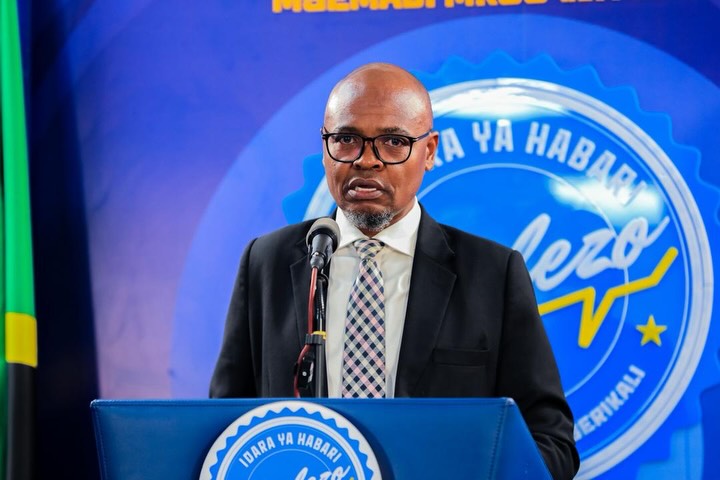
The Tanzania Petroleum Development Corporation (TPDC) has announced that the East African Crude Oil Pipeline (EACOP) — the world’s longest electrically heated crude oil pipeline — is on course for completion by July 2026, with first oil exports expected to follow in October.
Mussa Makame, TPDC’s Managing Director, made the disclosure at a press conference in Dodoma on March 11, 2026, outlining a sweeping portfolio of energy projects that he said would transform the country’s oil and gas sector over the coming decade.
The 1,443-kilometre pipeline stretches from Hoima in Uganda to the Chongoleani Peninsula in Tanga. It is designed to carry crude oil from Uganda’s landlocked Tilenga and Kingfisher fields to the Indian Ocean for export.
Makame noted that once construction is complete, it will take more than a month to fill the pipeline before the first shipments can depart.
The project is a joint venture involving Uganda’s national oil company, TotalEnergies of France, and China’s Sinopec. TPDC represents the Tanzanian government’s interests along the pipeline’s Tanzania section, with the 81 per cent completion figure confirmed by the EACOP project director during a visit by Tanzania’s Prime Minister to the Tanga terminal in February 2026.
Makame said the project had already delivered significant economic benefits, with a large share of construction contracts, labour, and services sourced from Tanzanian companies and workers.
A cohort of young graduates from institutions, including the Vocational Education and Training Authority (VETA) and the Arusha Technical College, are currently undergoing practical training at TPDC’s gas processing facilities in preparation for the pipeline’s operational phase.
LNG deal looms
The more consequential announcement concerned the country’s long-delayed liquefied natural gas (LNG) project, which Makame said is in its final stages of negotiation, with only a few outstanding points remaining before contracts can be signed.
He said TPDC expects the Host Government Agreement (HGA) to be finalised by June 2026.
That timeline aligns with statements made by Deputy Energy Minister Salome Makamba in January, who confirmed the government’s target to conclude the deal before mid-year. First production from the facility is anticipated by 2034.
The US$42 billion project — the largest single investment in the country’s history — would draw on offshore gas reserves operated by Shell in Blocks 1 and 4, and Equinor in Block 2.
The project is designed to produce up to 10 million tonnes of LNG annually from an estimated 47.13 trillion cubic feet of offshore reserves, with a processing terminal to be built at Likong’o in Lindi.
Makame said that following the signing of the HGA, the project would enter a pre-FEED (Front End Engineering and Design) phase — a process that typically takes two to three years — before a Final Investment Decision (FID) can be taken.
Analysts estimate the FID is unlikely before 2028–2029, with first LNG cargoes expected in the early 2030s.
Makame stressed that a significant volume of gas would be reserved for the domestic market as part of the deal, and that the project — expected to operate for approximately 40 years — would generate extensive employment and local business opportunities throughout its lifecycle.
Drilling accelerates
Separately, Makame said TPDC is drilling three new wells in the Mnazi Bay gas field in Mtwara, where production has been declining after nearly two decades of operation. One of the wells is an exploration well targeting new reservoirs, while two are development wells aimed at sustaining output from known deposits.
The US$235 million drilling programme is 27 per cent complete, with the first well expected to be finished within days of the press conference. Makame said the three wells are projected to add 45 million cubic feet of gas per day — enough to generate more than 200 megawatts of electricity.
The same drilling rig will subsequently move to the Ntorya area in the Ruvuma Block — also in Mtwara — where TPDC plans to drill one new exploration well, conduct a workover on a previously drilled well, and carry out tests on a third.
The Ntorya programme is budgeted at US$23.5 million and is expected to unlock an additional 60 million cubic feet per day of gas.
To connect Ntorya’s output to the national grid, TPDC is constructing a 34.2-kilometre pipeline to the Madimba gas processing plant, at Sh122 billion. The pipeline is 35 per cent complete and is scheduled for completion in September 2026, in line with the expected start of gas production from the first Ntorya well.
TPDC is also conducting seismic surveys across 736 square kilometres in the Lindi-Mtwara block, for 107 billion shillings, to identify new drilling targets by the end of 2026.
In parallel, the corporation is completing seismic data acquisition in the EAS Wembere block — spanning five central and lake-zone regions — where the geology is considered analogous to the oil-bearing formations in Uganda’s Hoima basin and Kenya’s Turkana region, both of which have yielded commercial oil discoveries.
Expanding the grid
On the domestic distribution front, Makame said TPDC has dramatically expanded the number of compressed natural gas (CNG) filling stations in Dar es Salaam, reducing wait times for motorists from several hours to just minutes compared to two years ago, when the city had only a single operational station.
The corporation is now procuring modular CNG stations for deployment in Tanga, Kilimanjaro, Arusha, Morogoro, and Dodoma — extending the reach of the existing gas pipeline network, which currently serves Mtwara, Lindi, Pwani, and Dar es Salaam.
Tanzania holds an estimated 57 trillion cubic feet of natural gas reserves and has set a target of generating 8,000 megawatts of electricity by 2030.
President Samia Suluhu Hassan’s administration has designated the LNG project a national priority, with the government racing to finalise the HGA before investment flows to competing projects in the region, including TotalEnergies’ recently restarted US$20 billion Mozambique LNG project.
Related Articles

World Bank Backed Fund targets solar energy projec...
09 Sep, 2024 13:34
Libya oil exports plunge as NOC cancels cargoes du...
12 Sep, 2024 08:31
Caterpillar introduces groundbreaking dynamic ener...
18 Sep, 2024 07:42
Saudi Arabia strikes $1 bln deal as aluminum drive...
18 Sep, 2024 09:03
Egypt and Petronas Discuss Expanding LNG Investmen...
19 Sep, 2024 13:00
6 Regional Banks Transforming Africa’s Oil & Gas I...
20 Sep, 2024 13:00
Giyani Metals advances battery-grade manganese dem...
30 Sep, 2024 09:20
Middle East tensions spike oil prices, but surge w...
01 Oct, 2024 07:59
Uganda receives first batch of line pipes for EACO...
01 Oct, 2024 09:21