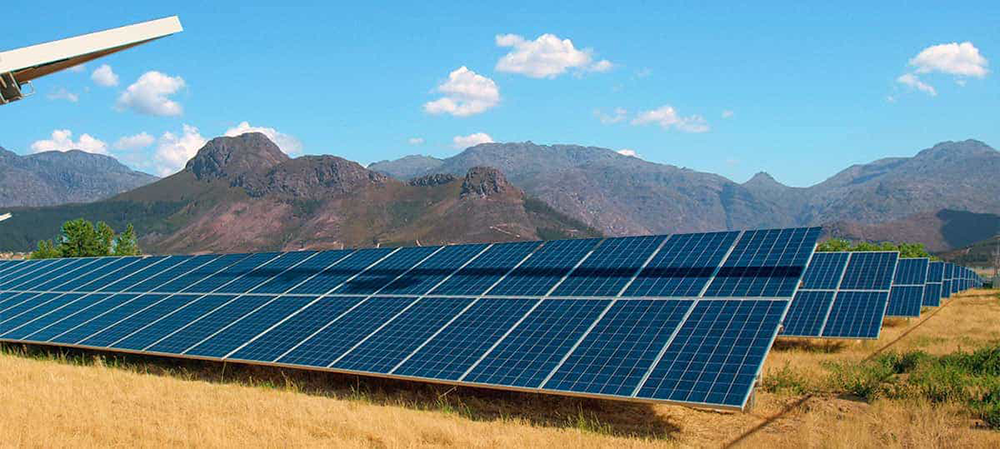
Generation

Saudi Arabia overtakes UAE on the GCC’s road to renewables


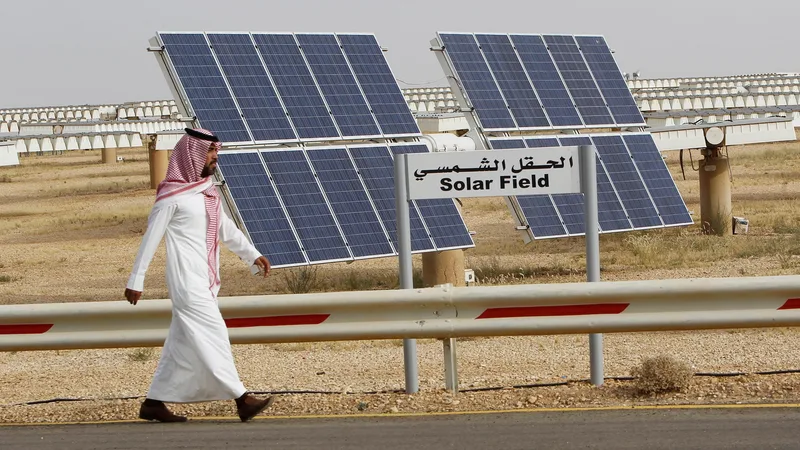
From vast solar plants in the Saudi desert to wind farms on Oman’s Arabian Sea coast, ambitious renewable energy projects have become a pillar of Gulf countries’ economic plans.
The six GCC member states aim to have 165 gigawatts of renewable energy available by 2030. So far, they have installed about 24GW.
To meet that 2030 target, the bloc will require an estimated $61 billion in additional investment, according to US think tank the Baker Institute, on top of the nearly $38 billion already committed.
The overwhelming majority of existing and planned projects are solar, with wind accounting for a tiny share of capacity.
Solar capacity in the GCC rose by 60 percent last year to make up 23GW of the 24GW total, according to the International Renewable Energy Association. This is equivalent to twice Dubai’s peak electricity demand.
Saudi Arabia increased its solar capacity by 92 percent last year to almost half the GCC total, overtaking the region’s long-time frontrunner the UAE.
Riyadh has a slate of mammoth projects including the Shuaibah 2 solar development, the Sudair solar plant and the Dumat Al Jandal wind farm.
Under Vision 2030, Saudi Arabia aims to source 50 percent of its electricity from renewables and install 100-130GW over the next four years.
But the pace of change varies across the region and analysts question whether countries expanding rapidly can maintain that momentum.
“The GCC is moving faster than it was five years ago, but progress is not even,” said Nishant Kumar, renewables and power analyst for Europe, the Middle East and Africa at Rystad Energy.
“The UAE, Saudi Arabia, Oman and Qatar have the clearest near-term renewable delivery paths. Saudi Arabia is the most consequential market and is accelerating sharply, but its 2030 target is so large that delivery risk remains high.”
The UAE, meanwhile, is powering ahead, with the “strongest delivery record”, according to Kumar.
“While the UAE is targeting a 44 percent renewable energy share by 2050, our forecast indicates that it could achieve this target by 2040, which is well ahead of schedule.”
Other Middle Eastern countries such as Egypt are also pursuing solar and wind projects.
Renewables targets, which also include nascent battery storage industries, will make a vital contribution to GCC states’ net zero goals, along with carbon capture and storage, nuclear energy and carbon credits.
The GCC countries also intend to keep exporting vast quantities of fossil fuels – and expanding their renewables capacity frees up more hydrocarbons for export.
The UAE and Oman aim to reach net zero by 2050, while Saudi Arabia, Kuwait and Bahrain are targeting 2060. Qatar does not have a set timeline.
Kuwait remains the region’s laggard, according to Kumar.
It is “targeting 15 percent renewable power generation or 4.5GW of capacity by 2030. However, renewable capacity is only about 114MW in 2025, and with almost no renewable pipeline awarded so far, Kuwait may not be able to achieve the target.”
The Iran war is not expected to supercharge investment in renewables in the Middle East in the immediate future, unlike in the rest of the world, analysts have said.
This is partly because their pipelines are already so large and hydrocarbons still such a central part of their economy.
The cost of repairing energy infrastructure damaged by missile and drone strikes is also expected to reduce the funds available for overseas investments, which have included renewables projects.
Related Articles
QatarEnergy ceases LNG production following milita...
03 Mar, 2026 08:20
Africa’s expected hydrogen mobility build-out deta...
03 Mar, 2026 09:21
South Africa energy build risks stalling without f...
04 Mar, 2026 12:01
LNG shutdown sinks Qatar stocks but Tadawul reboun...
04 Mar, 2026 12:19
Africa's energy transition must support industrial...
04 Mar, 2026 12:50
Funding for Africa clean energy financing surges d...
04 Mar, 2026 13:09
Kenya: Spenomatic Group Opens Solar Learning Centr...
05 Mar, 2026 08:30
NEDC Backs Solar Mini-Grid Rollout in Niger State...
05 Mar, 2026 09:16
Dr Kgosientsho Ramokgopa frames energy as Africa’s...
06 Mar, 2026 08:17