Energy Other

IEA slashes global oil demand forecast as war drives up prices


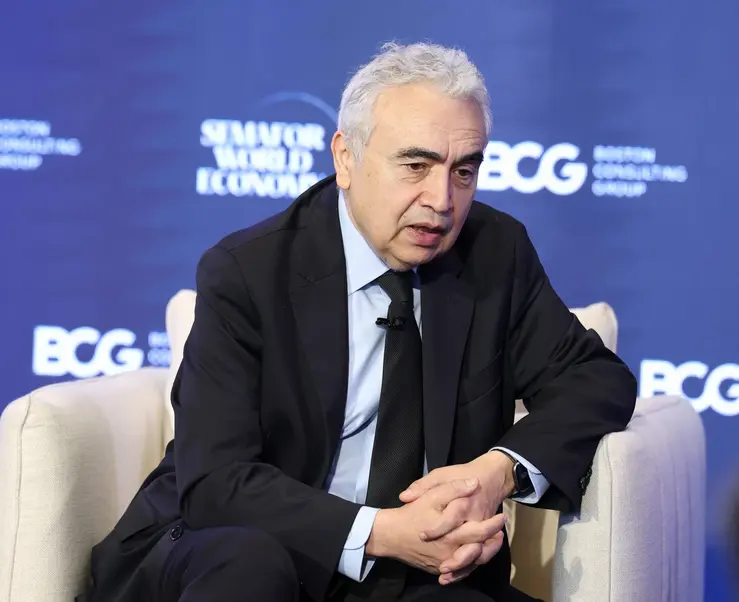
Global oil demand is likely to fall more sharply than previously thought this year as high prices and supply disruptions caused by the US-Iran war curb fuel use, according to the International Energy Agency (IEA).
The Paris-based organisation expects demand to decline by 1.6 million barrels per day (bpd) in 2026, widening its forecast by more than 500,000 bpd compared with July.
The war has sent shockwaves through crude markets as the Strait of Hormuz, through which a fifth of global oil supplies normally pass, has been effectively closed for months.
A second front in the conflict was established in July when Iran-backed Houthis began attacking ships attempting to transit the Bab al-Mandab waterway, disrupting a key export route for Saudi Arabia in the Red Sea.
The disruption has restricted the availability of petroleum products while pushing up fuel prices, forcing businesses and ordinary people to cut consumption.
The IEA said in a report that global refinery output remained almost 5 million bpd below year-earlier levels in July, while seaborne trade in refined products was down 3.8 million bpd.
“Continued disruptions to Middle East oil production and exports are straining international supply chains, curtailing product availability and pushing up prices,” the IEA said.
“Elevated fuel prices are putting further downward pressure on oil use.”
The agency expects the impact to be particularly severe in the third quarter, when global oil demand is forecast to fall by 2.8 million bpd year on year.
In mid-June Washington and Tehran signed a memorandum of understanding that many hoped would lead to a deal to reopen Hormuz – but this unravelled within weeks and the conflict escalated in fresh bombing campaigns for a fortnight in July.
No deal is in sight, while attacks on ships in Hormuz and the Bab al-Mandab have slowed oil exports yet again.
The IEA has described the crisis as the “largest global oil supply disruption ever” and said the conflict had exposed vulnerabilities in the energy security of oil-importing countries.
It cut its 2026 global oil supply forecast by another 600,000 bpd and now expects production to decline by 4.3 million bpd from 2025, averaging 102 million bpd this year.
Inventory concern
Manjeet Markanda, head of trade support at Lunaro Markets, said a bigger near-term concern than the drop in demand is “the amount of supply currently offline and the impact this is having on global inventories”.
“With inventories falling and the IEA now expecting a larger supply deficit in the third quarter, the market has less room to absorb any further disruption.
“Until there is more clarity around the Strait of Hormuz and Gulf exports returning to normal, geopolitical risks are likely to continue supporting oil prices.”
Slowdowns in traffic in the Gulf and Red Sea may have delivered a blow to producers including Iraq and Kuwait, which were starting to ramp up output in July, IEA data showed, and are dependent on shipping to get their oil to customers.
Gulf production recovered by 2.5 million bpd in July to 23.9 million bpd, but was 8.3 million bpd below pre-conflict levels.
Regional exports, including supplies transported through routes bypassing Hormuz, fell by 2.1 million bpd to 15 million bpd. Flows through the Bab al-Mandab also “collapsed in July”, the IEA said.
The IEA’s forecast contrasts with that of the Organization of the Petroleum Exporting Countries (Opec), which said on Wednesday that it expects global oil demand to grow by 580,000 bpd this year.
However, this was the fourth consecutive monthly cut to Opec’s growth estimate.
Brent crude was trading 1.2 percent lower at $87.76 a barrel on Thursday, while US benchmark West Texas Intermediate crude also dropped 1.2 percent to $82.05.
Prices have tracked higher each time tensions escalated considerably, then fallen when a peaceful resolution seemed imminent.
Ole Hansen, head of commodity strategy at Saxo Bank, said oil markets were looking beyond the immediate shortage and pricing in the prospect of Hormuz eventually reopening.
A separate report from the US Energy Information Administration, released on Tuesday, assumed that oil flows would remain severely disrupted in August before gradually improving from September.
Related Articles

South African rand falls to 3-month low as soaring...
09 Mar, 2026 08:35
Aramco’s 13% rally helps Saudi stocks post second ...
13 Mar, 2026 08:02
IEA Members Coordinate Historic Oil Stock Release ...
16 Mar, 2026 08:24
NamPower warns N$700 million in unpaid bills threa...
17 Mar, 2026 08:20
Middle East oil becomes most expensive in the worl...
17 Mar, 2026 08:43
Libya’s NOC launches Faragh-Brega pipeline project...
17 Mar, 2026 09:32
TotalEnergies’ global output down 15% amid Middle ...
17 Mar, 2026 09:39
Why Ethiopia’s Gas-to-Fertilizer Bet Matters for E...
19 Mar, 2026 12:58
Alake Advocates Regional Hubs to Power Africa’s Mi...
23 Mar, 2026 10:09