Energy Other

Shell's Profits Double as Middle East Conflict Reshapes Energy Markets


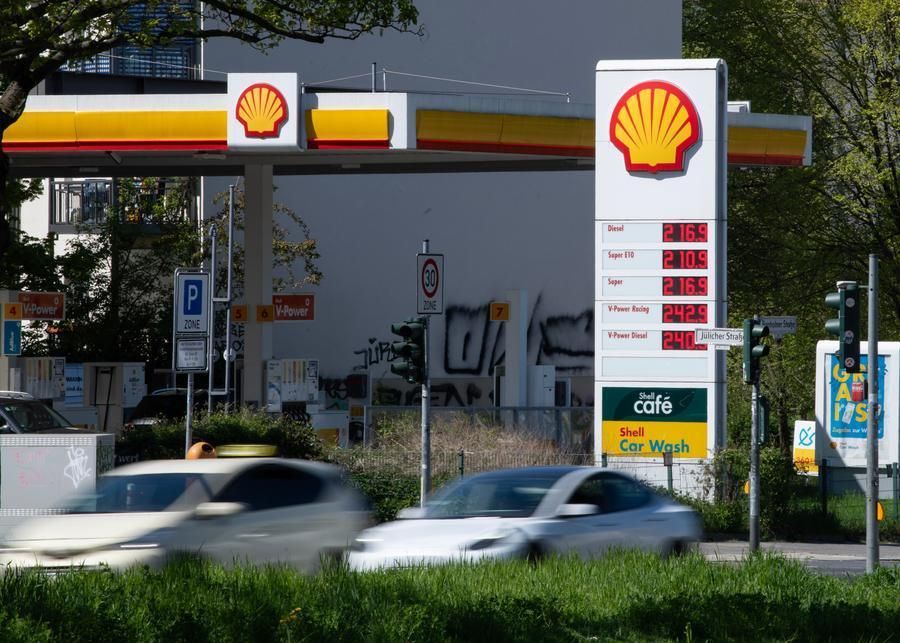
Shell posted profits of $9.84 billion for the second quarter of 2026, more than double the $4.26 billion it reported for the same period last year. It is the oil major's strongest quarterly result since 2022, and it comes at a moment when war in the Middle East has thrown global energy markets into some of their most volatile conditions in years.
A Quarter of Contrasts
The headline number tells only part of the story. Shell's own account of the quarter describes a business pulled in two directions at once: soaring prices lifting revenue on one side, and serious operational disruption cutting into production on the other.
Revenue for the quarter rose 45% year-on-year to $96.4 billion, driven largely by higher oil and gas prices. Cash flow from operations reached $21.4 billion, helped by a $3.4 billion working-capital inflow. The company also confirmed a further $3 billion share buyback and left its 2026 capital spending guidance unchanged, at $24–26 billion.
Set against that, Shell's gas production nearly halved within the space of a single quarter, falling to 631,000 barrels of oil equivalent per day, down from 909,000 in the first three months of the year. The cause was direct: the war has disrupted operations in Qatar, home to some of Shell's key liquefied natural gas (LNG) infrastructure. Its Pearl gas-to-liquids facility was struck by a missile in March and is not expected to be fully repaired for around a year, while wider outages hit the Ras Laffan LNG hub, one of the largest in the world. Across the first half of 2026, Shell's total oil and gas production was down 16% compared with the same period in 2025, only partly offset by new output from Brazil and the Gulf of America.
Where the Profit Actually Came From
With production falling, the quarter's earnings were driven less by pumping and selling more oil, and more by trading it. Since the conflict began, Brent crude — the global benchmark — has swung from around $73 a barrel before the war to peaks above $120, before falling back below $100 as markets weighed when, or whether, shipping through the Strait of Hormuz might return to normal. Roughly a fifth of the world's oil passes through that stretch of water, making it a key pressure point for global supply.
Big, fast price swings like these tend to widen the gap between buying and selling prices in commodity markets — exactly the kind of environment in which oil majors' trading arms tend to perform well. Analysts pointed to this as the standout feature of Shell's results. "The standout contribution came from Shell's trading operation, which once again demonstrated the value of its integrated business model, supported by healthy refining and chemicals performance and robust production growth in Brazil," said Maurizio Carulli, global energy analyst at Quilter Cheviot, adding that Shell "remains a steady ship in an industry where conditions can change rapidly."
Shell chief executive Wael Sawan struck a similar note, saying the firm's "operational performance enabled very strong results during another quarter of severe disruption in global energy markets." Combined with first-quarter profits of $6.92 billion, Shell's first-half earnings for 2026 are up 70% on the same period last year.
Part of a Wider Pattern
Shell is not alone. BP and Norway's Equinor have both reported strong profits this year on similar dynamics, and France's TotalEnergies also saw its profits double in the same quarter. Industry-wide, analysts have noted that several of the world's largest fossil fuel companies posted sharply higher earnings in the April-to-June period, a pattern widely attributed to the same combination of elevated prices and heightened trading volatility stemming from the conflict.
For now, the story of Shell's 2026 is one of a company whose upstream operations have taken a real hit from a war in a region central to its business, even as the market turbulence that same war has created has proven, for its trading desk at least, unusually profitable.
Related Articles
Kuwaiti oilfield comes onstream officially after 1...
22 Sep, 2025 12:56
African Energy Week (AEW) 2025: Unlocking the Pote...
22 Sep, 2025 13:22
South Africa warns illegal car imports threaten ne...
23 Sep, 2025 06:31
South Africa Confronts EU Carbon Border Mechanism...
23 Sep, 2025 12:33
South Africa, China Deepen Investment Ties in Key ...
24 Sep, 2025 07:35
Raysut Cement’s Expansion into Libya and North Afr...
24 Sep, 2025 07:40
Nextchem opens regional office in Abu Dhabi...
24 Sep, 2025 08:10
Ghanaian students win top honours in IAEA’s Female...
24 Sep, 2025 09:32
Key Sectors Linking Mauritania and Gambia...
24 Sep, 2025 09:40