Production

Iran makes new threats to Hormuz in ongoing conflict


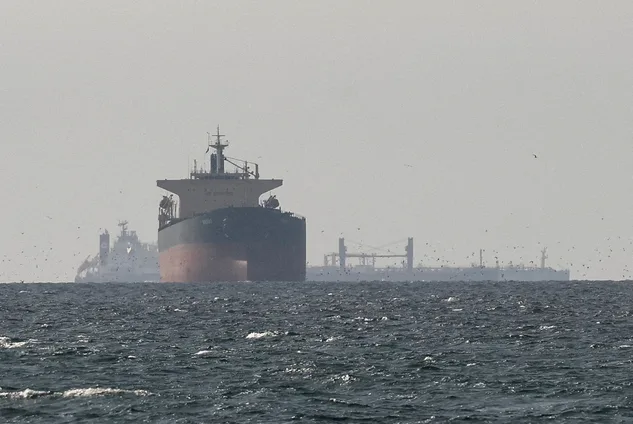
Crude oil rose on Thursday after Iran attacked more commercial ships near the Strait of Hormuz on Wednesday and US forces reacted to Iranian threats to mine the waterway.
Brent futures rose $8.54 on Wednesday’s closing price, or 9 percent, to $100.52 a barrel at 03:54 GMT, while US West Texas Intermediate crude was up $7.22, or 8 percent, to $94.47.
There was a sharp rise in suspected Iranian attacks on shipping and oil facilities on Wednesday. Five ships were attacked after roughly one per day over the previous four days while oil storage was hit in Salalah in southern Oman, hitherto considered relatively secure from Iranian action.
UKMTO, a maritime security body, said it had received 20 reports of incidents affecting vessels operating in and around the Arabian Gulf, Strait of Hormuz, and the Gulf of Oman since the start of the war on 28 February. It defined 16 of the incidents as attacks.
The vessels included the Marshall Islands-flagged tanker Safesea Vishnu, chartered by an Iraqi contracting company, and a second tanker the Malta-flagged Zefyros, which was carrying condensate products, the Iraqi news agency said.
The two tankers were struck by suspected drone boats five nautical miles south of Basra in the north of the Arabian Gulf, according to reports on Thursday.
Both tankers were present in the side-by-side loading area within Iraqi territorial waters, the news agency said.
The Star Gwyneth, a Marshall Islands-registered bulk carrier, was also hit by an unknown projectile 50 nautical miles northwest of Dubai, on Wednesday, according to UKMTO and the International Maritime Organisation (IMO). The Mayuree Narree, a cargo vessel, was hit by an unknown projectile 11 nautical miles north of Oman which resulted in a fire onboard, the IMO said.
The One Majesty, a Japan-flagged container ship, was hit 25 nautical miles northwest of Ras al-Khaimah, the IMO said.
Additionally, a suspected drone targeted fuel tanks in Salalah port in the south of the sultanate, causing no casualties or collateral damage, Oman Television reported on Wednesday.
As tanker traffic from the Gulf remained at a near standstill and energy prices spiked, the 32 member countries of the International Energy Agency unanimously agreed to pull 400 million barrels of oil from their reserves, the largest drawdown to date.
Such a record-breaking release may mitigate the supply crunch in the short term, according to Hamad Hussain, a climate and commodities economist with Capital Economics.
“However, this would prove temporary with prices likely to rise back above $100 per barrel if the Strait of Hormuz were to remain effectively closed for a prolonged period,” he said.
Additionally, Iran’s retaliation against escalating Israeli-US strikes is affecting interests beyond Hormuz and energy.
Multiple large global banks, including Citi, Goldman Sachs, HSBC and Standard Chartered separately closed their branches, advised staff to leave, or urged employees to work from home in countries such as Qatar and the UAE.
The moves came after the Islamic Revolutionary Guards Corps threatened to hit Gulf financial interests in response to an Israeli-US strike on Iran’s Bank Sepah.
US markets closed largely flat on Wednesday, with the Dow Jones dropping the most, at 0.6 percent. Dubai’s stock index fell 2.4 percent, hitting a nine-month low. Abu Dhabi’s closed 1.3 percent down.
Articles similaires
QatarEnergy ceases LNG production following milita...
03 mars, 2026 08:20
Africa’s expected hydrogen mobility build-out deta...
03 mars, 2026 09:21
South Africa energy build risks stalling without f...
04 mars, 2026 12:01
LNG shutdown sinks Qatar stocks but Tadawul reboun...
04 mars, 2026 12:19
Africa's energy transition must support industrial...
04 mars, 2026 12:50
Funding for Africa clean energy financing surges d...
04 mars, 2026 13:09
Kenya: Spenomatic Group Opens Solar Learning Centr...
05 mars, 2026 08:30
NEDC Backs Solar Mini-Grid Rollout in Niger State...
05 mars, 2026 09:16
Dr Kgosientsho Ramokgopa frames energy as Africa’s...
06 mars, 2026 08:17