المعادن الأساسية

Unicorn Mineral Resources Moves Into Copper Production With Namibian Acquisition


By: OrePulse
London-listed Unicorn Mineral Resources has struck a deal to acquire a 75% controlling interest in Q Global Copper Namibia, giving the company control of the historic Klein Aub copper mine and two prospecting licenses spanning 6,536 hectares in Namibia's Kalahari Belt region.
Structured as a share purchase agreement, the acquisition gives Unicorn access not only to the Klein Aub project itself, situated in central Namibia, but also to the surrounding prospecting territory. The site holds an estimated 5.5 million tonnes of historical surface tailings, grading about 0.24% copper and 7.4 grams per tonne silver, plus around 100,000 tonnes of considerably richer surface slimes, estimated at 1.34% copper and 33.55 grams per tonne silver.
This deal marks a notable pivot for Unicorn, shifting the company's focus from pure exploration to near-term base-metal production. According to the company, it plans to process the existing surface material in a way that generates cash relatively quickly — an approach expected to compress typical processing timelines and require significantly less capital investment than building an entirely new mine from the ground up.
Unicorn chairperson Paddy Doherty described the acquisition as a pivotal moment for the company, noting that it positions Unicorn to enter the copper market at an opportune time, given the steady rise in demand driven by global electrification trends.
The company highlighted several factors it believes support the acquisition's value, including copper's central role in the broader energy transition and grid modernization efforts, ongoing supply constraints, and the lengthy development timelines typically associated with building new mines from scratch. By focusing on reprocessing legacy tailings and slimes already on the surface, rather than developing an entirely new orebody, Unicorn is setting itself up for a considerably faster and more cost-effective path to production than a traditional greenfield mining project.
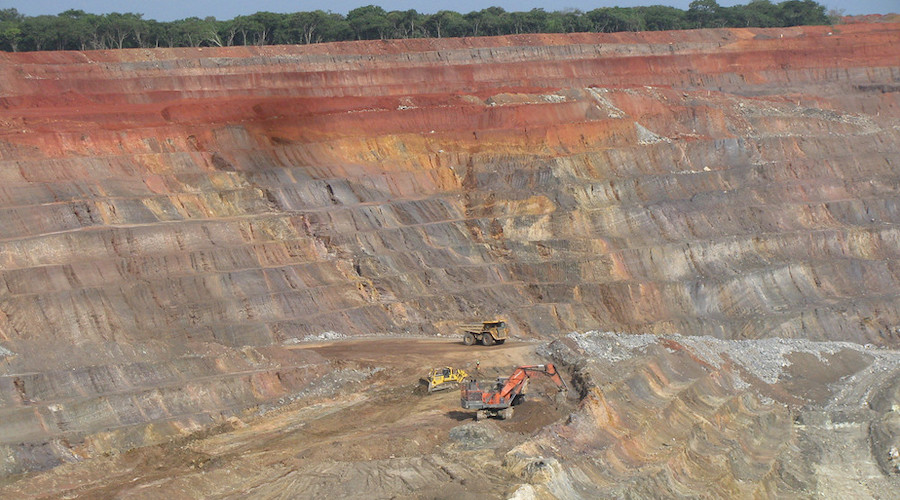
Klein Aub itself is a historic copper mine located within Namibia's Kalahari Belt. This area has seen renewed interest from explorers and developers as global copper demand has picked up. The surface tailings and slimes at the site are remnants of earlier mining and processing activity, and they offer Unicorn a potential near-term production opportunity that sidesteps the long lead times normally required to bring a new mine into operation.
Through this transaction, Unicorn secures a majority stake in Q Global Copper Namibia, along with control of the associated licenses, putting the company in a position to move forward with reprocessing work on the tailings and slimes while retaining the option to pursue further exploration across the wider prospecting area.
The significant grade difference between the two surface materials is worth noting. The larger volume of historical tailings — 5.5 million tonnes at 0.24% copper and 7.4 g/t silver — constitutes a sizeable but comparatively low-grade resource. Meanwhile, the smaller pool of roughly 100,000 tonnes of high-grade surface slimes, at 1.34% copper and 33.55 g/t silver, offers a much richer, if more limited, source of material. This combination gives Unicorn some flexibility, allowing it to potentially prioritize processing the higher-grade slimes first to generate earlier cash flow, while mapping out a longer-term strategy for working through the larger tailings resource over time.
For a company that had previously centered its activities on exploration, taking control of an asset with already well-defined surface material substantially reduces the geological uncertainty that typically comes with early-stage mineral projects. Rather than spending years drilling to establish a new resource, Unicorn's near-term roadmap instead involves metallurgical testing and securing the necessary permits to reprocess the surface material already on site — a route that both the company and its chairperson have characterized as quicker and less capital-intensive than pursuing a greenfield discovery. The two prospecting licenses covering 6,536 hectares also leave room for Unicorn to conduct additional exploration across the broader Kalahari Belt area, running alongside its near-term production plans centered on Klein Aub.
مقالات ذات صلة

Sanu Gold Announces $5 Million Private Placement L...
06 سبتمبر, 2024 13:08
Ivanhoe Mines produces 40,347 tonnes of copper at ...
09 سبتمبر, 2024 09:21
Andrada partners with SQM to develop Namibia lithi...
10 سبتمبر, 2024 08:56
US, Saudi Arabia in talks to secure metals in Afri...
10 سبتمبر, 2024 09:07
DRC: Eurasian Secures $150 Million to Develop a Co...
12 سبتمبر, 2024 06:22
Zambian mines desperate for power turn to a surpri...
13 سبتمبر, 2024 11:18
Africa at the cusp of a critical minerals boom...
17 سبتمبر, 2024 07:40
Coolabah to unite Broken Hill assets, paving path ...
17 سبتمبر, 2024 08:40
Marula Mining completes first manganese exports sa...
18 سبتمبر, 2024 09:05