Base Metals

Tanzania’s nickel prize moves closer as US-Gulf capital lines up behind Kabanga


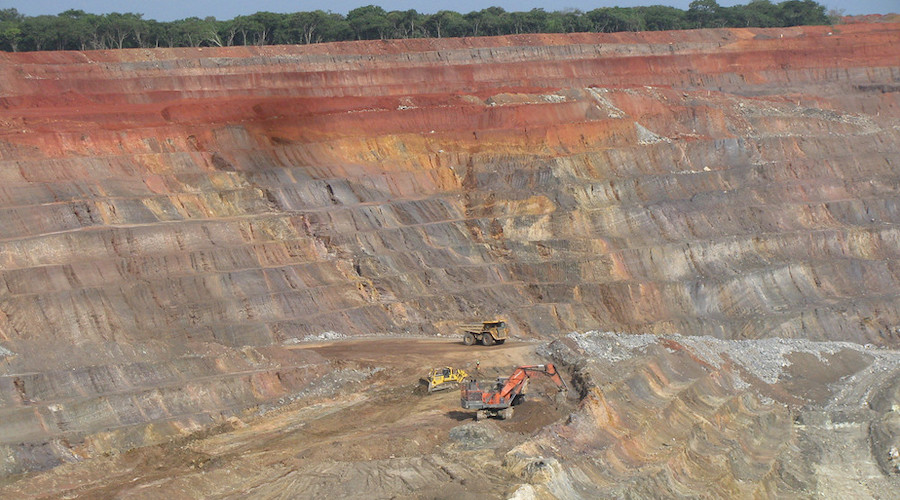
Much of the financing architecture for one of the world’s largest undeveloped high-grade nickel deposits is taking shape. A key agreement needed to advance it is not. Orion Critical Mineral Consortium is negotiating an investment of between $500 million and $600 million in the Kabanga nickel project in northwest Tanzania, Africa Confidential reported this month.
Neither Orion CMC nor Lifezone Metals, the New York-listed company that controls Kabanga, has confirmed the figure. Bloomberg identified Orion as the preferred bidder after a competitive process run by Standard Chartered and also reported the $500 million to $600 million range, citing people familiar with the matter. Lifezone’s own disclosure went no further than saying several offers had been received and that talks were advanced.
The figure remains indicative rather than committed. What is not in doubt is what a check that size could do to Kabanga’s balance sheet. Lifezone’s July 2025 feasibility study puts pre-production capital at $942 million, with total spending across the life of the mine — expansion, sustaining capital, and closure — at $2.49 billion. The company has discussed structuring the build on roughly 60% debt and 40% equity, according to comments reported during the financing process. Based on the headline capex alone, that implies an equity portion of about $377 million, by Ecofin Agency’s calculation, before capitalized operating and financing costs push the requirement higher.
So, the useful comparison is not that $600 million covers nearly two-thirds of the mine. It is that a single investor could cover a substantial portion, and potentially all, of the equity requirement under the financing structure management has discussed. Société Générale is leading a separate project-finance process with development banks and export-credit agencies from Africa, Europe, and North America. Lifezone says those institutions have provided indications of liquidity, which is still some distance from underwritten debt.
A strategic investor with deep pockets
The investor is worth a second look. Orion CMC was formed on October 23, 2025, by the U.S. International Development Finance Corporation, New York-based Orion Resource Partners, and ADQ, the Abu Dhabi sovereign investor. Each contributed roughly $600 million to an initial $1.8 billion vehicle, with an ambition to reach $5 billion. DFC closed its own $600 million commitment in January 2026, and its board approved an additional $900 million investment on June 3, 2026.
This is American strategy with Gulf capital inside it — a structure built to compete with Chinese state-linked vehicles that have spent two decades buying African resource assets. The target is obvious enough. Indonesia supplies roughly 60% of the world’s nickel, much of it processed through Chinese-backed smelters.
Kabanga is the kind of asset that argument needs. The feasibility study declared 52.2 million tons of proven and probable reserves grading 1.98% nickel, 0.27% copper, and 0.15% cobalt on a 100% basis, of which 43.9 million tons are attributable to Lifezone. Over an 18-year mine life, a 3.4 million-ton-per-year concentrator would produce material containing 902,000 tons of nickel, 134,000 tons of copper, and 69,000 tons of cobalt. Two years of construction and a four-year ramp-up stand between financing and steady state. All-in sustaining costs of $3.36 per pound would place Kabanga in the first quartile of the global cost curve, according to CRU.
For Tanzania, the arithmetic is substantial. The government holds 16% of Tembo Nickel Corporation, the operating company, through a free-carried interest it does not have to fund. Lifezone owns the other 84% through Kabanga Nickel Limited. The feasibility model projects $1.2 billion in royalties, fees, levies, and duties and $2.4 billion in corporate income tax over the life of the mine, alongside dividends — roughly $3.6 billion in projected direct fiscal revenue, plus about 1,090 permanent jobs, 91% of them expected to go to Tanzanians. Those are projections, dependent on price and production assumptions that a nickel market currently oversupplied by Indonesia may not deliver.
The unresolved issue is in Dodoma
Which brings the story back to Dodoma, and to what Tanzania is actually arguing about. Lifezone is negotiating amendments to its framework agreement with the government to reflect a staged build. The mine and concentrator would come first, producing a high-grade concentrate containing 17.5% nickel, while the hydrometallurgical refinery at Kahama would follow roughly five years later. Lifezone presents the phasing as a way to improve capital efficiency and bankability. It also changes when Tanzania captures the refining margin — concentrate would leave the country for about five years before Kahama comes online, and the existing framework is being amended to accommodate the staged development model and proposed concentrate exports.
The talks have gone slowly. Lifezone’s chairman met President Samia Suluhu Hassan on June 9, 2026. The first-half results published in July moved the final investment decision from late 2026 to the first quarter of 2027, and the company was explicit that the amended agreement and the joint financial model governing benefit-sharing are conditions for closing project finance. Lenders will price the revised framework before signing anything.
The infrastructure argument, by contrast, is largely settled. Concentrate would move 347 kilometers by road to the Isaka dry port, then 894 kilometers on Tanzania’s standard-gauge railway to Kwala and a final 88 kilometers to Dar es Salaam.
Lifezone is meanwhile running on borrowed time and borrowed money. Of a $60 million bridge facility from Taurus Mining Finance, $41.7 million had been drawn by June 30, 2026, with $18.3 million available until November 29. It has already released about $854 million of contracts to market. Its 2025 buyout of BHP’s 17% stake also carries deferred consideration capped at $83 million. A $10 million payment falls due once Lifezone has raised $250 million in aggregate funding, a threshold an Orion investment would likely cross depending on how the transaction is structured.
Related Articles

Sanu Gold Announces $5 Million Private Placement L...
06 Sep, 2024 13:08
Ivanhoe Mines produces 40,347 tonnes of copper at ...
09 Sep, 2024 09:21
Andrada partners with SQM to develop Namibia lithi...
10 Sep, 2024 08:56
US, Saudi Arabia in talks to secure metals in Afri...
10 Sep, 2024 09:07
DRC: Eurasian Secures $150 Million to Develop a Co...
12 Sep, 2024 06:22
Zambian mines desperate for power turn to a surpri...
13 Sep, 2024 11:18
Africa at the cusp of a critical minerals boom...
17 Sep, 2024 07:40
Coolabah to unite Broken Hill assets, paving path ...
17 Sep, 2024 08:40
Marula Mining completes first manganese exports sa...
18 Sep, 2024 09:05