تخزين الطاقة

Sub-Saharan Africa is buying solar and shows no sign of stopping


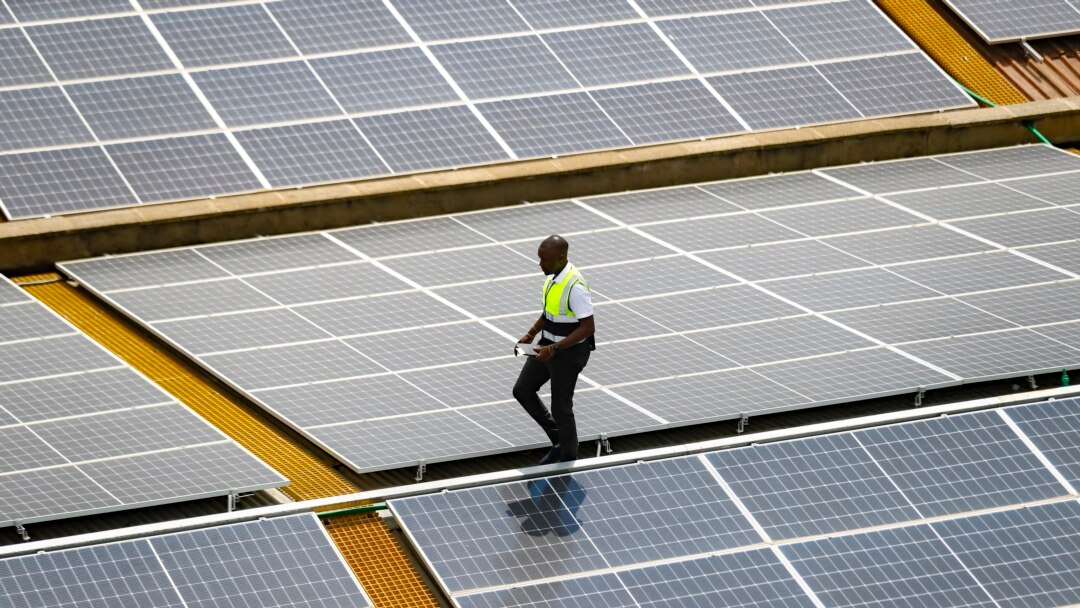
Sub-Saharan Africa is expected to install 29 gigawatts (GW) of solar, wind and battery capacity by 2030 from 13GW in 2025, with clean energy demand in the region increasingly important for global solar growth, according to a study by BloombergNEF.
In its “Sub-Saharan Africa Clean Energy Market Outlook 2026″ report, the research group says the region, where more than 560-million people lack access to reliable power, recorded its largest year-on-year growth in solar imports between the first quarters of 2025 and 2026, driven largely by South Africa, Nigeria and Kenya.
Increasingly expensive grid electricity tariffs are encouraging greater investment in solar energy, with South Africa continuing to see a mix of small-scale and utility-scale renewable energy investment. Corporate power purchase agreements are also growing in the country, driven by demand from mines and other intensive energy users in the private sector.
South Africa, Nigeria and Kenya all have increasingly expensive grid electricity tariffs as their indebted utilities try to recover costs, pushing people toward solar power.
In South Africa, energy regulator Nersa approved an average tariff increase of 8.76% this year for Eskom, saying that balanced the financial sustainability of the state utility — which supplies about 85% of the country’s electricity, most of it coal-fired — with affordability for customers.
Critics say electricity has now become too expensive for many households and has significantly pushed production costs higher for businesses.
The BloombergNEF study notes that South Africa had 67GW of installed energy capacity in 2025, dominated by about 45GW of coal.
The country’s 2025 integrated resource plan (IRP) sought to retire 8GW of coal capacity while adding 6GW of gas and 14GW of renewables before 2030, but due to delays with gas power procurement old coal-fired plants could run for longer.
Running with renewables
“Renewable capacity has expanded quickly, with 2GW of average annual additions from 2020 to 2025. Cumulative capacity hit 4.2GW of wind, 6.7GW of utility-scale solar and 6.2GW of small-scale solar last year,” the report says. Meeting the 2030 IRP renewable target of 14GW of new capacity requires nearly 3GW of additions a year from 2026 to 2030.
In his weekly newsletter on Monday, President Cyril Ramaphosa said South Africa’s just energy transition is gaining momentum, with rising clean energy investment helping the country meet its climate commitments.
He said the use of rooftop solar by households and businesses has surpassed expectations, with the number of households installing solar panels rising by 86% over the past three years to 675,000 in 2025.
The BloombergNEF report says Sub-Saharan Africa accounted for more than 10% of solar exports from China in March, when global clean technology trade flows hit a monthly record.
“Rising solar demand in the region is largely due to disruptions at the Strait of Hormuz due to the US-Iran war, which have made the renewable source a solution for both energy security concerns and rising costs affecting countries dependent on fossil fuels,” the report says.
Unreliable grids are another big driver of solar, with countries such as Nigeria, Zambia and Democratic Republic of Congo each having had about four hours of power a day on average last year. Ethiopia had 14 hours, Angola 18, and Kenya and Senegal 21.
Many homes and businesses rely on backup generators when grid power fails or solar isn’t generating, but batteries are quickly becoming a more economical option due to rising fuel prices and declining battery costs.
But while solar may help cut electricity bills, it is not a standalone solution for round-the-clock power and reliability.
The report says due to high interest rates across Sub-Saharan Africa few countries can support clean energy project finance on purely commercial terms, making them largely dependent on foreign investment and development capital to make projects bankable.
مقالات ذات صلة
Africa’s Emerging Producers Look to Strategic Stor...
19 مارس, 2026 09:42
Mauritania Doubles Fuel Storage to Shield Power Ma...
25 مارس, 2026 12:05
Morocco has diesel stocks for 51 days, energy mini...
02 أبريل, 2026 12:49
Vivo Energy converting Durban refinery into fuel s...
15 أبريل, 2026 09:38
AD Ports in talks to lease Egypt’s Red Sea oil sto...
15 أبريل, 2026 11:20
Power Producer Globeleq Launches Solar and Storage...
23 أبريل, 2026 08:17
Saudi launches qualification for 3GW battery stora...
23 أبريل, 2026 08:49
South Africa is sitting on empty tanks – and a mis...
19 مايو, 2026 12:18
Trinasolar and Ecohope Solar Sign 600MW MoU to Dis...
10 يونيو, 2026 10:38