المعادن الثمينة

Egypt Targets 20% Rise in Gold Deliveries as Mining Expansion Accelerates


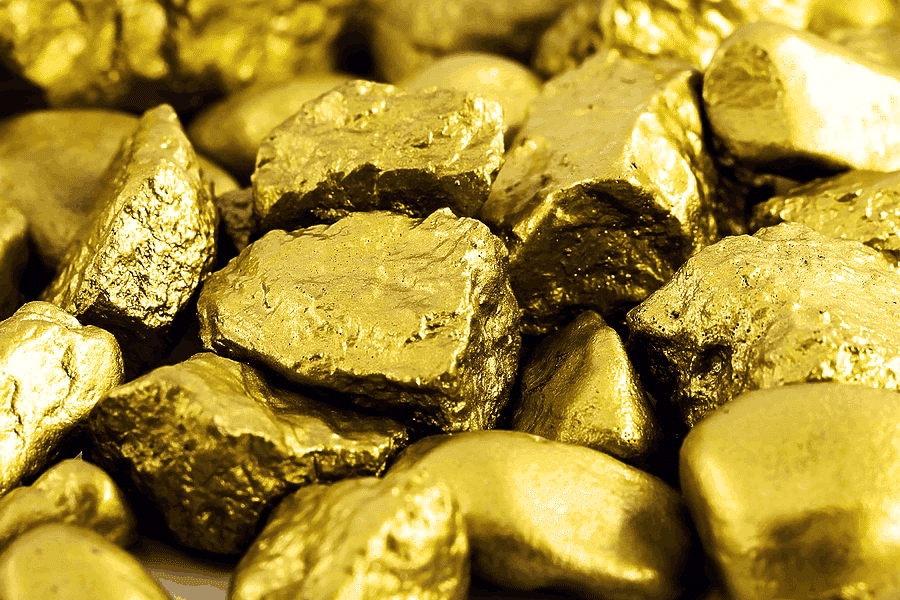
Egypt is targeting a 20% increase in gold deliveries to the Central Bank of Egypt this year as Cairo intensifies efforts to formalise gold production, attract mining investment and expand one of the country’s most promising non-oil industries.
State-owned Shalateen Mineral Resources Company aims to deliver approximately 1.5 tonnes of gold to the central bank by the end of 2026, up from an earlier target of 1.25 tonnes, according to government officials cited by Asharq Business. At current market prices, the planned deliveries would be worth roughly $200 million.
The increase reflects a combination of higher global gold prices and expanding activity across Egypt’s Eastern Desert, where Shalateen has accelerated licensing and exploration efforts. Earlier this year, the company granted eight new mining licences, raising the number of operating firms within its concession areas to around 61 companies engaged in gold exploration and extraction.
The programme forms part of a broader government effort to channel more domestically produced gold through official supply chains, strengthen oversight of small-scale mining activities and increase the contribution of locally produced precious metals to national reserves and foreign-currency earnings. Under the current framework, Shalateen receives gold from licensed miners and companies before transferring it to the Central Bank based on international market prices and official exchange rates.
The latest target follows a strong start to the year. Gold deliveries to the central bank exceeded 250 kilograms during the first quarter of 2026, representing a 12% increase compared with the same period last year.
Beyond the immediate increase in deliveries, the development reflects Egypt’s wider ambitions to transform mining into a major pillar of economic growth. The government is targeting annual mining investments of around $1 billion by 2030 and has identified the sector as a strategic component of its economic diversification agenda.
Recent reforms have played a central role in that strategy. Over the past several years, Egypt has overhauled mining regulations, replacing legacy production-sharing arrangements with royalty and tax structures more familiar to international investors. Officials hope the reforms will unlock greater exploration activity and attract new foreign mining companies to one of the region’s most underexplored mineral belts.
Although Egypt’s annual gold production, estimated at around 15.8 tonnes, remains modest compared with major African producers such as Ghana and South Africa, officials believe the country’s geological potential remains significantly underdeveloped. Most current output comes from the Sukari mine, one of Africa’s largest gold operations, alongside the Hamash and Iqat mines, while exploration activity across the Eastern Desert continues to expand.
The focus on mining comes at a time when governments across Africa and the Middle East are seeking new sources of export revenue and foreign-currency inflows amid growing global demand for gold and strategic minerals. For Egypt, the sector offers an opportunity not only to increase mineral production but also to reduce reliance on traditional foreign-exchange sources by developing a higher-value export industry linked to exploration, processing and refining.
Shalateen’s long-term plans reflect those ambitions. The company is targeting annual production of approximately six tonnes of gold by 2030 through additional licensing rounds and further development of concession areas across the Eastern Desert.
With gold prices remaining near historic highs and investor demand supported by geopolitical uncertainty, central-bank purchases and inflation concerns, officials view mining as an increasingly important contributor to Egypt’s future growth strategy. If exploration success continues and recent reforms attract additional investment, mining could emerge as one of the country’s most significant non-oil export sectors over the coming decade, strengthening both foreign-currency generation and economic diversification efforts.
مقالات ذات صلة
China’s ‘encouraging’ hydrogen progress witnessed ...
03 مارس, 2026 07:55
Lucara posts lower 2025 revenue, says additional f...
04 مارس, 2026 07:48
Gold bulls say broader rally is intact despite inv...
04 مارس, 2026 08:00
WorldVest Launches Gold Finance Africa, Building a...
04 مارس, 2026 10:44
Gold and silver rallies likely on pause despite ne...
04 مارس, 2026 11:49
Gold prices climb over 1 percent to $5,164 as Midd...
04 مارس, 2026 11:59
‘Extremely robust’ platinum investment demand expe...
04 مارس, 2026 13:08
Trigon Metals Launches Silver Exploration Drive in...
05 مارس, 2026 08:00
The Ekapa Mine liquidation – A tragedy compounded...
05 مارس, 2026 08:05