Base Metals

BHP’s Copper Boom Sharpens Focus on Zambia



Copper overtakes iron ore at BHP
According to BHP‘s FY2026 results, copper generated underlying EBITDA of US$18.19bn for the year to 30 June 2026. This pushed copper ahead of iron ore, which delivered about US$14.5bn in operating earnings — making copper BHP’s largest earnings driver for the first time. Analysis cited by Investing.com notes that copper contributed 54% of the group’s US$32.9bn underlying EBITDA, up from 45% in the prior year.
Revenue rose 15% to US$58.8bn, while underlying attributable profit increased 30% to US$13.2bn, according to company result summaries and investor reports. Statutory attributable profit reached US$9.8bn, reflecting a 9% rise on the previous year. The board declared a final dividend of US$0.99 per share, taking the full-year dividend to US$1.72 per share — its highest level in four years, per Mining Weekly and detailed investor commentary.
Copper EBITDA rose around 48% year on year, driven largely by price rather than volume. Metals market coverage states that BHP’s average realised copper price climbed about 35% to US$5.74 per pound, while copper production slipped roughly 3% to about 1.95m tonnes. That combination lifted the segment’s EBITDA margin to roughly 70%, well above iron ore’s margin and supported by gold, silver and uranium by-products.
The company’s guidance and analyst read-outs emphasise copper’s growing centrality. BHP expects annual global copper consumption to rise from about 34m tonnes today to more than 50m tonnes by 2050, driven by electricity networks, renewables, electric vehicles, construction and data centres. Internal estimates suggest the market may need over 2.5m tonnes of additional approved mine supply by 2030 to remain balanced, with the potential shortfall widening to roughly 10m tonnes in the following decade. Against that backdrop, BHP has outlined plans to increase its copper output by as much as 40% between the 2027 and 2035 financial years.
‘Copper has moved from being one of BHP’s key commodities to being the engine of its earnings growth’ — an analyst comment echoed across several investor notes that captures the scale of this portfolio shift.
Is Zambia the next frontier for BHP’s copper strategy?
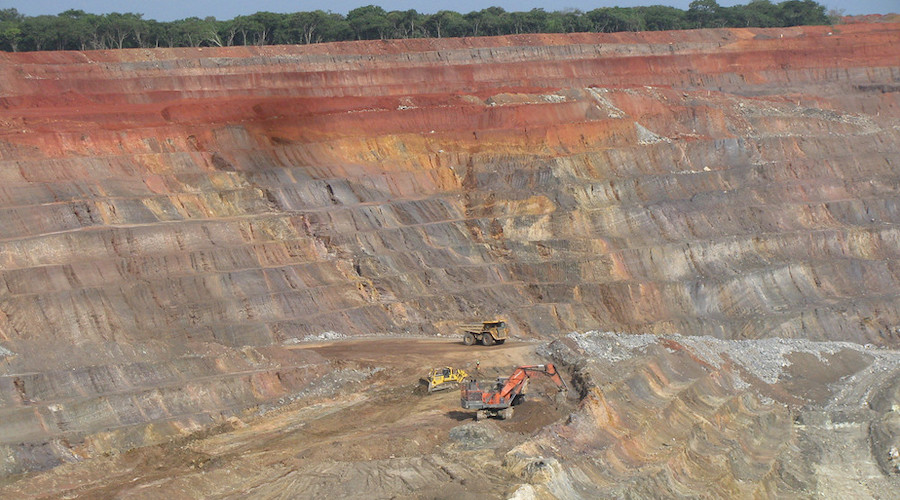
Africa-focused reporting indicates that BHP’s copper expansion is beginning to touch the continent, with Zambia back on the company’s radar after a long absence. Business Insider Africa and regional intelligence services report that Zambia’s Ministry of Mines and Minerals Development said in April 2026 that BHP is interested in large-scale copper exploration in the country. The statement followed meetings in Lusaka between senior ministry officials and Campbell McCuaig, BHP’s head of global generative exploration.
The ministry and BHP-linked commentary describe a focus on deep or concealed deposits, which are harder to detect using conventional exploration methods. McCuaig has highlighted the use of advanced geological techniques and large-scale data analysis, alongside Zambia’s push to improve geological information through airborne surveys and digitisation of historical records.
In April and May 2026, BHP also hosted exploration workshops in South Africa, Namibia, Angola and Zambia, bringing together junior miners, geological agencies, universities and research institutions. The company chose South Africa as the launch point for its 2026 exploration programme, framing Africa as an important source of future mineral discoveries.
However, BHP has not announced an acquisition, exploration licence or committed capital investment in Zambia. Publicly identified copper growth projects remain concentrated in Chile, Argentina, Australia and the United States. Zambia-focused economic analysis shows the country produced 890,346 tonnes of copper in 2025, up from 825,513 tonnes in 2024, and is pressing to lift output above one million tonnes in 2026 as it pursues a 3m-tonne long-term target. That ambition, combined with regulatory reforms and new regional infrastructure such as the Lobito Corridor, strengthens the case for early-stage engagement by global majors.
For investors, BHP’s interest should be read as a strategic signal, not yet a transaction. Early engagement gives the miner optionality over future projects in a rising jurisdiction, while preserving capital discipline until specific deposits and regulatory conditions meet its threshold. As Africa’s copper projects progress and global demand projections firm up, the next phase to watch will be whether BHP converts this exploration interest into licences, joint ventures or acquisitions in Zambia and its neighbours.
Related Articles

Sanu Gold Announces $5 Million Private Placement L...
06 Sep, 2024 13:08
Ivanhoe Mines produces 40,347 tonnes of copper at ...
09 Sep, 2024 09:21
Andrada partners with SQM to develop Namibia lithi...
10 Sep, 2024 08:56
US, Saudi Arabia in talks to secure metals in Afri...
10 Sep, 2024 09:07
DRC: Eurasian Secures $150 Million to Develop a Co...
12 Sep, 2024 06:22
Zambian mines desperate for power turn to a surpri...
13 Sep, 2024 11:18
Africa at the cusp of a critical minerals boom...
17 Sep, 2024 07:40
Coolabah to unite Broken Hill assets, paving path ...
17 Sep, 2024 08:40
Marula Mining completes first manganese exports sa...
18 Sep, 2024 09:05