Energy Other

Why Gulf oil is ‘irreplaceable’


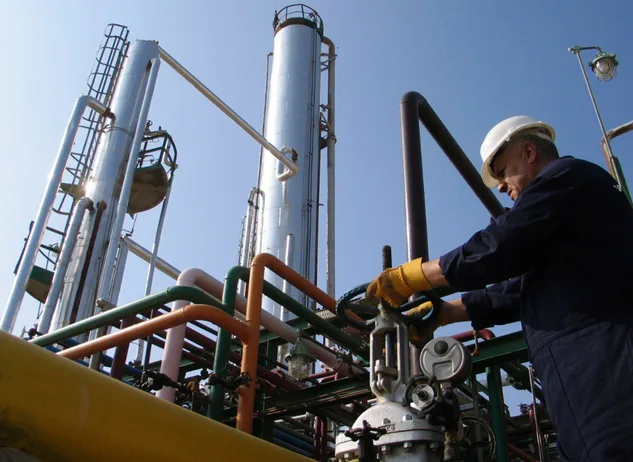
Most of the world’s oil never travels through the Strait of Hormuz, but the disruption of the waterway during the Iran war has removed a fifth of global supply – roughly 20 million barrels a day – from international markets.
So why can’t other producers simply step in and replace it?
There are several reasons. First, not all oil is the same.
The lion’s share of crude normally flowing out of the Gulf is known as “medium sour”, which means it is of moderate density with a relatively high sulphur content.
This type of oil is well-suited to making crucial products such as diesel and jet fuel. The drop in its supply is one reason why airlines are warning on their ability to keep flying if the conflict does not end soon.
Sherif Foda, chairman and chief executive of oilfield services provider National Energy Services Reunited, said Middle East oil is “absolutely irreplaceable” because of its high quality and, typically, its easy accessibility.
By contrast, the types of oil found in other regions of the world can have different qualities and building facilities to extract them can take years. This makes it difficult to ramp up production and refining.
For example, Venezuela has huge oil reserves and has become a potential target for new investment since the US military removed then-president Nicolas Maduro in January.
However, even if mass investment were to flow into the local industry, the grades of oil there are much heavier with more sulphur, meaning they require complex refining to turn into gasoline and diesel. Unless heavily processed, Venezuelan crude is typically suited to becoming fuel oil or asphalt.
Much of Canada’s reserves are in what is known as tar sands. Although such oil can be refined into gasoline and jet fuel, it is not extracted through typical well drilling and must instead be separated from sand and bitumen.
Increasing production would require new and costly projects. The Iran conflict, while prone to escalation, is still widely seen as temporary.
“Places like Venezuela and Canada have more reserves than Saudi Arabia,” Foda said. “But you need five to six years to put new reserves into production. It’s not like just poking holes and they will produce oil.”
Refiners have tailored their plants to process the type of oil their countries most typically import.
Asian countries including China, India and Japan are heavily reliant on Gulf crude. Feeding alternative types of crude into their highly specialised facilities can make such plants less efficient, the Oxford Institute for Energy Studies said.
“Overhauling Asia’s refineries would require expensive changes that would take months to plan and years to finish,” said Vijay Valecha, chief investment officer at brokerage Century Financial.
Crude constrained
Another problem is that there is little spare crude available at short notice.
The countries best placed to increase output are Saudi Arabia and the UAE, Valecha said, but both are constrained by the Hormuz blockade and their production “cannot be increased immediately”.
Bringing oil output online can take weeks or months for expansions of existing sites, but years for projects involving exploration, test drilling and large-scale construction.
The UAE doubled down on plans to increase oil output from about 3.4 million barrels a day to close to 5 million when it announced last week that it was leaving the Organization of the Petroleum Exporting Countries, but it will take until around 2027 to reach this level.
There are also practical constraints. “Even if supply increases elsewhere, you need enough tankers, port capacity and refineries that can handle that crude,” Valecha added.
Governments have been forced to fall back on emergency measures, with the Paris-based International Energy Agency coordinating the release of a record 400 million barrels from strategic reserves in March.
On Sunday, the wider Opec+ group announced it would increase production by 188,000 barrels per day, though this is only a fraction of what has been lost.
Related Articles
South African rand falls to 3-month low as soaring...
09 Mar, 2026 08:35
NamPower warns N$700 million in unpaid bills threa...
17 Mar, 2026 08:20
Middle East oil becomes most expensive in the worl...
17 Mar, 2026 08:43
Libya’s NOC launches Faragh-Brega pipeline project...
17 Mar, 2026 09:32
TotalEnergies’ global output down 15% amid Middle ...
17 Mar, 2026 09:39
Why Ethiopia’s Gas-to-Fertilizer Bet Matters for E...
19 Mar, 2026 12:58
Alake Advocates Regional Hubs to Power Africa’s Mi...
23 Mar, 2026 10:09
NTPC, Africa50 Discuss Joint Power Projects and En...
23 Mar, 2026 10:24
India and Africa Advance Strategic Energy Partners...
23 Mar, 2026 10:29