Energy Other

UN report flags disproportionate costs of clean energy transition


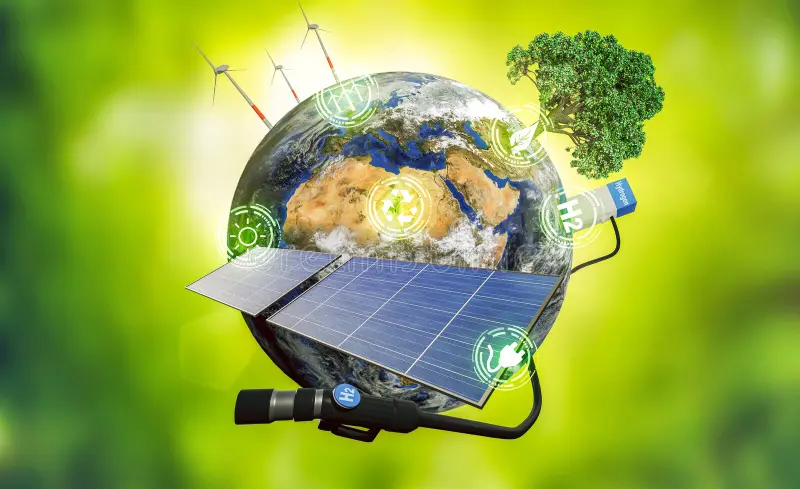
A new report published by the United Nations University Institute for Water, Environment and Health (UNU-INWEH) warns that wealthy nations’ push toward cleaner energy comes with high environmental and social costs in mineral-producing countries.
The investigation links the extraction of transition minerals used in green energy technologies like solar panels and rechargeable batteries to acute water insecurity, livelihood disruptions and health risks for local communities.
The authors conclude that the very technologies designed to combat climate change are also contributing to deepening inequality levels in vulnerable regions, mostly through the disproportionate usage of water.
“Extraction, especially lithium, cobalt, copper and rare earth elements, directly depletes and contaminates freshwater resources, often in already water-stressed and water-bankrupt regions,” lead author Abraham Nunbogu told Mongabay via email.
Across the world, mining activities have been linked to the depletion and contamination of freshwater sources as well as reduced access to safe water for local communities, increasing the risk of disease. Studies from the Democratic Republic of Congo (DRC), the world’s largest producer of cobalt, have linked the prevalence of gynecological problems, skin diseases and chronic illnesses in mining areas to heavy metal exposure through polluted water sources.
“These impacts are not incidental side effects but structural outcomes of prevailing extraction models,” said Nunbogu, who is a researcher at the UNU-INWEH.
Critical minerals are the minerals considered crucial to secure countries’ economic and security needs, especially in terms of energy access.
Between 2010 and 2023, the demand for critical minerals tripled, with cobalt demand growing by 70% between 2017 and 2022. To meet the climate targets set in the Paris Agreement — limiting global warming to below 2° Celsius (3.6° Fahrenheit) compared with preindustrial levels — the authors said the demand for key minerals such as lithium, graphite and cobalt could quadruple by 2050.
“The report documents a profound imbalance in which benefits accrue primarily to consumers and industries in the Global North, while economic, environmental, and health burdens are displaced onto communities in the Global South,” UNU-INWEH Director Kaveh Madani, who led the report’s investigation team, told Mongabay via email. He said women and children, often responsible for fetching water, are especially affected through direct exposure to polluted water.
For Madani, the DRC is emblematic of the problems highlighted in the report. The central African country supplies more than 60% of the world’s cobalt but faces water contamination from mining associated with high rates of disease. Foreign-controlled extraction — 80% of cobalt production is foreign-controlled — means little economic benefit stays in the country.
“This case captures water insecurity, health injustice, labor exploitation, and governance failure in one setting,” Madani said.
The report calls for a shift from voluntary standards to binding global governance frameworks to ensure human rights and environmental safeguards are upheld, the implementation of strict water-use regulations, zero-discharge policies and enforceable accountability mechanisms.
Related Articles

South African rand falls to 3-month low as soaring...
09 Mar, 2026 08:35
NamPower warns N$700 million in unpaid bills threa...
17 Mar, 2026 08:20
Middle East oil becomes most expensive in the worl...
17 Mar, 2026 08:43
Libya’s NOC launches Faragh-Brega pipeline project...
17 Mar, 2026 09:32
TotalEnergies’ global output down 15% amid Middle ...
17 Mar, 2026 09:39
Why Ethiopia’s Gas-to-Fertilizer Bet Matters for E...
19 Mar, 2026 12:58
Alake Advocates Regional Hubs to Power Africa’s Mi...
23 Mar, 2026 10:09
NTPC, Africa50 Discuss Joint Power Projects and En...
23 Mar, 2026 10:24
India and Africa Advance Strategic Energy Partners...
23 Mar, 2026 10:29