Rail

Jordan, UAE formalize $2.3bn rail deal as project moves to execution



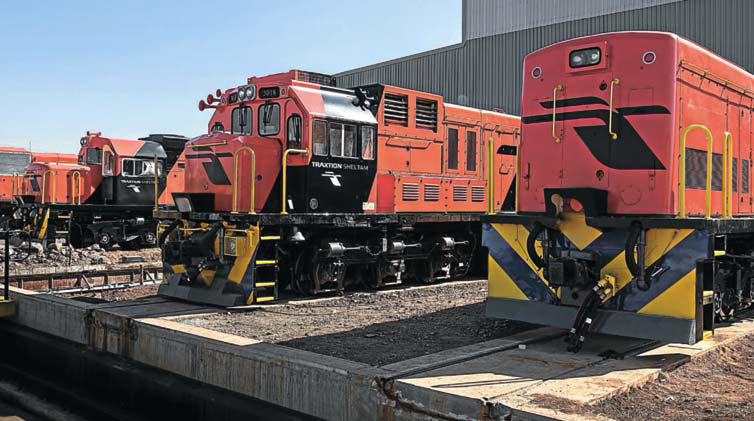
Jordan and the UAE have signed agreements for a $2.3 billion Aqaba Port Railway project, which will see the creation of a 360-km network connecting the facility with major phosphate and potash production sites.
The development is expected to have a major impact on Jordan’s mining sector, a core pillar of its export economy, with the rail network projected to transport around 16 million tonnes of cargo annually, including 13 million tonnes of phosphate and 2.6 million tonnes of potash.
As part of the agreement, the UAE–Jordan Railway Co. was formally established as a joint venture between Abu Dhabi's L’IMAD Holding Co. and several Jordanian stakeholders.
The move builds on a memorandum of understanding signed in 2024 between the two countries to develop the railway, marking a transition from initial cooperation to full-scale implementation.
The earlier deal, supported by Etihad Rail, was part of a broader $5.5 billion investment framework.
“It is designed to bridge a critical infrastructure gap by providing a direct rail link between the primary phosphate mines in Shidiya and the potash production sites in Ghor Al Safi to the industrial terminals at the Port of Aqaba,” Petra reported.
The project is structured as an equal partnership between a consortium of Jordanian sovereign and industrial entities — including the Jordan Phosphate Mines Co., Arab Potash Co., the Government Investments Management Co., and the Social Security Investment Fund — and Abu Dhabi-based L’imad Holding.
Under the agreement, the joint venture will be responsible for implementing the railway network through its executing arm, Etihad Rail, the developer and operator of the UAE’s national railway network.
Officials said financial close is expected by early 2027, with construction likely to take around five years.
It’s engineering plans include multiple tunnels and bridges to navigate the rugged terrain of southern Jordan and the Jordan Valley.
“By shifting these volumes from road to rail, the project is intended to drastically reduce per-unit transportation costs, enhance supply chain efficiency, and allow Jordanian minerals to compete more aggressively on the global stage,” Petra added.
Beyond its immediate industrial role, the railway represents the first phase of Jordan’s National Railway Network. Plans include extending the line north toward Madounah near Amman, with further links to Syria, the Mediterranean, and Turkiye, while also connecting to Saudi Arabia and wider Gulf Cooperation Council markets.
This expansion is seen as a catalyst for regional economic integration, reinforcing Jordan’s position as a key transit and logistics hub between the Levant and the Gulf.
Related Articles
Saudi cargo trains expand service due to Hormuz cl...
24 Mar, 2026 11:11
Trains through Angola's Lobito critical mineral co...
13 Apr, 2026 08:09
Riyadh expands logistics rail network with five ne...
13 Apr, 2026 12:36
Hafeet Rail hits 40 percent completion on UAE-Oman...
22 Apr, 2026 07:29
Algeria sees big gains from trans-Africa rail proj...
28 Apr, 2026 11:07
Etihad Rail spotlights importance of local supplie...
05 May, 2026 08:40
South Africa allows 11 private firms to operate tr...
14 May, 2026 10:56
AD Ports builds new rail-linked inland logistics n...
25 May, 2026 12:30
Rail network statement 2.0 coming soon, says trans...
03 Jun, 2026 10:36