Energy Other

Saudi Arabia’s Red Sea Oil Strategy Transforms Global Energy Security


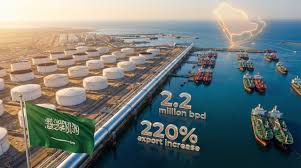
How Saudi Arabia's Red Sea Export Strategy Reshapes Global Energy Security
Regional power dynamics across the Middle East have consistently shaped global energy markets through infrastructure bottlenecks, strategic waterways, and coordinated production frameworks. When traditional export corridors face disruption, major oil producers must rapidly activate alternative pathways while managing complex logistics, security considerations, and market stability objectives. The intersection of geopolitical risk and energy infrastructure resilience creates scenarios where theoretical contingency plans become operational realities within weeks.
Understanding how export route diversification functions during crisis periods reveals the sophisticated coordination required between upstream production, midstream transportation, and downstream market delivery. Saudi Red Sea oil exports represent a critical case study in strategic energy security adaptation, demonstrating both the capabilities and constraints of alternative infrastructure systems. Furthermore, these developments highlight the interconnected nature of Saudi Arabia exploration licenses and export capabilities.
Infrastructure Pivot Analysis: From Hormuz Dependency to Red Sea Diversification
Saudi Arabia's dramatic export route reconfiguration demonstrates the operational complexity of energy security contingency planning. The kingdom achieved a 220% increase in Yanbu port loadings during March 2026, escalating from 1.1 million barrels per day (bpd) in February to 2.2 million bpd in the first nine days of March. This surge occurred as the Strait of Hormuz closure eliminated approximately 6 million bpd of Saudi crude flows through the strategic waterway.
The East-West Pipeline System emerged as the critical infrastructure backbone enabling this transition. With a total capacity of 7 million bpd, the system allocates 5 million bpd for export operations and 2 million bpd for domestic western coast refineries. Current Yanbu operations at 2.2 million bpd represent approximately 44% utilization of the dedicated export capacity, indicating substantial room for scaling.
The pipeline infrastructure demonstrates Saudi Arabia's long-term strategic planning, providing operational flexibility that proved essential when primary export routes faced disruption.
Historical performance data reveals Yanbu port rarely exceeded 2.5 million bpd in previous operational periods, making the March 2026 loading rates particularly significant. The coordination of 37 tankers scheduled for March loading operations, with 11 vessels already departed by March 11th, demonstrates the sophisticated logistics management required for sustained high-volume operations. These developments also impact broader OPEC production impact considerations.
Regional Production Adjustment Framework
The Saudi response involved coordinated production management across the Gulf Cooperation Council (GCC) framework. Saudi Arabia reduced output from 10.9 million bpd in February to 9.8 million bpd by March 2026, representing a 1.1 million bpd decrease. This reduction occurred alongside similar adjustments by Iraq, Kuwait, and the UAE, indicating a regional strategy to manage storage constraints and market stability.
The production cuts reflect technical limitations rather than strategic choice. Storage capacity constraints across major Gulf producers necessitated coordinated output reductions to prevent inventory overflow while alternative export routes scaled operations. This approach maintained market stability while infrastructure systems adapted to crisis conditions.
Key Production Adjustments:
- Saudi Arabia: 10.9M to 9.8M bpd (-10% reduction)
- Regional coordination: Iraq, Kuwait, UAE implementing parallel cuts
- Storage management: Preventing overflow during route transition
- Timeline: Implemented within weeks of Hormuz disruption
What Infrastructure Capabilities Enable Saudi Arabia's Export Route Diversification?
The technical specifications underlying Saudi Arabia's export route flexibility reveal sophisticated infrastructure planning developed over decades. Yanbu port's design capacity of 4.5+ million bpd provides substantial headroom beyond current operational levels, while the East-West Pipeline System offers multiple allocation scenarios for domestic and export requirements. Consequently, understanding this infrastructure proves crucial for oil futures analysis.
Technical Capacity Assessment of Alternative Export Channels
Yanbu port represents the primary Red Sea export terminal with proven capability to handle significantly higher throughput than current levels. Industry assessments indicate the terminal's 4.5+ million bpd design capacity far exceeds the 2.2 million bpd March 2026 operational rate. This 49% capacity utilization suggests infrastructure constraints are not currently limiting export expansion.
Comparative Export Infrastructure Capacity:
| Export Route | Capacity (Million bpd) | Current Utilization | Security Risk Level |
| Strait of Hormuz | 6.0 | 0% (Disrupted) | Critical |
| Red Sea (Yanbu) | 4.5+ | 49% (2.2M bpd) | Moderate |
| UAE Fujairah | 1.0+ | Variable | Low |
| Egypt Sumed Pipeline | Variable | Available | Low-Moderate |
The East-West Pipeline System's 7 million bpd aggregate capacity provides operational flexibility through dual functionality. The system can allocate throughput between export operations (currently 5 million bpd dedicated capacity) and domestic refinery supply (2 million bpd for western coast facilities at Yanbu and Rabigh). This flexibility enables dynamic response to changing operational requirements.
Operational Scaling Challenges and Solutions
The progression from 1.1 million bpd in February to 2.2 million bpd in March demonstrates Yanbu's ability to scale operations rapidly. However, achieving the port's maximum 4.5+ million bpd capacity would require sustained coordination across multiple operational systems.
Scaling Requirements:
- Pipeline Throughput Management: Coordinating crude flow from eastern fields through the East-West system
- Storage Tank Operations: Managing inventory levels to prevent bottlenecks or overflow
- Tanker Scheduling: Sequencing vessel arrivals and loading operations efficiently
- Demurrage Optimization: Minimising vessel waiting times through precise scheduling
The 37-vessel March loading schedule indicates sophisticated terminal management systems capable of handling multiple tanker classes simultaneously. This operational complexity requires real-time coordination between pipeline operators, storage facilities, and marine terminals.
Historical data showing Yanbu rarely exceeded 2.5 million bpd suggests the current 2.2 million bpd rate approaches previous operational ceilings. Achieving higher throughput levels would require infrastructure modifications or operational process improvements beyond current configurations.
Why Regional Conflicts Drive Strategic Energy Route Reconfiguration
The February 2026 US-Israeli war with Iran created the catalyst for Saudi Arabia's export route transformation. The conflict effectively closed the Strait of Hormuz in late February, eliminating the 40-mile-wide waterway that previously handled 6 million bpd of Saudi crude exports. This disruption demonstrated how rapidly geopolitical developments can transform theoretical risk scenarios into operational crises.
Geopolitical Risk Assessment Framework
The Strait of Hormuz closure represents the materialisation of a long-understood strategic vulnerability. The narrow waterway's role as a critical energy chokepoint became operationally relevant when military conflict rendered transit hazardous. Shipping insurance concerns, liability considerations, and direct military engagement risks created conditions where alternative routes became necessary rather than optional.
Red Sea corridor security presents different risk parameters than Hormuz disruption. Yemen's Houthi forces historically disrupted shipping during the 2023-2024 Israel-Gaza conflict, establishing precedent for attacks on energy transportation. However, Western coalition naval presence and monitoring through JMIC (West's navy information centre) indicated no reported attacks in the Red Sea following the Iran conflict initiation.
Risk Distribution Analysis:
- Hormuz Route: Complete disruption (6M bpd eliminated)
- Red Sea Route: Moderate threat level with naval protection
- Alternative Routes: UAE Fujairah, Mediterranean connections available
- Net Impact: 3.8M bpd capacity gap requiring production cuts
Economic Implications of Export Route Diversification
The strategic shift to Red Sea routing demonstrates both the value and limitations of infrastructure redundancy. Saudi Arabia's ability to activate 2.2 million bpd through Yanbu prevented complete export disruption, but the 3.8 million bpd shortfall relative to Hormuz capacity necessitated coordinated GCC production cuts. Moreover, these shifts significantly influence oil price dynamics globally.
Revenue protection through route diversification enables sustained export operations despite infrastructure constraints. The kingdom maintained substantial crude flows during crisis conditions, demonstrating the strategic value of alternative corridor investments. However, the infrastructure gap between primary and backup systems reveals the economic trade-offs inherent in redundancy planning.
Market stability considerations influenced both Saudi strategy and broader regional coordination. Rather than allowing individual producers to compete for limited export capacity, the GCC framework enabled coordinated output adjustments. This approach prevented market disruption while alternative systems scaled operations.
How Do Alternative Export Routes Compare in Strategic Value?
The comparative assessment of Saudi Arabia's export route options reveals distinct strategic trade-offs between capacity, security risk, and infrastructure investment requirements. Each corridor presents unique operational characteristics that influence long-term energy security planning.
Comprehensive Route Analysis Matrix
Strait of Hormuz represents the highest-capacity option with 6 million bpd throughput capability, but current disruption eliminates this advantage. The route's strategic vulnerability to regional military conflict demonstrates the risk concentration inherent in single-corridor dependence. Infrastructure investment requirements remain minimal given existing terminal and pipeline systems.
Red Sea (Yanbu) operations provide moderate capacity with 4.5+ million bpd design specifications currently utilised at 2.2 million bpd. Security risk levels remain moderate due to Houthi threat potential, but Western naval presence provides operational protection. Infrastructure expansion opportunities exist within current terminal and pipeline frameworks.
UAE Fujairah terminals offer lower capacity at 1+ million bpd but present minimal security risks. This route would require substantial new pipeline investment to connect Saudi production centres with UAE export facilities. The strategic value lies in geographic diversification rather than volume capability.
Mediterranean connections through existing regional pipeline networks provide variable capacity depending on system availability. Egypt's Sumed pipeline and other regional infrastructure offer potential alternative corridors with moderate security risk and existing operational frameworks.
Strategic Redundancy Planning
Multi-corridor export strategies require balancing infrastructure investment against operational flexibility. Saudi Arabia's current position demonstrates both the value and limitations of redundancy planning. The East-West Pipeline System enables Red Sea operations, but capacity constraints relative to Hormuz throughput reveal infrastructure gaps.
Investment Priority Framework:
- Immediate Capacity Expansion: Yanbu terminal and pipeline throughput optimisation
- Medium-term Diversification: UAE and Mediterranean corridor development
- Long-term Redundancy: Multiple route maintenance for crisis resilience
- Regional Coordination: GCC framework for shared infrastructure utilisation
The economic analysis indicates that maintaining multiple export routes involves substantial capital allocation with uncertain utilisation rates during normal operations. However, crisis scenarios demonstrate the strategic value of such investments when primary systems face disruption.
What Market Dynamics Result from Saudi Arabia's Export Strategy Shift?
The transformation of Saudi export routing creates cascading effects throughout global energy markets. Asian refineries receiving Red Sea-routed crude face extended delivery timelines compared to Hormuz transit, while European markets gain enhanced supply security through Mediterranean connections. These changes also affect Australia's energy export challenges.
Global Supply Chain Adaptation Analysis
Asian energy importers must adjust operational planning to accommodate longer transit times via Red Sea routing. The additional navigation around the Horn of Africa or through the Suez Canal extends delivery schedules, requiring inventory management modifications and supply chain coordination adjustments.
European energy security benefits from diversified Saudi export routing through Mediterranean connections. Regional supply stability improves when alternative corridors provide options beyond traditional Gulf routes. However, infrastructure constraints limit immediate volume scaling across these alternative pathways.
Market Adaptation Requirements:
- Asian Markets: Extended delivery timelines, inventory adjustment
- European Markets: Enhanced supply security, Mediterranean routing
- Pricing Differentials: Route-specific premiums and discounts
- Insurance Markets: Risk assessment modifications for alternative corridors
Investment and Development Implications
Aramco's $55 billion capital investment guidance for 2026 reflects both immediate operational requirements and long-term strategic positioning. The allocation between upstream production capacity and midstream infrastructure development will determine future export flexibility and crisis resilience.
Infrastructure expansion priorities must balance immediate operational needs against strategic redundancy objectives. Current Red Sea operations at 44% of dedicated pipeline capacity suggest near-term expansion possibilities within existing frameworks. However, achieving full alternative route capacity would require substantial additional investment.
The regional security environment influences infrastructure development timelines and investment priorities. Sustained conflict scenarios favour accelerated alternative corridor development, while conflict resolution would shift focus toward Hormuz route restoration and normal operational patterns.
Which Scenarios Define Future Saudi Energy Export Architecture?
Strategic scenario modelling reveals multiple potential pathways for Saudi Arabia's export infrastructure evolution. Each scenario presents distinct implications for investment priorities, operational planning, and regional energy security frameworks.
Strategic Scenario Modeling Framework
Scenario 1: Hormuz Reopening within 6 months suggests rapid return to 6 million bpd through the traditional route. This outcome would restore normal operational patterns while maintaining Red Sea capacity as strategic backup. Regional production could return to 10.9 million bpd levels, eliminating current output constraints. Investment priorities would shift toward maintaining dual-route capability rather than alternative corridor expansion.
Scenario 2: Extended Hormuz disruption (6-18 months) requires maximum Red Sea capacity utilisation targeting the 4.5+ million bpd Yanbu design limit. Enhanced pipeline infrastructure investment becomes critical for sustained alternative routing. Permanent export route diversification emerges as strategic policy, reducing future dependence on single corridors. Regional coordination mechanisms strengthen to manage ongoing capacity constraints.
Scenario 3: Regional escalation and multi-route threats activates comprehensive contingency planning across all available export corridors. Strategic petroleum reserve utilisation supplements export capacity during infrastructure scaling. International coordination mechanisms, including G7 and EU frameworks, provide market stability support. Emergency supplier activation occurs across global markets to offset Gulf production constraints.
Long-term Infrastructure Investment Strategy
East-West pipeline expansion represents the most immediate infrastructure development opportunity. Current 7 million bpd total capacity could potentially expand to accommodate higher throughput rates, though specific engineering and environmental constraints require detailed assessment.
Infrastructure Development Priorities:
- Phase 1: Yanbu terminal capacity optimisation (6-12 months)
- Phase 2: Pipeline throughput enhancement (12-24 months)
- Phase 3: Alternative corridor development (24-60 months)
- Phase 4: Regional integration frameworks (ongoing)
Red Sea port capacity enhancement projects could expand Yanbu's 4.5+ million bpd design capability through additional berths, storage capacity, and loading systems. However, such expansion requires substantial capital investment and extended development timelines.
Regional energy security cooperation frameworks enable shared infrastructure utilisation and crisis coordination. GCC integration across export terminals, pipeline networks, and storage facilities provides enhanced flexibility during disruption scenarios.
Related Articles
Kuwaiti oilfield comes onstream officially after 1...
22 Sep, 2025 12:56
African Energy Week (AEW) 2025: Unlocking the Pote...
22 Sep, 2025 13:22
South Africa warns illegal car imports threaten ne...
23 Sep, 2025 06:31
South Africa Confronts EU Carbon Border Mechanism...
23 Sep, 2025 12:33
South Africa, China Deepen Investment Ties in Key ...
24 Sep, 2025 07:35
Raysut Cement’s Expansion into Libya and North Afr...
24 Sep, 2025 07:40
Nextchem opens regional office in Abu Dhabi...
24 Sep, 2025 08:10
Ghanaian students win top honours in IAEA’s Female...
24 Sep, 2025 09:32
Key Sectors Linking Mauritania and Gambia...
24 Sep, 2025 09:40