Energy Other

Cashflow woes on horizon for UAE companies hit by Hormuz crisis


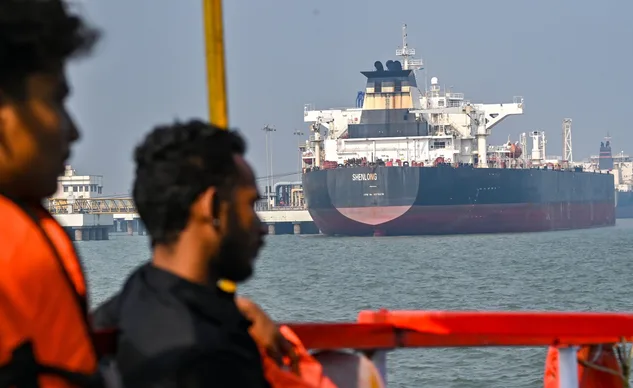
UAE businesses are bracing for cashflow squeezes and payment delays as the US-Israeli war against Iran prevents cargo leaving or entering the region, executives have told AGBI.
Major shipping lines are offloading Gulf-bound containers at the nearest safe port while the Strait of Hormuz, a critical artery for global trade, is blocked and supply chains are disrupted.
Cargo is being left thousands of miles from its intended destination, resulting in delayed payments from customers who have yet to receive their goods. Companies trying to transport their goods still have to pay their own suppliers and absorb much higher freight costs to reroute shipments.
“Covering accounts receivables is becoming a huge concern for companies right now,” said Aurélien Paradis, CEO of AU Group MEA, a credit insurance brokerage.
“We are receiving a lot of calls from companies that want to get insured because they know what will come next, unfortunately. The first thing [customers] do when they face issues is delay payment to suppliers,” he told AGBI.
Paradis said credit insurance premiums – used when businesses want to protect themselves against financial loss if customers fail to pay for goods – are up 10 to 20 percent since the conflict began.
Companies that import goods for resale – a important strand of UAE business supported by the country’s location and trade infrastructure – are particularly exposed to late payments since invoices can make up a large share of their assets.
Receivables – money due the company for products or services it has already delivered – can represent more than half of total assets, according to Paradis. Non-payment by a major client can push companies into bankruptcy, he warned.
“The real problem is not just the supply, it’s cashflow,” said Saleem Ahmed, CEO of Dahbashi Group, a UAE-based supplier of heavy equipment spare parts and services.
“Until the situation eases, you have to find ways and means to keep yourself afloat, pay your suppliers, and deal with the people who can pay you.”
The UAE central bank has moved to support liquidity and credit, allowing banks to delay classifying corporate loans hit by “extraordinary circumstances” while urging continued lending to customers.
Ahmed said he might have to refuse to deal with customers seen as higher credit risk, but worries this could damage relationships in the future.
“It’s a very difficult situation,” he said, but he has little choice given rising costs – some shipping routes are tripling in price and air freight is up 15 to 20 percent.
One shipment bound for Doha was diverted first to Mumbai, then to Fujairah, where port congestion forced a 24-hour clearance deadline or there would be penalties.
Ahmed had budgeted for 15 percent growth in 2026 and said “the first two months of the year were very good” – before the conflict erupted on February 28.
Activity has stalled across ports, marine operators and oil and gas companies he supplies, he said.
“The vessels cannot come in and then go. They cannot do the service … everything is stopped for them,” he said, adding that disruption to the marine sector is also affecting oil field operations.
“The worry is that things have slowed down … everything is at a standstill. Their payments are not going to come in.”
Communication is crucial
Mishal Kanoo, chairman of Kanoo Group, one of the UAE’s largest family conglomerates, said companies need to maintain close communication with both suppliers and customers.
His family’s group of businesses span travel, shipping, logistics, energy and industrial services.
“We are starting to talk to our suppliers and our principals and our customers to say, how can we be a bit more flexible with you and how can you be more flexible with us,” he told AGBI.
“If I’m getting a reprieve from my principal, then I should pass some of that reprieve also to my customers. We’re all in the same boat.”
Kanoo warned against companies exploiting the situation to delay payments opportunistically.
“There are always people who are going to take advantage,” he said. “To me, this is stupid because it’s short-termism. People will remember this.”
Related Articles

South African rand falls to 3-month low as soaring...
09 Mar, 2026 08:35
Aramco’s 13% rally helps Saudi stocks post second ...
13 Mar, 2026 08:02
IEA Members Coordinate Historic Oil Stock Release ...
16 Mar, 2026 08:24
NamPower warns N$700 million in unpaid bills threa...
17 Mar, 2026 08:20
Middle East oil becomes most expensive in the worl...
17 Mar, 2026 08:43
Libya’s NOC launches Faragh-Brega pipeline project...
17 Mar, 2026 09:32
TotalEnergies’ global output down 15% amid Middle ...
17 Mar, 2026 09:39
Why Ethiopia’s Gas-to-Fertilizer Bet Matters for E...
19 Mar, 2026 12:58
Alake Advocates Regional Hubs to Power Africa’s Mi...
23 Mar, 2026 10:09