Logistic Other

Trucking gains as Gulf logistics undergoes rapid change


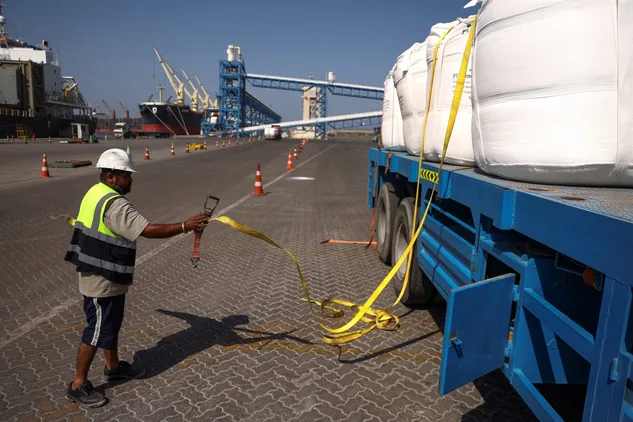
The Gulf’s logistics sector is shifting from sea to land transport.
The US-Israeli war with Iran has disrupted shipping, putting a truck-booking platform at the centre of the scramble to move goods.
TruKKer, a digital freight platform that connects businesses with trucks, is seeing a shift towards more diversified supply chains that reduce reliance on the Strait of Hormuz as a single chokepoint, its founder and CEO Gaurav Biswas told AGBI from Dubai.
The crisis, which began on February 28 and is in a ceasefire lull, taught Gulf states that, while they may funnel most exports through the waterway, they do not control “the green and red switches of the traffic light”, according to Biswas.
Ports on the UAE’s east coast are emerging as important alternatives to the Strait of Hormuz, with Fujairah and Khor Fakkan allowing cargo to bypass the chokepoint by routing shipments through the Gulf of Oman and onto overland transport networks into the Gulf.
Trade across the Oman and Saudi Arabia border has surged to record levels as companies reroute goods overland to avoid the maritime disruption.
“The western edge of Saudi Arabia and the eastern edges of the UAE and Oman will create a lot of redundancy in capacity so that we don’t have to be subjected to this again,” he said. “A lot of this has changed permanently.”
Biswas established TruKKer nearly a decade ago to streamline the Gulf’s fragmented trucking industry, where the UAE has more than 200,000 registered heavy trucks and its top fleet operator controls 800. Saudi Arabia has more than 600,000 trucks but the largest single fleet is 3,000.
“We will provide the client with a price for a truck that is available from, say, Sharjah to Jeddah and, once they confirm, this goes into a reverse auction for all qualified supply,” Biswas said. “Our margin depends on the lowest bidder we identify.”
TruKKer is the largest land-freight broker in the region, according to Biswas. It operates in seven countries and connects owners of tens of thousands of trucks with more than 1,200 corporations, from Pepsi and Borouge, the Abu Dhabi-based petrochemical company, to small and medium-sized enterprises.
It specialises in large, long-haul vehicles and is not involved in last-mile delivery vans.
It has received investments from regional venture capital fund Shorooq Partners and sovereign powerhouses such as Mubadala, ADQ and the Public Investment Fund.
Biswas said Trukker has been growing at a 40 percent compound annual growth rate for five years, but its business jumped just as much in only two months between February and April because of the war.
The logistics industry reacted faster this time than during the early, panic-stricken days of Covid.
“By March 7 TruKKer was already servicing ships that were routed to Khor Fakkan port from Jebel Ali or Abu Dhabi,” Biswas said.
The UAE’s Khor Fakkan sits just outside Hormuz, on the Gulf of Oman.
From early May TruKKer will be picking up hundreds of loads daily from there, and has opened land bridges to Fujairah as well as Sohar, Duqm and Salalah in Oman, and Jeddah, Yanbu and even Neom in Saudi Arabia.
“These ports are helping to move cargo that is meant for the GCC and countries like Qatar, Bahrain and Kuwait, which are locked in because they don’t have any ports outside Hormuz,” Biswas said.
Food grains, construction materials and inputs for refining aluminium and steel are among the goods TruKKer is moving on the import side, while petrochemicals dominate export routes.
There are challenges, though. The Jebel Ali and Khalifa ports in Dubai and Abu Dhabi can move the equivalent of more than 25 million twenty-foot containers annually. By comparison, Khor Fakkan has an annual capacity of 5 million 20-foot equivalent units and has never run above 3 million before, Biswas said to highlight that cargo volumes remain inhibited by Hormuz’s closure.
The war has also exacerbated a long-running dearth of trucks and drivers in the region.
“When there is one container coming into Jebel Ali for a company in the Jebel Ali free zone, that container will go from the port to the destination in one to one-and-a-half hours,” Biswas said. “A truck can do four of those containers in a day.”
Now the same cargo takes a day and a half to arrive from Khor Fakkan.
“Suddenly you run out of supply because a lot of short haul has become long haul.”
TruKKer has worked with regional authorities during the conflict to relax protectionist rules that limit the ability of trucks from one country to carry cargo in another.
Biswas said he hopes this is an opportunity for a more integrated industry approach to take hold for the long term.
“Remove the borders like Europe, where you come into a Spanish port and you can drive all the way to Norway without encountering customs,” he said.
Related Articles
Air freight rates soar as Middle East conflict blo...
13 Mar, 2026 08:35
War fallout hits global air cargo flows in week 10...
17 Mar, 2026 07:56
African LNG exporters pitch Europe gas supply in P...
17 Mar, 2026 08:48
Oman Air Cargo adds fuel and war risk surcharges s...
17 Mar, 2026 08:58
Aramex opens first regional healthcare hub at Duba...
17 Mar, 2026 09:16
New Container User Forum launched to improve effic...
17 Mar, 2026 09:24
AirCairo appoints Aeroprime as cargo GSSA for Indi...
19 Mar, 2026 11:00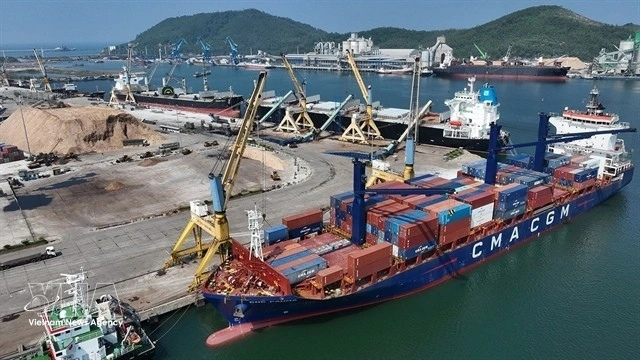
Ministry proposes transport measures amid Middle E...
19 Mar, 2026 11:16
Renewables and Grid Upgrades Drive Djibouti’s Ener...
19 Mar, 2026 12:39